
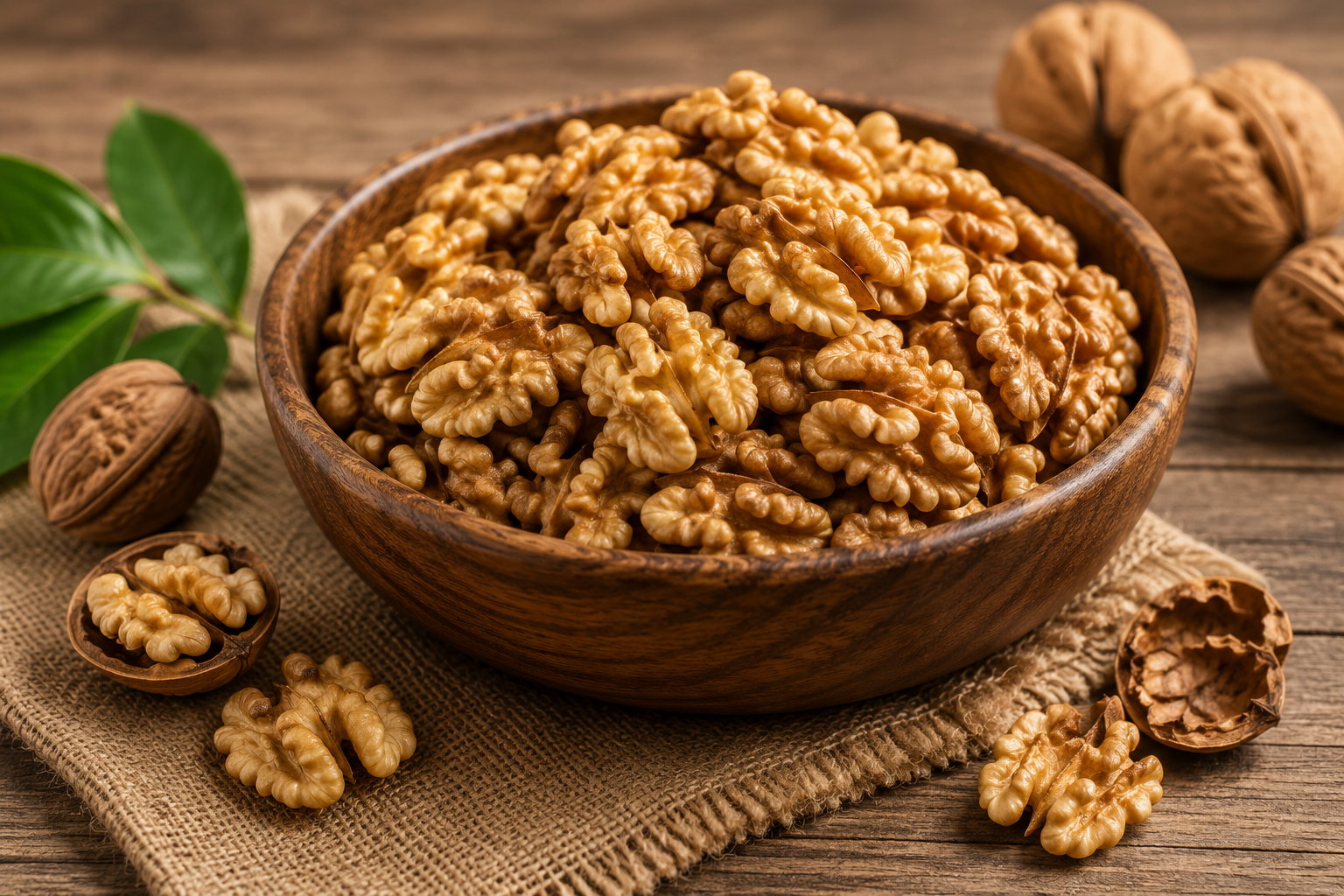
Why walnut kernels become bitter and how to tell is a common question when their taste, smell or appearance changes after opening the package. Walnut kernels are sensitive to air, light, moisture, heat and storage time because of their structure. When they are not stored properly, their typical fresh aroma may weaken and a heavier, bitter taste may appear.
The bitterness of walnut kernels is often linked to changes in their natural oil structure during storage. When walnut kernels remain exposed to air and heat for too long, their aroma profile can gradually change. This change may not be obvious at first. In many cases, it is noticed through a heavy aftertaste, an unusual smell or a duller surface. For this reason, walnut kernels should be checked by smell, taste and appearance together, not by appearance alone.
Shelled walnut kernels are more sensitive than walnuts kept in their shells. The shell protects the kernel from external factors, while shelled kernels come into direct contact with air, light and temperature changes. Large packages that remain open for a long time can therefore lose their aroma faster. This is especially noticeable when the package is stored in a warm kitchen, near a window or in a container that does not close properly.
Bitter walnut kernels can affect the flavour of many recipes. They are used in cakes, cookies, breakfast plates, pestil, köme and traditional desserts, where their aroma can influence the whole preparation. Before adding them to a recipe, it is useful to make a short check. Smell, taste, colour and surface texture can give a clearer idea of whether the walnut kernels are still suitable for the intended use.
What Storage Conditions Cause Walnut Kernels to Become Bitter?
One of the main reasons walnut kernels become bitter is long exposure to air. Once the package is opened, the kernels come into greater contact with oxygen. If the package is not closed tightly after each use, their aroma can change over time. This is especially common in large packages that are opened repeatedly and stored for a long period.
Heat is another important factor. Walnut kernels kept in warm kitchen cabinets, near a stove, close to an oven or in direct sunlight may lose their quality more quickly. Heat can affect both smell and taste, making the kernels feel heavier and sharper. A cool, dry and dark storage area is more suitable for keeping walnut kernels in better condition.
Moisture can also change the structure of walnut kernels. When they absorb moisture, their surface may become dull, slightly soft or different in smell. This can happen more easily in containers that do not close well, in humid kitchen areas or in packages left open. Once the moisture balance changes, both texture and aroma can be affected.
Light exposure should also be considered. Walnut kernels kept in transparent packaging or glass jars in a sunny place may gradually change in colour and smell. The storage container should not only have a lid; it should also protect the product from external conditions. If walnut kernels are not used frequently, storing them in smaller portions can reduce repeated air exposure.
How Can Bitter Walnut Kernels Be Recognised by Smell, Taste and Appearance?
Bitter walnut kernels are often first recognised by their smell. Fresh walnut kernels usually have a mild and characteristic nutty aroma. When they have been stored for too long or under unsuitable conditions, the smell may become heavier, sharper or unpleasant. The first smell when opening a package should be checked carefully, especially if the product has been stored for some time.
Taste is another important sign. Walnut kernels that have become bitter may leave a sharp, heavy and lasting taste in the mouth. If the flavour is far from the usual walnut aroma or dominates the recipe in an unpleasant way, the product should be examined more carefully. Before using walnuts in cakes, cookies, desserts or breakfast plates, tasting a small piece can help avoid affecting the whole recipe.
Appearance also matters during the evaluation. Strong darkening, dull patches, stains or pieces that look unusually dry should be checked. However, walnut kernels may naturally vary in colour depending on type and processing. For this reason, colour alone should not be the only basis for judgement. It should be evaluated together with smell and taste.
Texture can also provide clues. Walnut kernels that are overly dry, crumbly, unusually oily on the surface or different to the touch should be examined more carefully. Sometimes some pieces in the same package may look normal while others have become darker or developed a changed smell. The whole package should be checked rather than only the top layer.
What Should Be Considered to Prevent Walnut Kernels from Becoming Bitter?
To prevent walnut kernels from becoming bitter, the first step is to reduce contact with air. After opening, they should not be left exposed in the package. A lidded glass jar, a sealed storage container or packaging that closes tightly can help limit air exposure. The container should be closed carefully after every use.
The storage area should be cool, dry and away from light. Places near a stove, oven, window or areas with frequent temperature changes are not suitable. If walnut kernels need to be stored for a longer time, portioning can be helpful. This allows only the needed amount to be opened while the rest remains less exposed to air.
Walnut kernels should also be kept away from strong-smelling ingredients. Spices, coffee, onions, garlic or other intense foods can affect the aroma if they are stored nearby in open containers. A tightly closed container and a separate storage area help preserve the walnut’s own aroma more effectively.
A short check before use is also important. Walnut kernels that have been stored for a long time should be checked for smell, taste and appearance before being added to recipes. In desserts, baked goods, breakfast plates, pestil or köme, the condition of the walnut kernels can directly influence the final flavour. Careful storage makes them easier to use in a controlled and versatile way.