
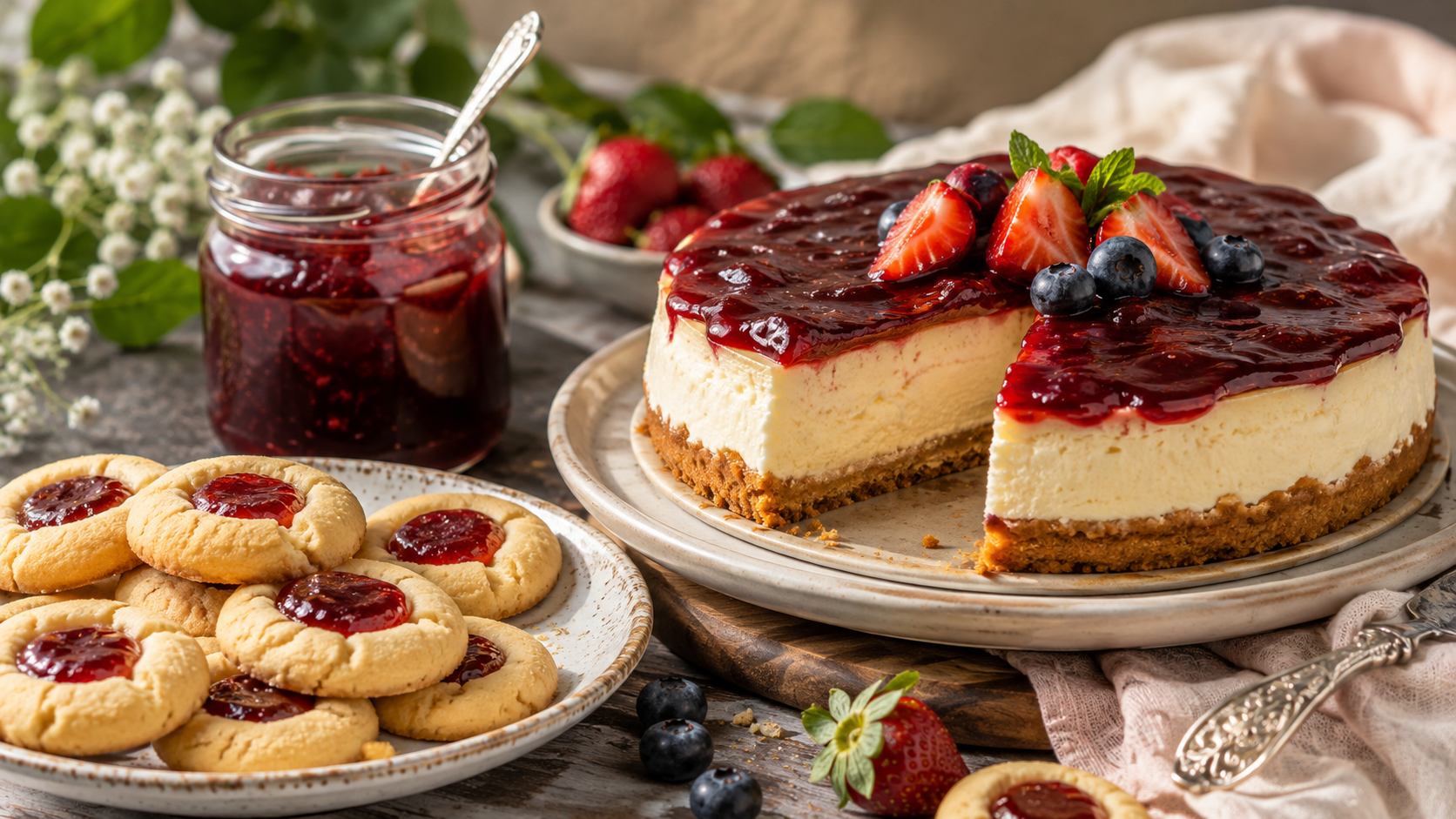
Jam can be used in cheesecake and cookie recipes to create a fruity layer, add aroma, improve presentation, and bring a more colorful appearance to desserts. Strawberry, sour cherry, apricot, rose, fig, and other fruit jams can be used as a topping, filling, middle layer, or serving complement depending on the structure of the recipe. In simple desserts, jam creates a clearer flavor transition and makes the final presentation more noticeable.
In cheesecake recipes, jam is most often used as a top layer. A thin layer of jam spread over the creamy cheese base gives the dessert a glossy look and a fruit-based aroma. In cookie recipes, jam is more commonly used as a filling, a center layer, or a thin topping added after baking. In both uses, the consistency, amount, and compatibility of the jam with the dessert should be controlled carefully.
The most important point when using jam is not to make the dessert too heavy. If too much jam is used, it can run over the cheesecake surface or spill out of cookie fillings. Very runny jams can soften the dough and affect the shape of the dessert. For this reason, the thickness, fruit pieces, and sweetness level of the jam should be considered before adding it to a recipe.
Jam selection should not be based only on fruit flavor. In creamy recipes such as cheesecake, jams that spread easily and create a smooth surface can be more suitable. In cookies and filled pastries, thicker jams usually give a more controlled result because they stay in place better. This helps create a more balanced dessert in terms of taste, texture, and appearance.
What Purposes Does Jam Serve in Dessert Recipes?
Jam is mainly used as a flavor layer in dessert recipes. In plain cheesecakes, vanilla desserts, cookies, or cake slices, it adds a fruity note and a more distinct taste. It becomes especially noticeable in creamy, milk-based, or plain dough recipes. This is why the fruit flavor of the jam should match the main structure of the dessert.
Jam also adds color and improves presentation. Strawberry jam gives a bright red tone, sour cherry jam creates a darker appearance, and apricot jam adds a warm orange color. Rose jam has a more delicate look and a characteristic aroma, making it suitable for more elegant presentations. In this way, jam affects not only flavor but also the first visual impression of the dessert.
In some recipes, jam is used as a filling. It can be placed in the center of cookies, spread between two cookies, or used as a fruity layer in tart-style pastries. When jam is used as a filling, it should not be too runny. Otherwise, it may spread too much during baking or leak out of the pastry.
The amount of jam is also important. Jam already has a strong aroma and its own sweetness. If it is used too heavily, it can cover the other flavors in the dessert. In cheesecake, a thin layer is usually enough. In cookies, small amounts give both a cleaner appearance and a more balanced flavor.
How Is Jam Consistency Balanced on Cheesecake?
Jam used on cheesecake should be spreadable but not too runny. Very thick jams may be difficult to spread evenly, while very liquid jams can flow over the surface and create an uneven look. Before use, the jam can be stirred gently. If needed, it can be left at room temperature for a short time so that it becomes easier to spread.
Jam should usually be added after the cheesecake has cooled completely. If it is spread over a warm or not fully set cheesecake, it can melt slightly and mix with the creamy layer. This may disturb the clean separation between layers. For a neater result, the cheesecake should be chilled first, and then the jam should be spread in a thin and even layer.
The fruit pieces inside the jam also affect the consistency. Large fruit pieces can look decorative on the cheesecake, but they may make slicing less clean. If a smoother top layer is desired, the jam can be lightly mashed or large pieces can be made smaller. If a more natural appearance is preferred, fruit pieces can be left on the surface in a controlled way.
The thickness of the jam layer should also be balanced. A very thick layer can overshadow the creamy texture of the cheesecake. A thin, evenly spread layer creates a better flavor transition and helps the slices look cleaner. Chilling the cheesecake briefly after adding the jam can help the top layer settle better before serving.
How Is Jam Used as a Filling and Topping in Cookies?
When jam is used as a filling in cookies, the dough should be shaped accordingly. Thumbprint cookies, sandwich cookies, and thin tart-style cookie bases are suitable for jam fillings. If too much jam is placed directly on the dough, it can spread during baking. Creating a small space in the center of the cookie helps keep the jam in place.
If jam is added before baking, thicker jams are usually more suitable. Runny jams can leak in the oven and spread toward the edges of the cookie. Thicker jams remain more stable and create a cleaner result. In some cookie recipes, jam can also be added after baking. This method works better when a glossy and fresh jam appearance is desired.
Jam can also be spread between two cookies to make sandwich cookies. In this use, the jam layer should not be too thick because it can squeeze out from the sides when the cookies are pressed together. A thin layer gives flavor and helps bind the cookies together. The cookies should be completely cooled before the jam is added, because warm cookies can soften too much.
As a topping, jam can be applied in a thin layer shortly before serving. This method can be used for plain cookies, almond cookies, or walnut cookies. Finely chopped hazelnuts, almonds, pistachios, or coconut can be added over the jam for a richer presentation. However, these ingredients should be used in moderation so they do not cover the jam flavor completely.
How Do Strawberry, Sour Cherry, Apricot, and Rose Jam Differ in Dessert Recipes?
Strawberry jam is one of the most commonly used jams in dessert recipes. Its familiar fruit aroma and bright color make it suitable for cheesecake, cookies, cakes, and milk-based desserts. When used with fruit pieces, it gives a more natural look. When stirred or lightly mashed, it creates a smoother top layer. It works especially well in plain desserts where its color can stand out.
Sour cherry jam has a sharper and more distinct aroma than strawberry jam. In creamy desserts such as cheesecake, it can create a balanced contrast. Its darker color makes it more visible on light-colored surfaces. In cookie recipes, it is better to use it in small amounts because too much sour cherry jam can dominate the main dough flavor.
Apricot jam has a softer aroma and a warm color. It can be used in cookies, tarts, cakes, and lighter dessert presentations. Its more balanced and mild structure makes it suitable for recipes that should not taste too intense. When used on cheesecake, apricot jam creates a gentler fruit layer and a lighter appearance.
Rose jam has a more characteristic aroma than many other jam types. Because of this, it should not be used heavily in every dessert. Small amounts can be preferred in plain cookies, light milk desserts, or special serving plates. When rose jam is used, it is better not to combine it with too many strong ingredients so that its distinctive aroma remains balanced.