
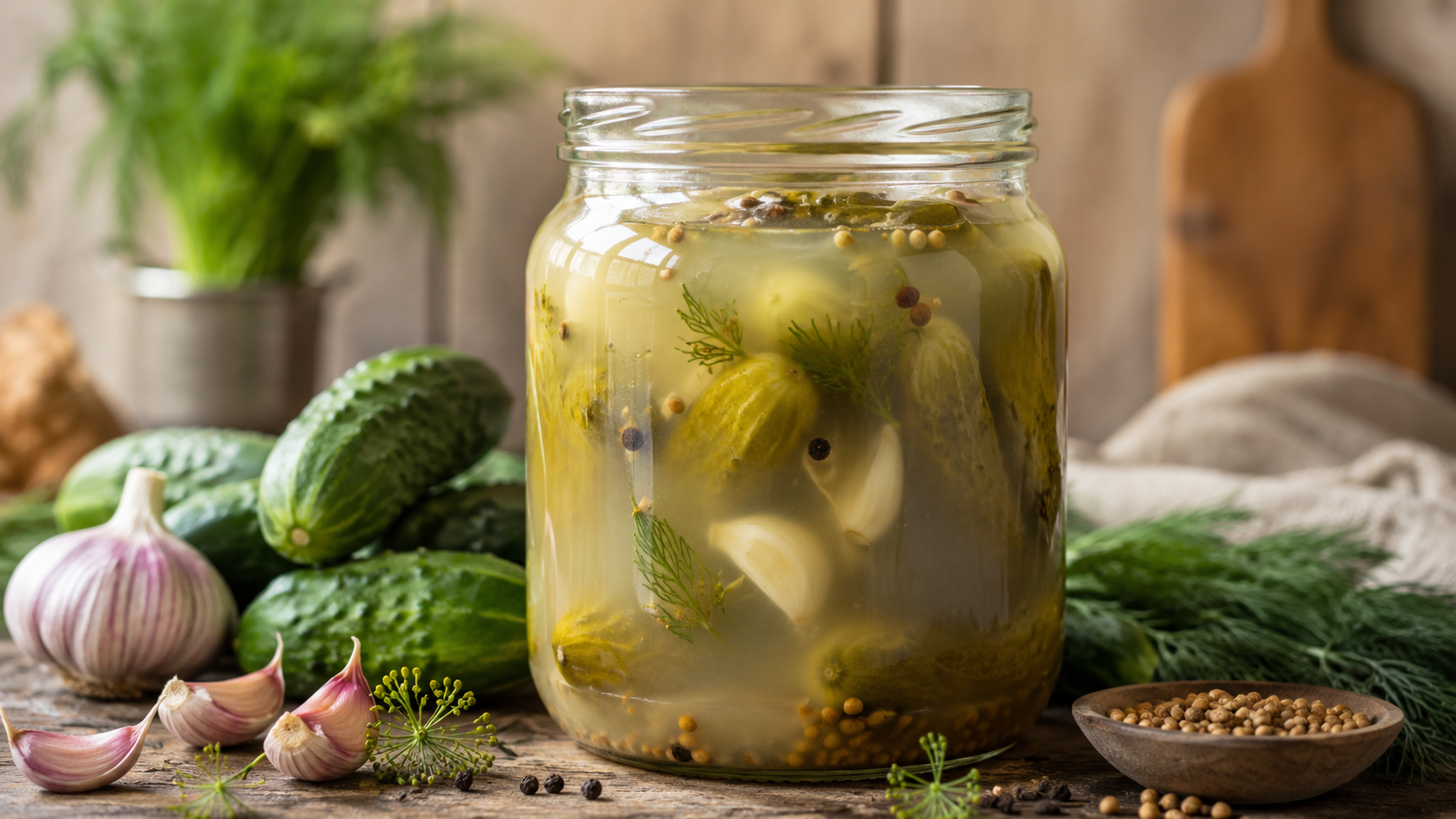
Why pickle juice becomes cloudy is a common question, especially when a jar looks different after opening. Cloudiness in pickle juice can be caused by the ingredients used, the salt, vinegar and water ratio, small vegetable particles, spices, storage conditions and the way the jar is handled after opening. This change does not always come from a single reason. Sometimes it is related to the recipe itself, while in other cases it may develop because of how the jar is opened, served and stored.
Pickle juice is usually clearer or lightly coloured when the jar is first prepared or opened. Over time, however, vegetables may release tiny particles into the liquid. Garlic, peppers, cabbage, cucumbers, carrots and spices can also leave visible traces in the brine. In mixed pickles, cucumber pickles, pepper pickles, cabbage pickles or spicy pickles, the level of cloudiness may appear differently because each ingredient affects the liquid in its own way.
Cloudiness may become more noticeable after the jar has been opened. If the jar is opened frequently, left on the table for a long time or served with utensils that have touched other foods, the liquid may begin to look less clear. Bread crumbs, food residue or small foreign particles can enter the jar and create a heavier cloudy appearance. For this reason, pickles should be taken from the jar with clean serving utensils.
Cloudy pickle juice should not be evaluated by colour alone. Smell, surface appearance, vegetable texture, lid condition and storage history should all be considered together. A light cloudy look caused by spices or vegetable particles is not the same as a strong structural change in the whole jar. To understand why pickle juice has become cloudy, the ingredients, ratios and storage conditions should be examined together.
What Ingredient and Storage Factors Cause Pickle Juice to Become Cloudy?
One of the main reasons pickle juice becomes cloudy is the structure of the ingredients inside the jar. Cucumbers, peppers, cabbage, carrots, garlic and similar ingredients can release small particles into the liquid while they sit in the brine. These particles may settle at the bottom of the jar or spread through the liquid. This can be more visible in pickles made with finely cut vegetables or ingredients that soften more easily.
Spices can also change the appearance of pickle juice. Black peppercorns, coriander seeds, mustard seeds, chilli flakes and other aromatic ingredients may release colour and fine residue into the liquid. In spicy pickles, chilli flakes and similar ingredients can make the liquid look more matte or cloudy. These changes are often linked to the materials used in the jar and do not appear in every pickle variety in the same way.
Storage conditions have a strong effect on the appearance of pickle juice. If an opened jar is left uncovered for too long, kept in a warm place or not closed properly, the liquid may change more quickly. Frequent temperature changes can also affect the structure of the contents. Opened jars should therefore be stored according to the information on the product label and closed tightly after each use.
The way the product is served can also increase cloudiness. If a wet, dirty or previously used fork or spoon is placed into the jar, foreign particles may mix with the liquid. This can affect not only the appearance of the pickle juice but also the surface of the vegetables and the overall smell of the jar. Using clean utensils, keeping the rim of the jar clean and closing the lid properly help keep the liquid more stable in appearance.
How Do Salt, Vinegar and Water Ratios Affect the Clarity of Pickle Juice?
The ratio of salt, vinegar and water is one of the key factors that affects how clear pickle juice looks. If the salt ratio is too low, particles from the vegetables may become more visible and the liquid may look duller. On the other hand, too much salt can change both the taste and texture of the vegetables. This is why the balance of the brine matters not only for flavour but also for appearance.
The type and amount of vinegar can also affect the liquid. Grape vinegar, apple vinegar and other vinegar varieties differ in colour, intensity and aroma. A lighter vinegar may create a clearer-looking liquid, while darker or more aromatic vinegars can change the colour of the brine. This difference is especially noticeable in pickles made with pale vegetables.
The quality of the water used in the brine may also influence the appearance. Water with a higher mineral content can sometimes create a light residue or a dull look inside the jar. This is more noticeable when a very clear pickle liquid is expected. The interaction between water, vinegar, salt and vegetables plays an important role in the final appearance of the pickle juice.
The liquid balance remains important after the jar is opened. As pickles are taken out, the liquid level may drop and some vegetables may remain above the brine. When vegetables are not fully covered, their surface can begin to change and release more particles into the jar. For this reason, the pickle juice should continue to cover the vegetables as much as possible.
How Should Cloudy Pickle Juice Be Checked Before Use?
Cloudy pickle juice should first be checked visually. A slightly dull appearance, spice residue at the bottom of the jar or small vegetable particles in the liquid may not be unusual on their own. However, if there is an unusual layer on the surface, a strong colour change or a noticeable change in the structure of the vegetables, the jar should be examined more carefully.
Smell is another important point of control. Pickles naturally have a sharp and distinctive smell, but the smell should still be consistent with the expected character of the product. If the jar smells very different from usual, the cloudy appearance should not be evaluated alone. The overall condition of the jar should be considered together with the smell.
The texture of the vegetables can also help when evaluating cloudy pickle juice. If cucumbers, peppers, cabbage or mixed vegetables have become overly soft, broken down or visibly changed on the surface, this may point to storage-related changes. The condition of the liquid is only one part of the evaluation. The full structure of the contents should be considered.
The lid, jar rim and storage history should also be checked. If the lid was not closed properly, if dried residue is visible around the rim or if the jar was stored in unsuitable conditions for a long time, the cloudiness becomes more important to evaluate. Pickle juice should always be checked together with appearance, smell, vegetable texture, lid condition and storage conditions.