
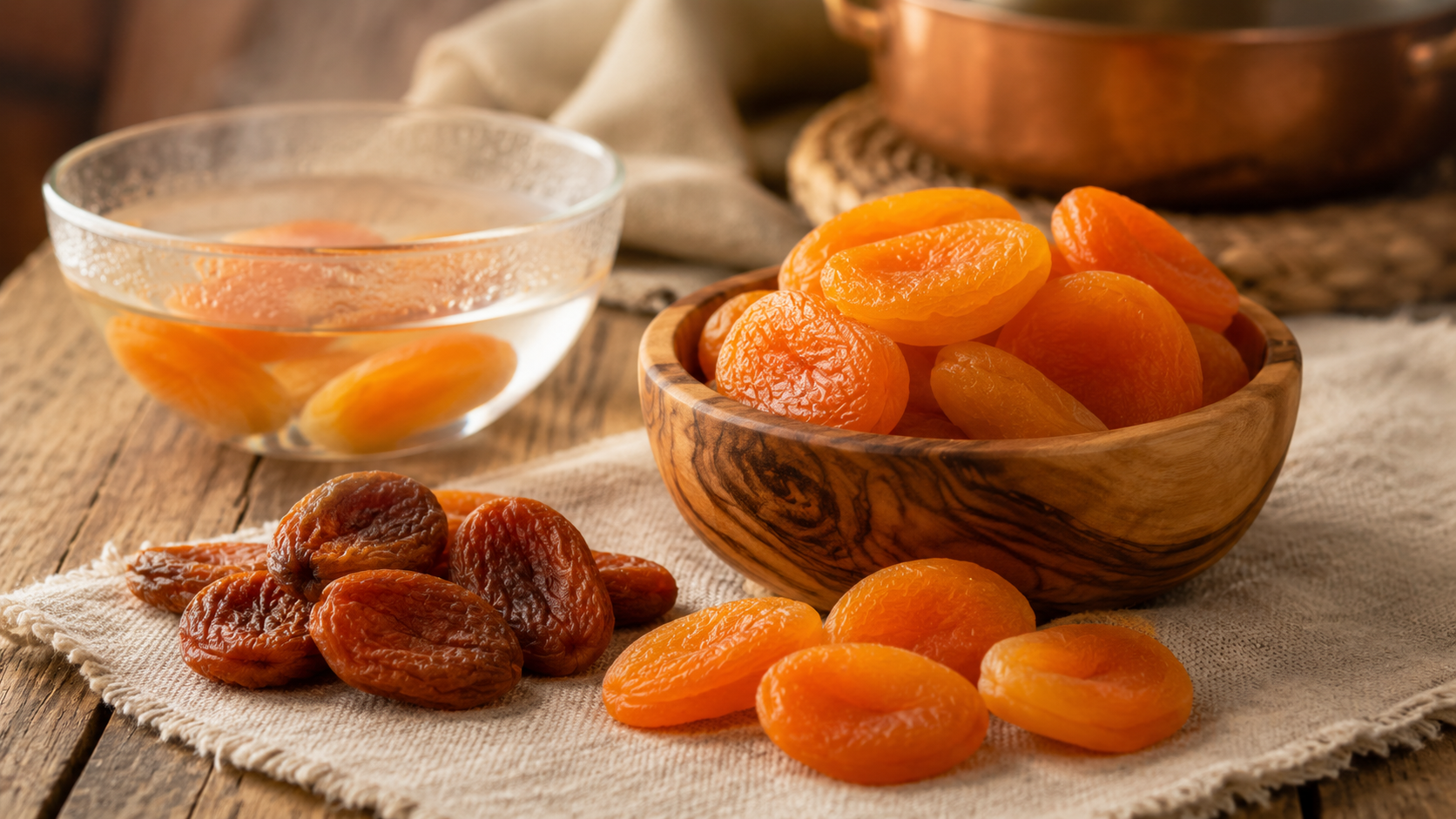
Why dried apricots become hard and how they can be softened is a common question when their texture changes after the package has been opened. Dried apricots are fruit products with reduced water content, so they are directly affected by air, moisture, temperature and packaging. When storage conditions are not suitable, they may become firmer, drier and harder to chew over time.
The hardening of dried apricots is usually related to moisture loss. When the product remains exposed to air for a long time, the surface begins to dry first and the inner structure can become firmer. This change is more noticeable in packages that are left open, stored in warm places or exposed to dry air. Smaller and thinner dried apricots may harden faster than larger and softer pieces.
There are differences between dried apricot varieties in colour, size, dryness and texture. Some dried apricots are softer and fleshier, while others have a denser and firmer structure from the beginning. For this reason, not all dried apricots harden at the same speed or in the same way. Their initial texture, the time since opening and the storage environment all affect the rate of hardening.
Hardened dried apricots do not always need to be considered unusable. If the smell, appearance and surface look normal, they can be softened with controlled methods or used differently in recipes. However, if there is an unusual smell, a strong colour change or an unwanted layer on the surface, the overall condition of the product should be checked, not just its hardness.
What Moisture and Storage Factors Cause Dried Apricots to Become Hard?
One of the main reasons dried apricots become hard is exposure to air. After the package is opened, the product may gradually lose its moisture balance. This is first noticed on the outer surface and later in the whole fruit. In large packages that are opened and closed repeatedly, the hardening process may develop more quickly.
The moisture level of the storage environment also affects the texture of dried apricots. In very dry areas, they may lose softness faster. In very humid areas, however, the surface may change and the pieces may stick together. For this reason, dried apricots should not be left uncovered in dry air or stored in damp environments for a long time.
Temperature is another factor that affects texture. Dried apricots kept in direct sunlight, near a stove or in areas with frequent temperature changes may lose their preferred consistency more quickly. Warm environments may make the surface sticky, while dry and warm air can reduce moisture and cause hardening. The storage location therefore has a direct effect on product quality.
Packaging also plays an important role. Dried apricots kept in thin bags, open packages or containers without lids come into more contact with air. A lidded glass jar, a sealed storage box or packaging that can be tightly closed helps reduce this contact. If the product is not consumed quickly, storing it in smaller portions can make usage more controlled.
How Can Hardened Dried Apricots Be Made Soft Again?
Before softening hardened dried apricots, the overall condition of the product should be checked. If the smell, colour and surface appear normal, practical methods can be used to improve the texture. The aim is not to soak the apricots excessively, but to restore moisture balance in a controlled way. Fast methods based on high heat should be avoided because they can change the surface structure.
One practical method is brief contact with lukewarm water. The apricots can be soaked for a few minutes and then drained well. This method works especially well for apricots that have only become dry on the surface. They should not be kept in water for too long, as this may weaken their aroma and texture.
Another method is to rest the dried apricots in a closed container for a short time. Slightly hardened pieces may become a little softer when kept in an airtight container, as their remaining moisture can settle more evenly. This method is more suitable for products with mild hardening. For apricots that have become much firmer, brief lukewarm water contact may be more effective.
Hardened dried apricots can also be used in recipes instead of being eaten directly. They can be chopped into small pieces for cakes, cookies, compotes, fruit mixtures, breakfast bowls or dessert plates. If the apricots do not fully return to their former softness, chopping or using them inside a recipe offers a practical solution. This makes the firmer texture easier to manage.
What Should Be Considered to Keep Dried Apricots from Losing Their Texture?
To keep dried apricots from losing their texture, the package should be closed properly after opening. The product should not be left exposed to air. If the original package cannot be resealed, the apricots should be transferred to a suitable storage container. Reducing air contact is one of the most important steps in slowing down hardening.
The storage area should be cool, dry and away from direct light. Sunlight, high temperature and moisture changes can affect the colour, surface and texture of dried apricots. In the kitchen, they should be kept away from the oven, stove and window areas. If they are stored in a cupboard, they should be placed away from strong-smelling ingredients.
Dried apricots may absorb surrounding odours. Spices, coffee, onions, garlic or other intense ingredients can change their aroma if stored nearby in open containers. A clean, tightly closed storage container is important for both texture and aroma. It also helps keep the product more stable during longer storage.
Dried apricots stored for a long time should be checked at intervals. If pieces become extremely hard, sticky, visibly discoloured or unusual in smell, the storage conditions should be reviewed. With proper storage, dried apricots can be used more comfortably in breakfast plates, desserts, nut mixtures and traditional serving ideas.