
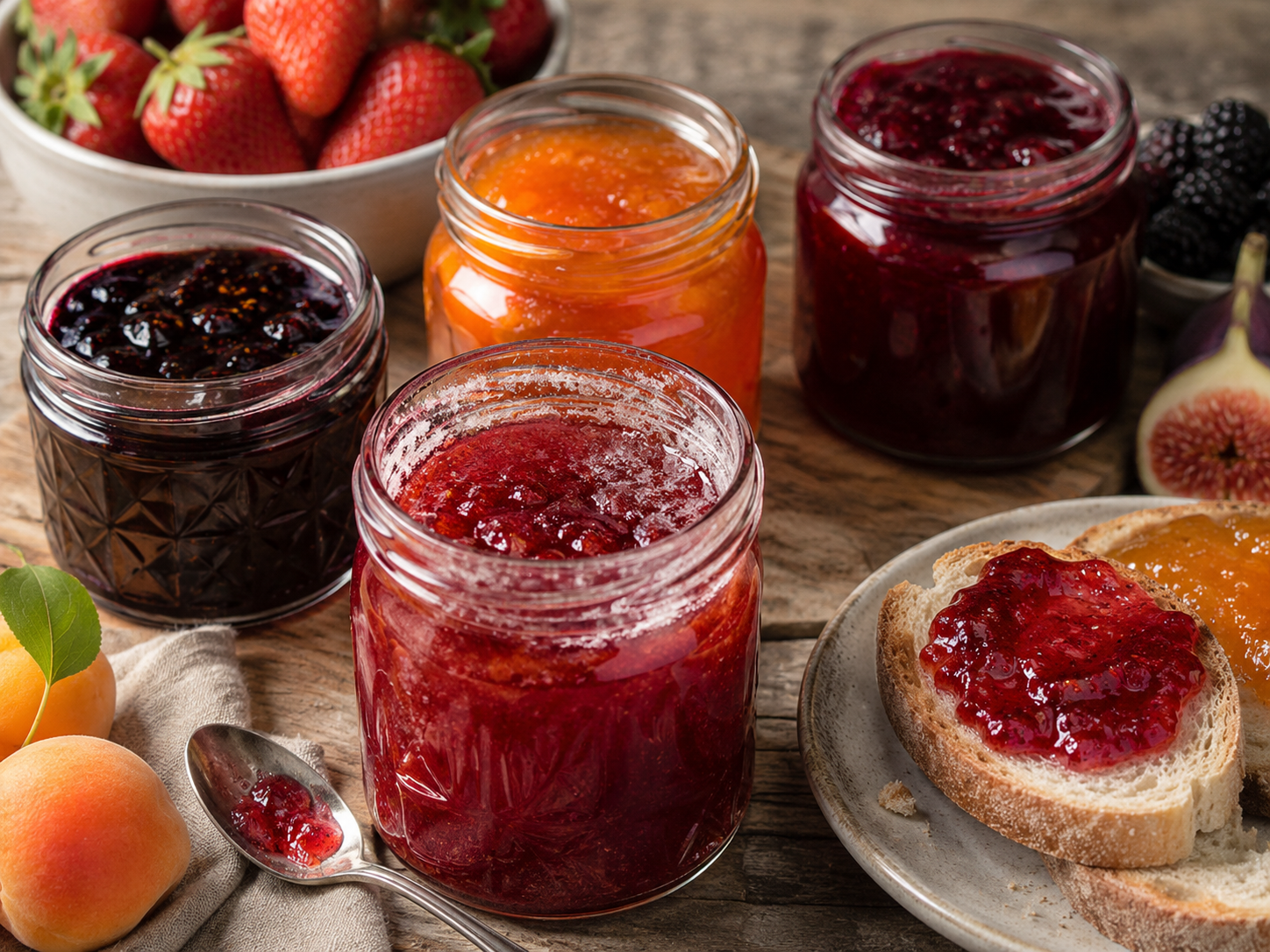
Jam crystallisation is a common texture change that can appear in jars stored for a long time or used gradually after opening. Crystallisation occurs when the sugar inside the jam turns into small solid crystals over time. These crystals may appear on the surface, around the rim of the jar, or throughout the jam as tiny grainy particles. Different products such as black mulberry jam, strawberry jam, apricot jam, quince jam, sour cherry jam, rose jam, bitter orange jam, raspberry jam, blackberry jam, white mulberry jam, and peach jam may not crystallise in exactly the same way because each fruit has its own texture, moisture level, fruit ratio, and consistency.
Crystallisation does not always mean that the jam has become completely unusable. In many cases, it is a physical change in the structure of the product. Sugar level, long storage time, frequent opening and closing of the jar, and temperature changes in the storage area can all affect this process. In thicker and chunkier products such as dried fig jam with walnuts, walnut jam, aubergine jam, or persimmon jam with walnuts, changes in consistency may feel different because the fruit or walnut pieces also influence the overall texture.
The structure of jam varies depending on the fruit used. Jams made with softer fruits such as strawberry or raspberry may have a more fluid feel, while products such as quince jam, bitter orange jam, walnut jam, or green fig jam dessert may have a denser and more textured structure. For this reason, the same crystallisation signs should not be expected in every jam type. In some products, crystallisation may begin around the jar rim, while in others it may appear as slight dullness on the surface or a thicker overall consistency.
For users who enjoy jam at breakfast, in desserts, in pastries, or as a sauce-like addition, a smooth and spreadable texture is often important. Knowing why jam crystallises, which types may show texture changes more clearly, and how the consistency can be adjusted helps create more practical use in the kitchen. When jam varieties are stored carefully, they can be used more consistently in both breakfast presentations and dessert recipes.
What Are the Main Reasons Jam Crystallises?
The main reason jam crystallises is the gradual imbalance between sugar and liquid content. Sugar naturally present in the jam may begin to form crystals under certain conditions. This becomes more visible in jars that are stored for long periods or frequently exposed to air. In darker fruit jams such as black mulberry, sour cherry, blackberry, and raspberry, surface crystallisation may become noticeable more quickly because visual changes are easier to detect on darker colours.
Temperature changes can also affect crystallisation. When a jar of jam is repeatedly moved between warm and cold environments, its texture may fluctuate. These changes can make it easier for sugar crystals to form. This process may develop faster in opened jars due to increased air exposure. In softer fruit jams such as strawberry jam, apricot jam, and peach jam, the texture change may move from a fluid structure toward a thicker, grainier consistency.
Dried jam residue around the rim of the jar may also increase crystallisation. After use, jam left around the mouth of the jar can dry and make the lid harder to close properly. When these dried pieces mix back into the jam, they may create a grainier texture. This can especially affect the serving quality of aromatic products such as rose jam, mastic jam, and bitter orange jam. Keeping the jar rim clean is therefore important.
The cooking process and the structure of the product also influence the final consistency. In products such as walnut jam, aubergine jam, dried fig jam with walnuts, or green fig jam dessert, crystallisation may not only be felt in the syrup-like part but also around the fruit or nut pieces. In these varieties, texture change may feel more noticeable. For this reason, the jam type, piece structure, and storage conditions should be considered together when evaluating crystallisation.
How Can Crystallised Jam Be Brought Back to a Smoother Consistency?
Crystallised jam can often be brought closer to a smoother consistency through controlled warming. Instead of heating the entire jar, it is better to take only the amount needed into a small separate container. This prevents the rest of the product from being unnecessarily exposed to heat. For everyday breakfast varieties such as black mulberry, sour cherry, strawberry, apricot, or peach jam, working with small portions is more practical and helps preserve the remaining jam in the jar.
In cases of light crystallisation, gently stirring the jam may be enough. If the crystals have collected on the surface or around the edges, using a clean spoon to mix the jam slowly can help distribute the structure more evenly. For stronger crystallisation, brief warming over low heat may be needed. In textured products such as quince jam, bitter orange jam, aubergine jam, or walnut jam, stirring should be done carefully so that fruit or walnut pieces do not lose their shape.
High heat should be avoided during warming. Excessive heat can alter the colour, fruit texture, and consistency of the jam. This is especially important for aromatic products such as rose jam, mastic jam, or white mulberry jam, where overheating may affect the character of the product. The goal is not to cook the jam again but to soften the crystallised structure gently.
Once the consistency has been adjusted, the jam should be placed in a clean container and covered after cooling. If only a small amount will be used for breakfast, pancakes, yoghurt, or dessert filling, it is better to process only that portion. This helps keep the rest of the jam more stable in its original jar. Portion-based use is especially practical for dense products such as persimmon jam with walnuts, dried fig jam with walnuts, or green fig jam dessert.
What Should Be Considered to Reduce Crystallisation While Storing Jam?
One of the most important points in storing jam is using a clean spoon. When bread crumbs, butter, cheese, or other food residues enter the jar, they can affect the surface and consistency of the product. This may lead to unwanted changes in both appearance and texture. For frequently used breakfast jams such as black mulberry jam, strawberry jam, apricot jam, sour cherry jam, and raspberry jam, avoiding food residue inside the jar is especially important.
The jar lid should also close tightly after every use. If the lid does not close properly, the jam is exposed to more air and the surface may begin to dry. A dried surface can make crystallisation appear more clearly over time. For aromatic products such as mastic jam, rose jam, bitter orange jam, and white mulberry jam, checking the lid is also important for preserving the product’s aroma and serving quality.
The storage environment also affects consistency. Very hot, very cold, or frequently changing temperatures can cause the jam structure to change faster. Following the storage conditions indicated on the product label is important in this regard. In textured products such as walnut jam, aubergine jam, dried fig jam with walnuts, and persimmon jam with walnuts, environmental changes may affect the balance between the syrup-like part and the fruit pieces.
Jam is usually consumed gradually over time, so small handling details become important. Keeping the jar rim clean, using a dry and clean spoon, closing the lid properly, and storing the product in a suitable environment can help preserve the texture for longer. Evaluating each jam variety according to its own structure allows for more consistent use in both breakfast presentations and dessert recipes.