
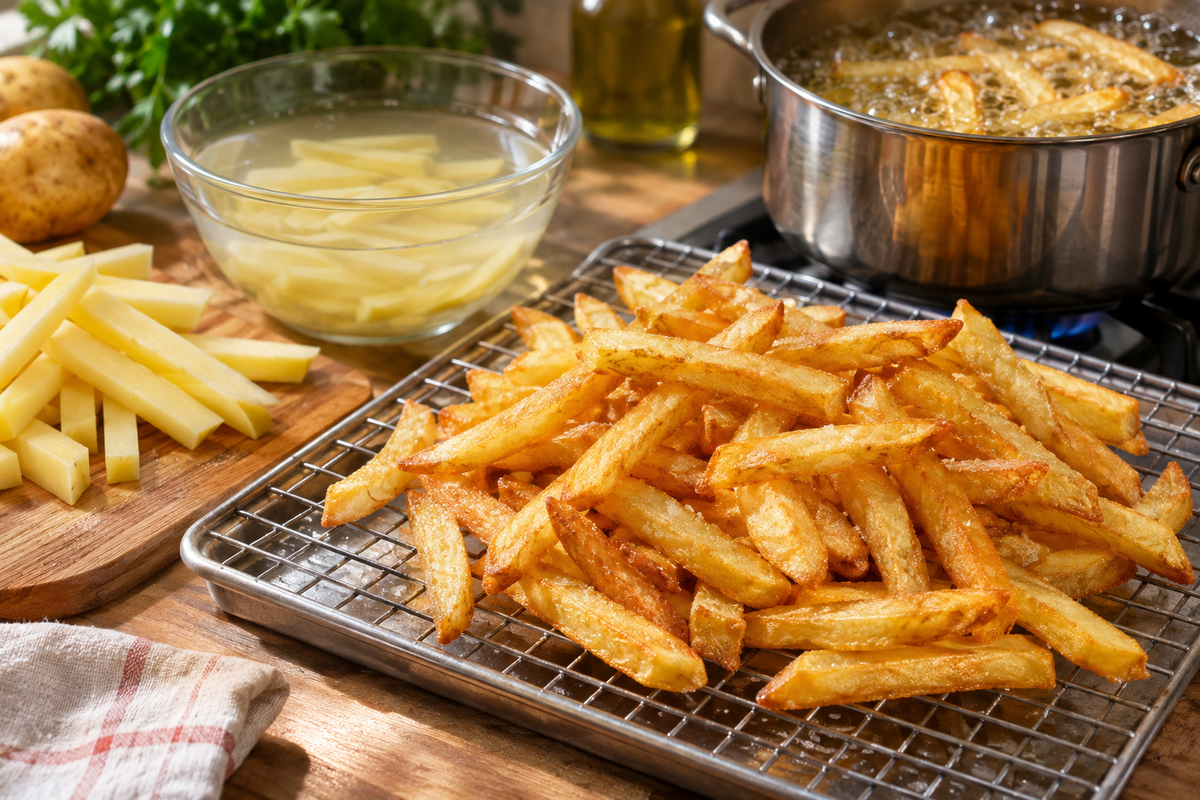
To make French fries crispy, choose potatoes suitable for frying, remove excess surface starch after cutting, dry the potatoes thoroughly, and fry them at the appropriate oil temperature. Double frying is one of the most effective methods for achieving a crispy exterior and a soft interior. During the first stage, the potatoes are cooked at a lower temperature to soften the inside. They are then fried a second time at a higher temperature to develop a golden, crisp surface.
When homemade French fries turn out soft, greasy, or stuck together, the problem is not necessarily related to frying time alone. The potato variety, moisture content, thickness of the pieces, and stability of the oil temperature all influence the result. Adding too many potatoes to the pan at once can cause the temperature to drop significantly. This prevents the exterior from browning quickly and makes it more difficult to develop the desired crispness.
Preparation is just as important as frying. Rinsing or briefly soaking cut potatoes in cold water helps remove excess starch from their surfaces. However, the potatoes must be thoroughly dried before they are placed in hot oil. Remaining moisture can cause dangerous splattering and temporarily lower the oil temperature. Proper rinsing and careful drying should therefore be considered complementary preparation steps.
The way French fries are handled after cooking also affects their texture. Piling hot fries into a deep bowl can trap steam between the pieces, causing the crispy surface to soften. Allowing them to drain briefly on a wire rack helps excess oil and moisture escape. French fries are generally best served shortly after cooking, with salt and other seasonings added once they have been removed from the oil.
Why Do French Fries Become Soft?
One of the most common reasons French fries become soft is that the frying oil is not sufficiently hot. When potatoes are added to oil at a low temperature, their surfaces take longer to dry and brown. During this extended cooking period, the interior continues to soften without the exterior developing the desired crispy crust. The result may be fries that feel limp and relatively greasy rather than crisp on the outside and tender inside.
Overcrowding the frying pan or pot can create a similar problem. Adding a large quantity of cold potatoes at once lowers the temperature of the oil. Wet potatoes can cause an even greater temperature drop. When too many pieces are crowded together, they may also stick to each other and brown unevenly. Frying in smaller batches helps the oil maintain a more consistent temperature and allows each piece to cook properly.
The starch and moisture content of the potatoes also affect crispness. Potatoes with a relatively high water content may require more time for their outer surfaces to dry. Excess starch remaining on the cut surfaces can cause the pieces to stick together during frying. Selecting an appropriate potato variety and preparing the pieces correctly can therefore improve the final texture before the frying process even begins.
French fries can also lose their crispness after being removed from the oil. When freshly cooked fries are placed in a closed container or piled together, hot steam becomes trapped around their surfaces. This moisture can soften the crust that formed during frying. The effect becomes more noticeable when the fries are left standing for an extended period. Draining them in a single layer and serving them promptly helps maintain their crispy texture.
Which Potatoes Should Be Selected for Crispy French Fries?
Potatoes with a relatively high starch and dry matter content are generally preferred for crispy French fries. These characteristics help create a fluffy interior and a surface that browns effectively during frying. Potatoes containing more moisture may have greater difficulty developing the same exterior texture. For this reason, potato selection should not depend only on size or skin color.
Potatoes are commonly classified as starchy, waxy, or all-purpose varieties. Starchy potatoes are often suitable for frying and baking because their structure can produce a soft interior and crispy exterior. Waxy potatoes tend to retain their shape more effectively during cooking, making them popular for boiling and certain salads. All-purpose varieties may also be suitable for French fries, depending on their specific characteristics.
Packaging information can help when selecting potatoes. Products labeled as suitable for frying or French fries are generally chosen for properties that support this cooking method. However, growing conditions, maturity, and storage can affect the final characteristics of the potatoes. Even the most suitable variety still requires proper cutting, drying, and temperature control to produce consistently crispy fries.
The physical condition of the potatoes should also be checked. Firm potatoes without rot or significant damage are preferable. Potatoes with extensive green areas, heavy sprouting, or a noticeably bitter taste should not be used. Green coloration can indicate exposure to light and may be associated with increased glycoalkaloid levels. Once suitable potatoes have been selected, cutting them into similarly sized pieces helps ensure more even cooking.
How Should Potatoes Be Prepared Before Frying?
Before frying, potatoes should be washed thoroughly, peeled if desired, and cut into evenly sized strips. The thickness of the strips affects both cooking time and texture. Very thin pieces may brown quickly but can become excessively dry inside. Thicker fries take longer to soften in the center. The cutting dimensions should therefore match the desired style of fries and the frying method.
After cutting, the potatoes can be rinsed under cold water or soaked briefly to remove some of the excess starch released from their surfaces. This preparation step may help reduce sticking during frying. However, soaking for several hours is not necessary for every recipe. The appropriate duration depends on the potato variety and the technique being used. A short rinse or soak may be sufficient for many homemade French fry recipes.
Once rinsed, the potatoes should be drained and thoroughly dried. They can first be placed in a colander to remove excess water, then gently dried with a clean kitchen towel or paper towels. Visible water droplets should be removed as completely as possible. Water coming into contact with hot oil can cause forceful splattering, while excess moisture may temporarily reduce the frying temperature. Thorough drying is therefore important for both texture and safe cooking.
When using the double-frying method, the potatoes should not become fully browned during the first stage. The initial frying period is intended to soften the interior and prepare the surface for the second stage. Afterward, the fries can be removed and allowed to rest briefly on a wire rack. During the second frying stage, a higher oil temperature creates the desired golden color and crispy exterior. The two stages work together to produce a more balanced texture.
How Should Oil Temperature and Frying Time Be Adjusted for French Fries?
Oil temperature should be adjusted according to the frying technique and the thickness of the potato strips. For single-stage frying, many recipes use temperatures of approximately 170–180°C (338–356°F). However, this range does not guarantee identical results for every potato variety or cooking method. Excessively hot oil can cause the exterior to darken before the interior is sufficiently cooked. Oil that is too cool may extend frying time and make crispness more difficult to achieve.
In the double-frying method, the first stage is generally performed at a lower temperature. For example, the potatoes can initially be cooked at approximately 150–160°C (302–320°F) until their centers begin to soften. They are not expected to develop a strong golden color at this point. Once removed, the fries should be allowed to drain and rest briefly before the second stage begins.
During the second frying stage, the oil temperature can be increased to approximately 175–185°C (347–365°F). The partially cooked potatoes are returned to the oil for a shorter period until the exterior becomes crisp and golden. The exact time depends on the thickness of the fries and how much they softened during the first stage. Their color and texture should be monitored instead of relying only on a fixed number of minutes. A golden finish is preferable to excessive dark browning.
A kitchen thermometer makes oil temperature easier to monitor accurately. Without a thermometer, bubbles and other visual cues provide only limited information about the actual temperature. Heavy smoking may indicate that the oil has overheated. If this occurs, the heat should be reduced and the condition of the oil assessed before continuing. The pan should not be overcrowded, and the oil should return to the appropriate temperature between batches.
After frying, the potatoes can rest briefly on a wire rack so excess surface oil can drain away. Paper towels may also be used for short periods, but leaving fries piled together can trap steam and soften their crust. Salt and seasonings should be added after frying, preferably shortly before serving. Careful preparation, stable oil temperatures, and proper handling after cooking help produce French fries with a crispy exterior and tender center.