
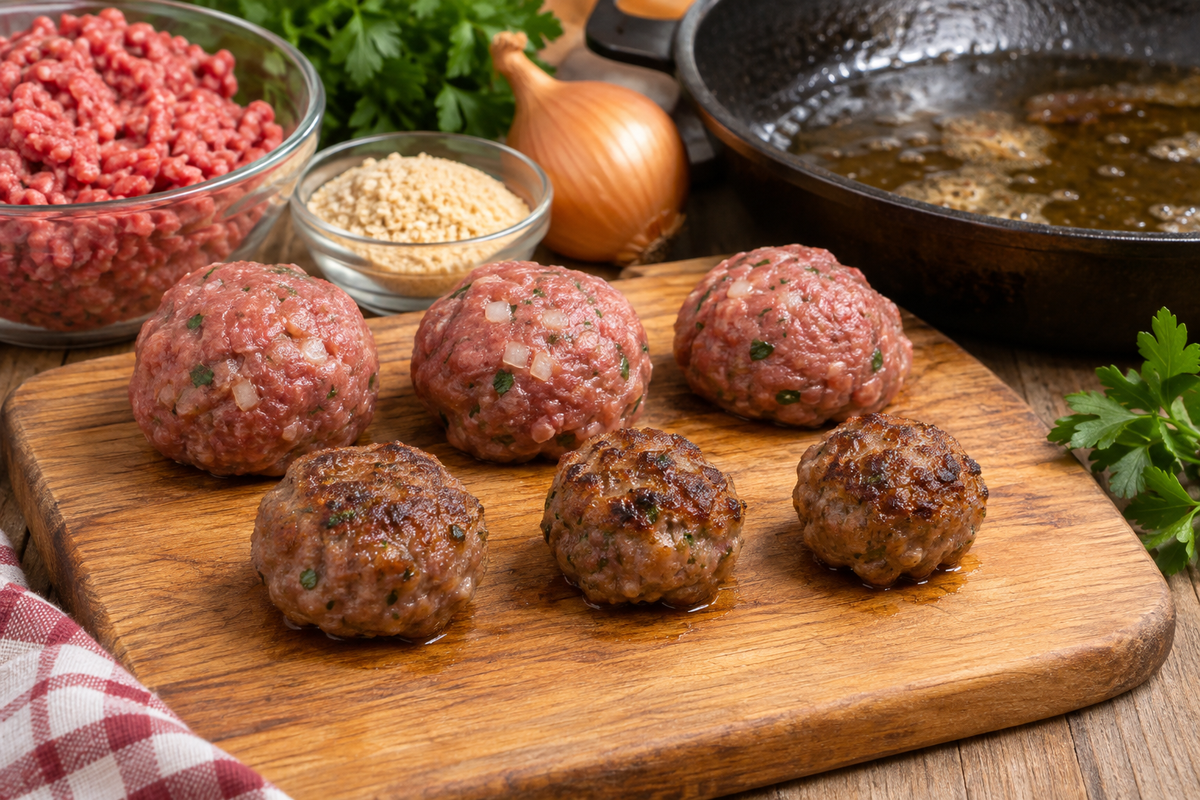
Meatballs shrink during cooking because heat causes the proteins in ground meat to contract while some of the meat's moisture and fat are released. As the temperature rises, the structure of the muscle proteins changes, making the meat firmer and causing part of its liquid content to escape. In meatballs prepared with higher-fat ground meat, melted fat may also leave the mixture and collect in the pan. To reduce excessive shrinkage, the choice of meat, fat content, preparation of the mixture, meatball shape, and cooking temperature should all be considered.
A certain amount of shrinkage is a normal part of cooking meatballs. However, when there is a noticeable difference between their raw and cooked sizes, the ingredients and cooking method may need to be reconsidered. Excessively high heat, prolonged cooking, and an unsuitable fat ratio can increase moisture loss and reduce the size of the finished meatballs. The objective should not be to prevent every change in size, but to achieve a properly cooked meatball with a balanced texture.
In addition to the ground meat itself, the proportions of the other ingredients can influence the result. Onions, bread, breadcrumbs, eggs, and spices are used in different meatball recipes. Each ingredient affects the moisture content, binding properties, and structure of the mixture. For example, a mixture containing excessive free moisture may lose a considerable amount of liquid during cooking. Overworking the mixture can also produce a firmer texture.
The cooking method is another important factor. Meatballs prepared in a frying pan, on a grill, or in the oven are exposed to different heating conditions. When meatballs are cooked at very high temperatures for too long, their surfaces may tighten quickly while moisture continues escaping from the interior. Choosing an appropriate temperature for the thickness of the meatballs and avoiding unnecessary cooking time can help limit excessive shrinkage.
What Causes Meatballs to Shrink During Cooking?
The primary reason meatballs shrink during cooking is the structural change that occurs in meat proteins when exposed to heat. Muscle proteins contract as the temperature increases, causing the meat to become firmer and more compact. During this process, some of the water held within the meat is released. As moisture escapes, the weight and volume of the meatballs can decrease. This is why some shrinkage should be expected even when meatballs are prepared correctly.
Fat content also contributes to changes in size. During cooking, some of the fat in ground meat melts and may flow out of the meatballs. When higher-fat meat is used, more rendered fat may collect in the pan. However, shrinkage cannot be explained by fat content alone. Meatballs prepared from lean ground meat can also become smaller because of protein contraction and moisture loss.
Cooking temperature and duration can increase the amount of shrinkage. When meatballs are exposed to excessive heat for an extended period, they may lose more moisture than necessary. Thin meatballs cook relatively quickly and can become dry if left on the heat too long. Thick meatballs, on the other hand, may require additional time for the center to reach a safe temperature. The cooking method should therefore be adjusted to the thickness of each portion.
The shape of the meatballs also affects how shrinkage appears. Thick, rounded meatballs may become more compact as their proteins contract. The edges can pull inward while the center becomes slightly raised. This change is particularly noticeable in hamburger patties. Forming pieces with a similar thickness and, in certain recipes, making a shallow indentation in the center can help reduce uneven shape changes during cooking.
How Do Ground Meat Selection and Fat Content Affect Meatball Shrinkage?
The choice of ground meat influences how meatballs behave during cooking. Meat structure, fat content, and the degree of grinding affect how well the mixture holds together and how much moisture is released when heated. Meatballs made from ground beef, ground lamb, or a combination of meats may therefore produce different textures and degrees of shrinkage. The meat should be selected according to the intended recipe.
Ground meat with a higher fat content may release more melted fat during cooking. This can contribute to a reduction in the finished meatball's weight and size. However, choosing extremely lean meat does not automatically produce a better result. Lean meatballs can become particularly firm and dry when overcooked. The aim is to achieve a suitable balance between meat structure, fat, moisture, and flavor.
Many traditional homemade meatball recipes use ground meat with a moderate fat content. Richer mixtures may be preferred for certain grilled meatballs, depending on the desired texture. Nevertheless, no single fat percentage can guarantee that meatballs will not shrink. Cooking temperature, preparation technique, additional ingredients, and meatball thickness all affect the final result.
Proper handling and storage of ground meat are equally important. Ground meat is a perishable product and should be kept refrigerated until preparation. If frozen ground meat is used, it should preferably be thawed in the refrigerator rather than left at room temperature for an extended period. Using properly stored ingredients supports food safety and makes the preparation process more controlled.
What Should Be Considered When Preparing the Meatball Mixture?
When preparing a meatball mixture, the proportions of ground meat and additional ingredients should be balanced. Onions, bread, breadcrumbs, eggs, and spices may be included depending on the recipe. Each ingredient influences how the mixture binds together and retains moisture. For example, using a large amount of grated onion can introduce considerable liquid into the mixture. Some of this moisture may escape during cooking, affecting the size and consistency of the meatballs.
Grated onion should be added in a quantity appropriate for the recipe. If the onion releases excessive liquid, removing some of the free moisture may make the mixture easier to shape. However, the onion does not need to be completely dry. The objective is to preserve its flavor without making the meatball mixture unnecessarily wet. Large onion pieces may also interfere with shaping and produce an uneven texture.
Bread or breadcrumbs can help bind the ingredients and absorb some of the moisture in certain meatball recipes. However, excessive amounts may create a dense, bread-like consistency that reduces the characteristic texture of the meat. Eggs can also serve as a binding ingredient, particularly in recipes containing several additional components. Nevertheless, eggs are not necessary for every meatball preparation. Ingredient choices should reflect the specific style of meatball being made.
The amount of mixing also influences the final texture. Ingredients should be combined until they are evenly distributed throughout the ground meat. However, prolonged and forceful kneading can develop a firmer structure, particularly in traditional homemade meatballs. Once the mixture is sufficiently combined, it should be divided into portions of similar weight and thickness. Uniform portions make cooking times easier to control.
Depending on the recipe, shaped meatballs can be refrigerated briefly before cooking. Resting may help the mixture become firmer and maintain its shape. However, raw meatballs should not be left at room temperature for extended periods. Before cooking, their sizes and thicknesses should be checked. Pieces that differ significantly in size may cook unevenly, causing some meatballs to lose more moisture than others.
What Can Be Done During Cooking to Prevent Meatballs from Shrinking Too Much?
To limit excessive meatball shrinkage, the cooking temperature should be carefully controlled. A frying pan or grill should be sufficiently preheated to develop a browned surface without burning the exterior too quickly. Cooking over very low heat may extend the preparation time and make browning more difficult. The appropriate temperature depends on the thickness of the meatballs and the cooking equipment being used.
Meatballs should not be turned constantly or pressed firmly with a spatula during cooking. Pressing them can force additional moisture and fat out of the meat, contributing to a drier texture and greater weight loss. It is generally better to allow one side to brown sufficiently before turning the meatballs carefully. Gentle handling also helps them maintain their original shape.
Consistent thickness is another important consideration. Very thin meatballs can cook quickly and lose moisture if left on the heat for too long. Thick meatballs need more time for their centers to cook completely. For hamburger patties, making a shallow indentation in the middle before cooking may help reduce excessive bulging and uneven changes in shape.
Although unnecessary overcooking should be avoided, ground meat must still reach a safe internal temperature. Meatballs made from ground beef or lamb should reach at least 71°C (160°F) at their center. Meatballs made from ground chicken or turkey should reach at least 74°C (165°F). A food thermometer provides a more reliable way to check doneness than judging the interior solely by its color.
Once the meatballs have reached the required internal temperature, they should be removed from the hot cooking surface to avoid unnecessary additional cooking. A short resting period before serving may help the finished meatballs maintain a more even texture. However, resting does not replace reaching the necessary cooking temperature.
Selecting suitable ground meat, balancing the mixture, forming uniformly sized portions, and controlling the cooking process can help reduce excessive shrinkage. Nevertheless, some reduction in size is a natural result of the structural changes that occur when ground meat is heated. The most practical goal is to limit unnecessary moisture loss while achieving meatballs that are properly cooked and have the desired consistency.