
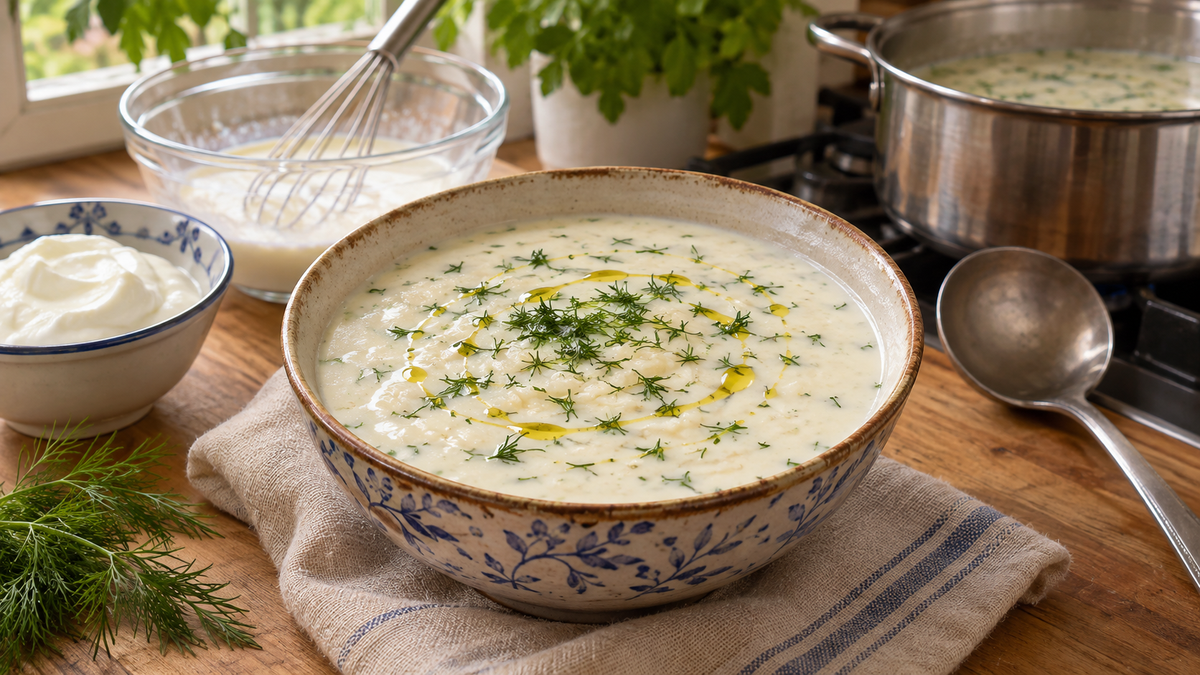
Yogurt soup curdles when the yogurt mixture is exposed to sudden temperature changes, added directly to boiling liquid, or heated too aggressively. The proteins in yogurt can clump together under high heat, forming small white particles that interrupt the soup's smooth, creamy texture. To prevent yogurt soup from curdling, the yogurt mixture should be prepared until smooth, gradually tempered with hot soup, and slowly incorporated into the pot while stirring.
Yogurt-based soups are an established part of traditional Turkish cooking. Popular variations include yayla soup with rice, yogurt soup with wheat, and other preparations using grains or vegetables. Although their basic preparation methods are similar, the proportions of yogurt, thickening ingredients, and cooking times can differ. These variations affect how the yogurt mixture should be incorporated into the soup.
The consistency of the yogurt also plays an important role. Very thick yogurt may be difficult to distribute evenly if it is not whisked before use. A mixture that contains lumps of flour or poorly combined ingredients may develop an uneven appearance when heated. Preparing the yogurt mixture carefully before adding it to the pot helps produce a more consistent result.
Temperature control remains important after the yogurt has been added. The soup should not be subjected to prolonged vigorous boiling, particularly once the ingredients have reached the desired consistency. Gentle heating, gradual tempering, and appropriate ingredient proportions can help preserve the soup's appearance and texture.
What Mistakes Cause Yogurt Soup to Curdle?
One of the most common mistakes is pouring cold yogurt directly into boiling soup. The considerable difference in temperature can cause yogurt proteins to clump rapidly, creating visible white particles throughout the liquid. This risk may become more noticeable when yogurt is used immediately after being removed from the refrigerator. Gradually warming the yogurt mixture with hot soup before combining the ingredients helps reduce the temperature difference.
Another mistake is keeping the heat too high after adding the yogurt. Continuous vigorous boiling can encourage further protein aggregation and cause the soup to develop a grainy texture. Once the yogurt mixture has been incorporated, the heat should be controlled to allow gentle cooking. Regular stirring is particularly useful when using a thin-bottomed saucepan, where the bottom can become much hotter than the surrounding liquid.
Insufficient mixing can also produce an uneven texture. If yogurt, flour, and egg are not properly combined, small lumps may remain in the mixture before it is added to the soup. These lumps can become more noticeable during heating. For this reason, yogurt should first be whisked until smooth, followed by the other ingredients, which should be incorporated gradually.
The natural acidity and composition of yogurt can influence its behavior when heated. A particularly tangy yogurt does not necessarily curdle, but acidity, protein composition, and fat content can affect the final consistency. Yogurt that has spoiled or been stored improperly should never be used. Preventing curdling depends primarily on using suitable ingredients and controlling the temperature throughout preparation.
How Should the Yogurt Mixture for Soup Be Prepared?
The yogurt mixture for Turkish yogurt soup is commonly prepared with yogurt, flour, and sometimes an egg or egg yolk. However, eggs are not required in every recipe. Certain preparations use only yogurt and flour, while others include additional thickening ingredients. The main objective is to combine the ingredients in the proportions specified by the recipe and obtain a smooth mixture before it comes into contact with hot soup.
A medium-sized mixing bowl provides enough space to whisk the ingredients thoroughly. The yogurt should first be stirred until its texture becomes uniform. Flour can then be added gradually while whisking to prevent lumps. If the recipe includes an egg or egg yolk, it should also be incorporated carefully. When the mixture is excessively thick, a small amount of cold water may be added if the recipe allows it.
Flour helps thicken many yogurt soup recipes and can contribute to a more stable consistency. However, using too much flour may make the soup overly dense or leave an obvious flour flavor. Egg yolk can also help create a more cohesive mixture, but it may coagulate if heated too quickly. Increasing the amounts of these ingredients without adjusting the recipe is therefore not advisable.
If the prepared mixture still contains lumps, it can be passed through a fine-mesh strainer. This helps create a smoother base, but straining alone does not prevent curdling. The mixture must still be tempered before it is added to the hot soup. Small amounts of hot liquid should be whisked into the yogurt mixture gradually, allowing its temperature to rise without sudden changes.
When and How Should the Yogurt Mixture Be Added to Soup?
The yogurt mixture should generally be added after the main ingredients, such as rice or wheat, have become sufficiently tender. Adding yogurt too early may require the soup to remain over the heat for an unnecessarily long period. This can increase the likelihood of curdling. In recipes containing grains that need extended cooking, it is better to complete most of their cooking before incorporating the yogurt mixture.
Tempering begins by taking a small ladle of hot liquid from the soup and slowly pouring it into the yogurt mixture while whisking continuously. Another small amount can be added once the first addition has been fully incorporated. This gradually reduces the temperature difference between the two mixtures. Pouring a large quantity of boiling liquid into cold yogurt all at once should be avoided.
Once tempered, the yogurt mixture can be poured into the soup in a thin, steady stream. The soup should be stirred gently throughout this process to help the ingredients combine evenly. The heat should remain controlled rather than being set to its highest level. A whisk or suitable cooking spoon can be used to prevent the mixture from collecting in one area of the pot.
After the yogurt has been added, the soup should be heated gently until the required consistency is reached and any flour or egg ingredients are properly cooked. Prolonged vigorous boiling is unnecessary. Depending on the recipe, a topping made with butter or oil and dried mint can be prepared separately and added before serving. This allows the flavor to be completed without repeatedly reheating the yogurt-based soup.
How Can You Fix Curdled Yogurt Soup?
If yogurt soup has curdled, the first step is to remove it from high heat to prevent further protein coagulation. When only small white particles are visible, gentle whisking may improve the appearance. For certain smooth soups, a hand blender operated briefly at low speed can help break up the particles. However, blending does not reverse the changes that occurred in the yogurt proteins. It only makes the curdled pieces smaller and less noticeable.
Whether a blender is appropriate depends on the other ingredients in the soup. If the recipe contains rice or whole grains, prolonged blending can break them apart and significantly change the intended texture. In these cases, briefly whisking the soup may be preferable. Minor curdling can sometimes become less noticeable without turning the entire dish into a puree.
If the soup has also become excessively thick, a small amount of warm liquid can be added when appropriate for the recipe. The quantity should be controlled because adding too much liquid may weaken the flavor. Adding dry flour directly to the finished soup is not a suitable solution, as it may produce new lumps. Additional thickeners cannot automatically restore proteins that have already coagulated.
Whether curdled yogurt soup is suitable for consumption depends on the reason it curdled. Small particles caused solely by excessive heating do not necessarily indicate spoilage. However, soup prepared with spoiled yogurt or stored under unsuitable conditions cannot be made safe simply by blending or reheating. The most reliable approach is to prevent the problem through careful preparation, gradual tempering, and controlled cooking temperatures.