
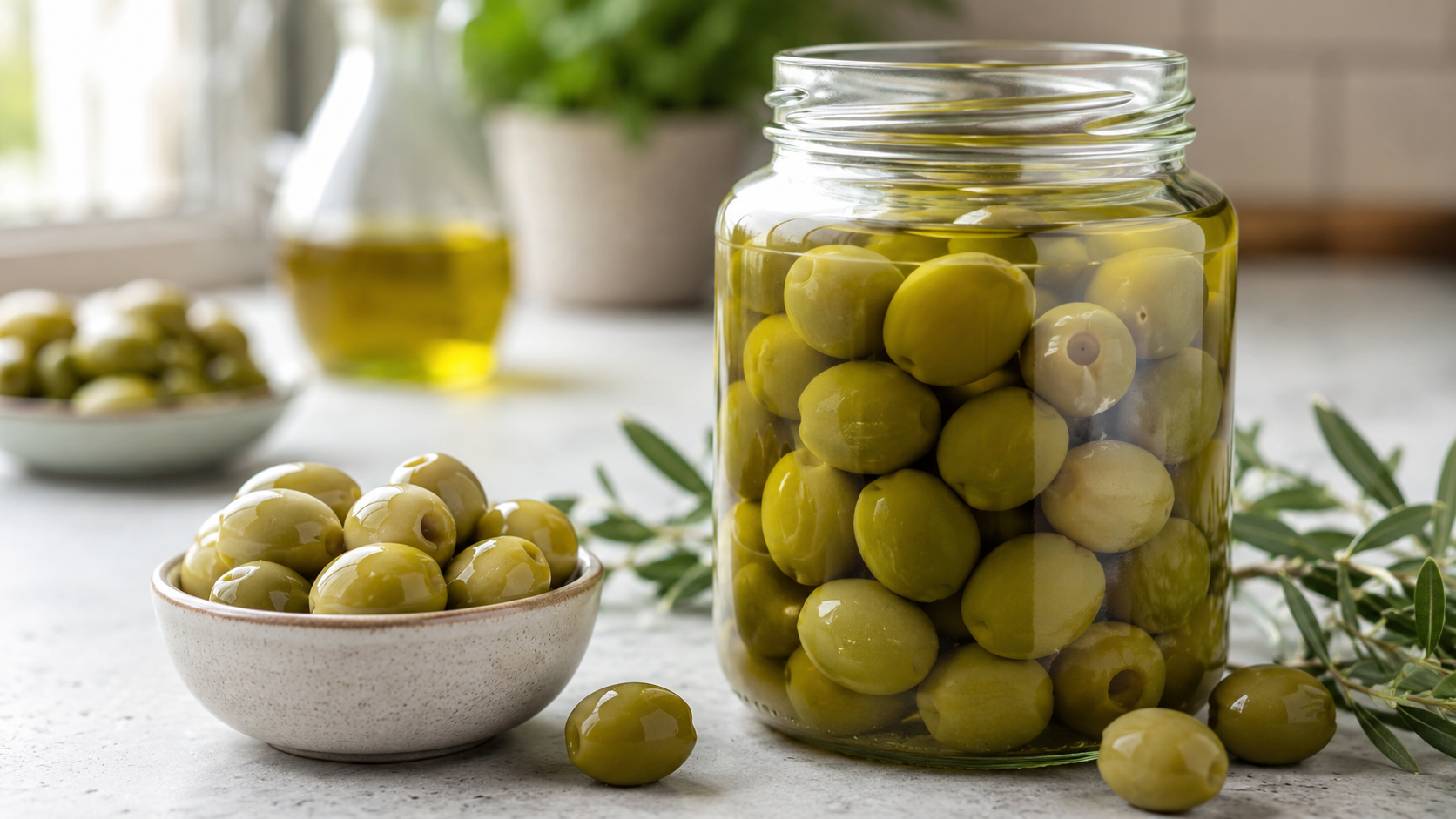
Why green olives become soft and how to tell is a common question when olives lose their firm texture after opening or when changes appear in their brine. Green olives can change texture depending on the brine, salt ratio, storage temperature, air exposure and the way they are handled. If proper conditions are not maintained, the olives may become softer, easier to crush or duller in appearance over time.
The softening of green olives does not always come from a single cause. A lower brine level, frequent opening of the jar, olives remaining above the liquid, warm storage conditions or the use of unclean serving utensils can all affect the process. Once the jar has been opened, the surface of the olives becomes more exposed to external factors. This makes storage and serving habits especially important.
Green olive pieces may naturally have different textures depending on variety, processing method and size. Some green olives are firmer and fleshier, while others are softer from the beginning. For this reason, not every soft texture should be viewed as a problem. The important point is whether there is a clear texture change compared with the product’s original condition.
When evaluating softened green olives, texture alone is not enough. Smell, appearance, brine colour, surface condition and storage history should all be checked together. This helps identify whether the softness comes from the natural structure of the product, storage conditions or handling mistakes. A combined evaluation gives a clearer result.
What Are the Main Factors That Cause Green Olives to Become Soft?
One of the main factors that causes green olives to become soft is a change in brine balance. Olives are stored in a certain liquid and salt structure. After the jar is opened, this balance can gradually change. If the olives are not fully covered by the brine, their surface may be affected more quickly and they may lose their original firmness.
Air exposure can also speed up texture changes. Frequent opening of the jar, a lid that is not closed tightly or olives left uncovered for a long time can affect the surface. Olives exposed to air may become duller, change colour or soften in certain areas. The jar should therefore be closed tightly after each use.
Temperature changes are another important factor. In warm environments, the brine structure may change more quickly. Areas near a stove, oven, sunny window or long periods at room temperature on the table can increase this effect. Opened olive jars should be stored according to the conditions stated on the product label.
Handling mistakes can also contribute to softening. If olives are taken from the jar with a spoon or fork that is not clean, or with a utensil that has touched other foods, foreign particles may enter the brine. This can affect the structure of the liquid and the surface of the olives. Clean and dry serving utensils should always be used.
How Do Brine and Storage Conditions Affect the Texture of Green Olives?
Brine is one of the most important elements that helps preserve the texture of green olives. When the olives remain properly covered by the brine, their surface is better protected. If the liquid level drops as olives are removed from the jar, the pieces on top may remain exposed. These olives may soften faster, look duller or show surface changes.
The salt ratio also affects the function of the brine. If the salt ratio is too low, the texture of the olives may change more quickly. A very strong brine, however, can affect taste and overall use. This is why brine balance matters not only for flavour but also for preserving texture. In opened jars, the brine level and condition should be checked regularly.
Storage temperature can directly affect the brine balance. Green olives stored in cool and suitable conditions may retain their firm texture for longer. In warmer environments, the colour, smell and appearance of the brine may change more quickly. This can also affect the texture of the olives. Storage conditions become especially important during warmer months.
The cleanliness of the jar and the condition of the lid also matter. If the lid does not close properly, if product residue builds up around the rim or if brine spills frequently, the structure of the contents may be affected. Keeping the jar rim clean, closing the lid tightly and keeping the olives inside the brine help maintain their texture.
How Can Softened Green Olives Be Recognised by Appearance, Smell and Texture?
Softened green olives can often be recognised first by their texture. If olives that are normally firm are easily crushed with light pressure or if the area around the pit feels loose, a texture change may have occurred. However, it should be remembered that not every green olive variety has the same firmness. The product should be compared with its original condition.
Appearance is also an important control point. Excessive dullness, wrinkling, clear colour changes or olives that begin to break apart may be seen together with softening. If the brine looks unusually cloudy, if an unexpected layer appears on the surface or if heavy residue collects at the bottom of the jar, the product should be examined more carefully.
Smell can also help evaluate the condition of green olives. Green olives and their brine have a characteristic smell. However, if this smell becomes clearly different from the usual character, the overall condition of the product should be assessed, not only the soft texture. Smell, appearance and texture should be checked together.
Softness alone may not be enough for a clear judgement. Some olives are naturally softer, while others lose firmness during storage. For this reason, the texture of the olives, the appearance of the brine, the storage history and the smell should all be evaluated together. This makes it easier to understand whether the softness is normal for the product or related to storage conditions.
What Should Be Considered to Preserve the Texture of Green Olives?
To preserve the texture of green olives, the pieces should remain covered by brine as much as possible. As olives are removed from the jar, the liquid level may drop and the upper pieces may remain exposed. This can affect their surface and texture. Keeping the olives covered with liquid helps maintain a more even texture.
The jar should be closed tightly after every use. Leaving the lid open or loosely closed increases air exposure. This can lead to surface changes in the olives. Brine or olive pieces left around the rim should be cleaned so the lid can close properly. This simple habit supports better storage.
Clean and dry serving utensils should always be used when taking olives from the jar. A spoon or fork that has touched other foods should not be placed inside the jar. Otherwise, residues may change the structure of the brine and cause the olives to soften more quickly. Clean serving is one of the most important habits for opened olive jars.
The storage area should also be chosen carefully. Opened green olives should be stored according to the conditions stated on the product label. Warm, sunny or frequently changing environments should be avoided. When the brine level, smell, appearance and texture are checked from time to time, green olives can maintain a more balanced texture during use.