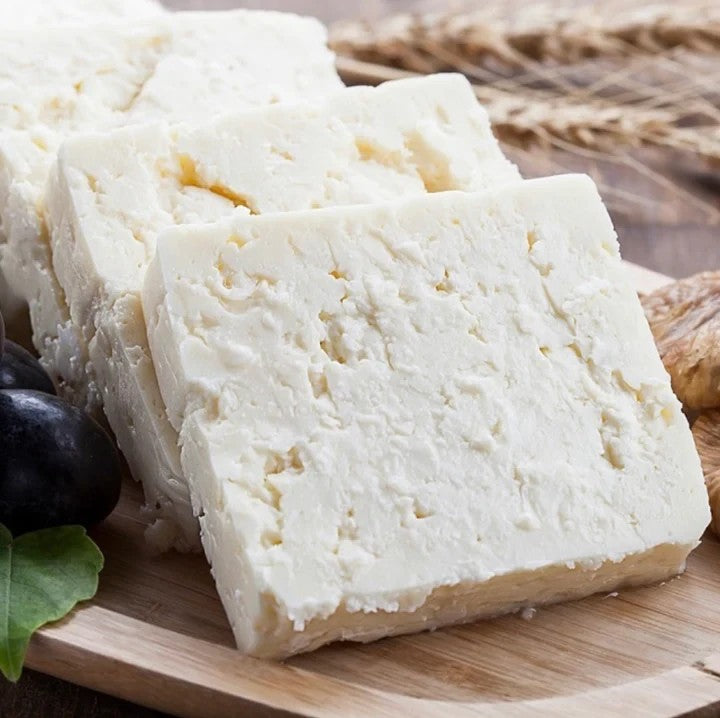

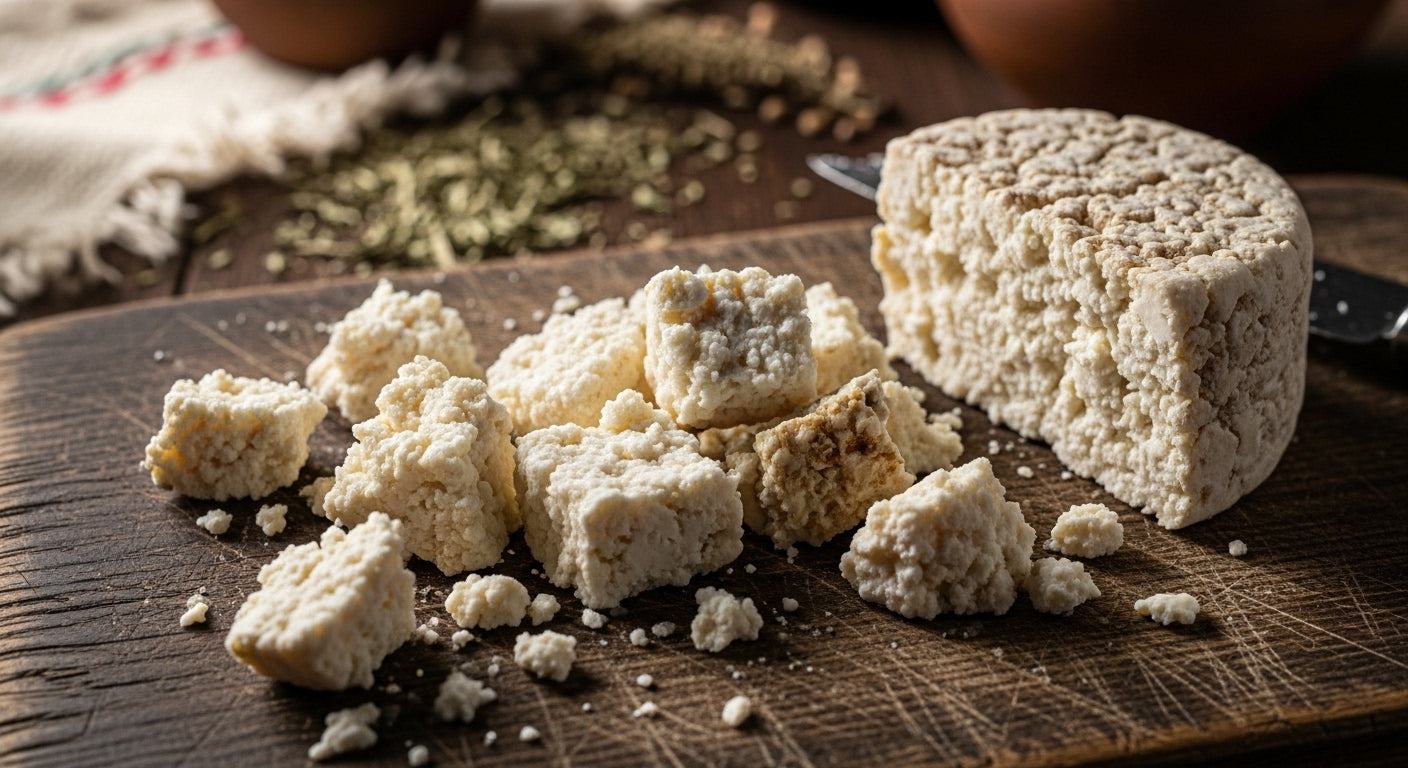
Tulum cheese has a structure that clearly differs from many other types of cheese due to its production method and maturation process. Instead of being firm and elastic, it is known for its drier, fibrous, and crumbly texture. This characteristic is directly related to the techniques used during production and the natural properties of the raw materials. Especially in traditionally produced tulum cheeses, this structure is more noticeable.
The crumbly texture results from the fact that tulum cheese is not tightly pressed and develops a more porous internal structure. Unlike cheeses with an elastic consistency, tulum cheese forms a structure that breaks apart more easily. This also affects how it is consumed, as it is typically crumbled rather than sliced.
During the maturation process, the internal structure of the cheese changes and its moisture content decreases. This leads to a drier and more fragile texture over time. In cheeses that are aged longer, this effect becomes even more pronounced. Therefore, the crumbly nature is largely a natural outcome of the production process.
This structure does not arise from a single factor. The composition of the milk, production technique, maturation period, and storage conditions must all be considered together. The characteristic texture of tulum cheese is formed through the combination of these factors and may vary slightly between different productions.
How Does the Production Process Shape the Structure of Tulum Cheese?
The production process is the foundation of tulum cheese’s structure. The milk used is first coagulated and then processed through specific stages. Unlike many other cheese types, the curd is not heavily pressed. This results in a looser internal structure.
The way the curd is broken also affects the final texture. Smaller curd pieces create a more irregular internal structure. This irregularity contributes to the crumbly nature of the cheese. The amount of pressure applied during production is also a determining factor.
In tulum cheese production, low pressure is typically applied, and in some traditional methods, pressing is minimal or absent. This allows small gaps to remain within the cheese, making it easier to crumble.
The more traditional the production method, the more pronounced the natural structure becomes. In industrial production, however, this texture can be controlled to some extent.
Why Does Tulum Cheese Develop a Crumbly Texture?
The crumbly texture is directly related to moisture content and protein structure. Tulum cheese generally contains less moisture compared to many other cheeses. This results in a drier texture, which increases its tendency to crumble.
Protein structure also plays an important role. The proteins within the cheese form a firm but non-elastic structure. As a result, the cheese does not stretch when cut but instead breaks apart.
As the maturation process continues, this characteristic becomes more noticeable. The reduction in moisture content makes the cheese increasingly fragile. This is why aged tulum cheese crumbles more easily.
Storage conditions may also influence this feature. If the cheese dries out more quickly due to environmental conditions, the level of crumbling may increase. However, the primary cause remains the production and maturation process.
How Does the Texture of Tulum Cheese Change Over Time?
The texture of tulum cheese changes over time. In the early stages, it may have a slightly higher moisture content and a more cohesive structure. As maturation progresses, the moisture content decreases and the texture becomes drier.
This change makes the cheese more fragile. The outer surface may become firmer, while the inside becomes easier to break apart. This also affects how the cheese is handled and consumed.
The maturation process influences not only the flavor but also the texture. Longer aging results in a more distinct crumbly structure. Different maturation levels therefore produce different textures.
These changes are part of the natural development of the cheese. The variation in texture over time is a continuation of the production process rather than a defect.
What Factors Influence Structural Differences in Tulum Cheese?
Structural differences in tulum cheese depend on several factors. The type of milk used is one of the most important. Different milk compositions can lead to different textures.
Production techniques also play a significant role. Traditional methods and modern industrial processes can result in noticeable differences in both structure and crumbling behavior.
The maturation period is another key factor. Longer aging leads to a drier and more fragile structure, while shorter aging results in a softer texture.
Finally, storage conditions influence the final structure. Cheese stored in different environments may develop different textures over time. Therefore, tulum cheese does not have a fixed structure but rather a variable one.