
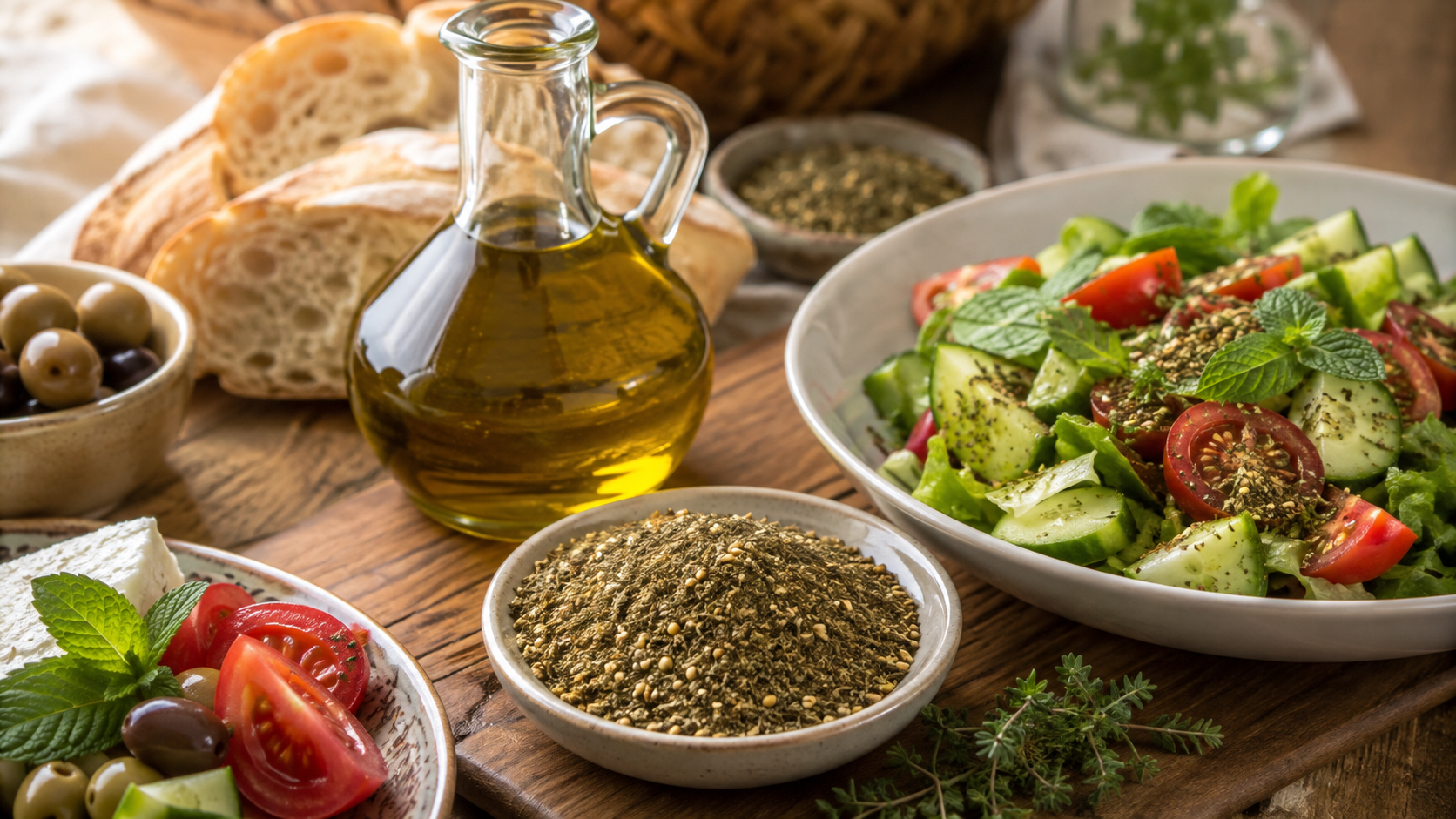
Zahter is a traditional product that can be enjoyed with olive oil at breakfast and used as an aromatic spice blend in salad recipes. Since it may contain different herbs and spices depending on the blend, it creates a strong aroma even on its own. For this reason, the amount, accompanying ingredients, and serving style should be chosen carefully.
At breakfast, zahter is usually served with olive oil. Bread can be dipped first into olive oil and then into zahter. This creates a simple and traditional serving style. In salads, zahter can be added directly as a seasoning or mixed with olive oil, lemon juice, and pomegranate molasses to create a dressing.
Because zahter has an intense aroma, it should not be used in large amounts in every recipe. Especially in salads, it should not completely cover the taste of greens, tomatoes, cucumbers, cheese, or olives. At breakfast, a more balanced table can be prepared by serving it with simple items such as cheese, olives, and bread.
The way zahter is used may change depending on the structure of the blend. Finer blends mix more easily with olive oil, while coarser blends can add more texture to salads and bread-based servings. For this reason, the type of zahter should be considered depending on whether it will be used as a dip, dressing, or direct seasoning.
How Is Zahter Served at Breakfast?
Zahter is most commonly served at breakfast in a small plate or bowl with olive oil. Olive oil can be served separately, or zahter can be mixed directly into it. When eaten with bread, bazlama, lavash, or simit, it adds an aromatic flavor to the breakfast table. This presentation is simple but effective.
If zahter is served at breakfast, the other products on the table should also be considered. Very spicy sauces, strongly flavored cheeses, or very salty products may create an overly intense taste when served with zahter. Milder cheese, olives, tomatoes, cucumbers, and fresh greens create a more balanced combination.
The serving amount is also important. A small bowl of zahter is usually enough for several people. Serving too much may create unnecessary intensity on the table. If zahter is mixed with olive oil, it should be stirred gently before use because the spice particles may settle at the bottom over time. This helps create a more even aroma in each bite.
On a breakfast plate, zahter can be served in a separate section. Especially when cheese, olives, and dried tomatoes are on the same plate, zahter should not be sprinkled directly over all ingredients. Keeping it separate allows each person to adjust the amount according to taste. This creates a cleaner and more practical breakfast service.
How Is Zahter Consumed with Olive Oil?
Eating zahter with olive oil is one of its best-known uses. In this presentation, olive oil softens the spicy and herbal aroma of zahter. Bread is first dipped into olive oil and then touched to zahter. In some presentations, zahter is mixed directly into olive oil. Both methods can be used, but the balance of amount is important.
If zahter is mixed with olive oil before serving, the mixture should not be too thick. Too much zahter can make the mixture dry and heavy. Too much olive oil can weaken the spice flavor. For a more balanced result, it is better to start with a small amount of zahter and add more during serving if needed. This allows the mixture to be prepared more carefully.
The choice of bread also affects the serving. Thin lavash, toasted bread, bazlama, or fresh bread slices are suitable for this use. Very oily or strongly flavored pastries may push the taste of zahter into the background. Simpler bread varieties allow the aroma of zahter and olive oil to be felt more clearly.
The products served alongside this combination should also remain simple. Cheese, olives, tomatoes, and cucumbers can accompany zahter with olive oil. However, if the table already includes many heavily spiced products, the overall taste may become too intense. Zahter should add an aromatic touch to breakfast without overpowering the rest of the table.
How Is Zahter Used in Salad Recipes?
Zahter can be used directly as a seasoning in salad recipes. It can create a different aroma layer when added in small amounts to green salads, tomato salads, cheese salads, or olive oil-based plates. Since zahter is a strong blend, using too much can cover the fresh taste of the salad. For this reason, a measured amount is usually more suitable.
In salad dressings, zahter can be mixed with olive oil and lemon juice. In salads that include pomegranate molasses, a small amount of zahter can add an additional spice layer. However, if lemon, pomegranate molasses, and spices are all used too heavily, the dressing may become too strong. For a balanced dressing, olive oil and the acidic ingredient should be mixed first, and zahter should be added gradually at the end.
Zahter can pair well with tomatoes, cucumbers, greens, onions, and cheese in salads. In cheese-based salads, the salt level should be considered because both cheese and zahter may have a noticeable taste. Before adding extra salt, the salad should be tasted. This helps prevent the salad from becoming too salty or too heavily seasoned.
If zahter will be used in a salad, it is better to add it shortly before serving. When added too early, the spice blend may combine with the salad juices and settle at the bottom, or it may form an uneven layer on the greens. Lightly mixing it before serving helps distribute the zahter more evenly. This gives a cleaner result in both aroma and appearance.
How Is Aroma and Spice Balance Set When Using Zahter?
When using zahter, aroma balance is directly related to the amount used and the ingredients served with it. Zahter is already a strong spice blend, so it should be combined carefully with extra spices. If too much red pepper flakes, thyme, mint, or black pepper is used in the same recipe, the flavor may become crowded. Zahter can often be treated as the main seasoning.
At breakfast, the amount of olive oil helps soften the aroma. If too little olive oil is used, zahter may feel dry and intense. If too much oil is used, the spice flavor may become weak. To set the balance, small amounts of zahter and olive oil can be mixed first, then adjusted at the table if needed. This also allows each person to decide the preferred intensity.
In salads, aroma balance is more delicate. Fresh ingredients such as greens, tomatoes, cucumbers, and onions can balance the intensity of zahter. However, if cheese, olives, or pomegranate molasses are also included, the amount of zahter should be reduced. Otherwise, too many strong flavors may be felt at the same time.
The salt level should also be checked when using zahter. Some zahter blends may already contain salt. For this reason, the salad or breakfast mixture should be tasted before adding extra salt. This becomes especially important when zahter is served with cheese, olives, or pickled products. Measured use helps the aroma of zahter remain clearer and more balanced.