
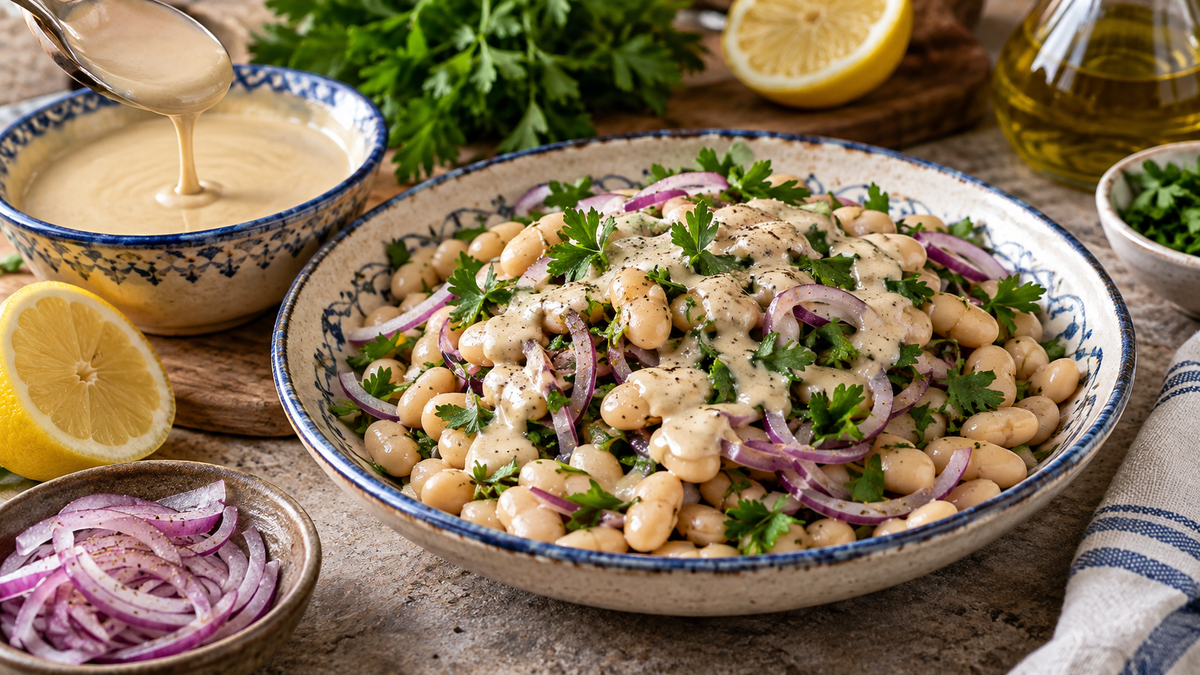
Tahini piyaz sauce is prepared by mixing tahini, lemon juice, vinegar, garlic, water, and spices in a balanced way. It is a creamy and dense sauce often used with piyaz made from boiled beans. The thick structure of tahini becomes smoother when opened with lemon, vinegar, and water, allowing it to coat the beans and other ingredients more evenly.
The most important points in this sauce are consistency and acidity balance. Tahini has a naturally thick and oily structure. When lemon juice and vinegar are added, the mixture may first become thicker. Then, with gradually added water, it turns into a smoother sauce. For this reason, the ingredients should not be added all at once, and the water amount should be adjusted slowly.
Garlic, salt, cumin, black pepper, or red pepper flakes can be used in tahini piyaz sauce. However, these additions should not overpower the tahini, lemon, and vinegar balance. The purpose of the sauce is to bring beans and other piyaz ingredients together with a smooth flavor base. A simple and balanced aroma usually gives a better result than heavy seasoning.
The prepared sauce can be used not only in classic piyaz but also in different salad and meze recipes. It pairs well with boiled beans, onion, parsley, tomato, and boiled egg. It can also be used on some vegetable plates or legume salads. When the consistency is adjusted correctly, it can be spooned easily and stay on the ingredients without running too much.
Which Ingredients Are Used for Tahini Piyaz Sauce?
The main ingredient of tahini piyaz sauce is tahini. Tahini gives the sauce its dense texture and characteristic flavor. The tahini used should be smooth and well mixed. Tahini can separate in the jar over time, with oil rising to the top and a thicker layer staying at the bottom. For this reason, it should be stirred thoroughly before use. A homogeneous tahini creates a smoother sauce.
Lemon juice and vinegar are the main acidic ingredients that balance the sauce. Lemon gives a fresher and more noticeable aroma, while vinegar adds a sharper taste. If both are used together, their amounts should be adjusted carefully. Too much lemon or vinegar can overpower the soft structure of tahini. Too little acidity can make the sauce feel heavy and flat.
Garlic is a common supporting ingredient in tahini piyaz sauce. Crushed or grated garlic mixes into the sauce more evenly. However, if too much garlic is used, it can dominate the main flavor. Starting with a small clove and increasing later if needed gives more control. If garlic is not used, the sauce stays simpler and more tahini-focused.
For seasoning, salt, cumin, black pepper, and red pepper flakes can be used. Cumin works especially well with legume dishes, so it can be added in a moderate amount. Red pepper flakes provide a light color and flavor transition. Spices should be added in small amounts so the main balance remains based on tahini, lemon, and vinegar.
How Is the Balance of Tahini, Lemon, and Vinegar Set?
The balance of tahini, lemon, and vinegar defines the character of tahini piyaz sauce. Tahini creates a dense and smooth base, while lemon and vinegar sharpen the flavor and make it more lively. If too much acidic ingredient is used, the tahini flavor may fall into the background. For this reason, lemon and vinegar should be added gradually, and the taste should be checked after each addition.
Lemon juice gives a softer and fresher transition. In piyaz sauce, it helps balance the dense structure of tahini. Vinegar creates a sharper and more defined effect. If a more classic piyaz flavor is desired, a small amount of vinegar can be used. When lemon and vinegar are used together, neither should dominate the other.
When tahini is mixed with lemon juice, the sauce may suddenly thicken. This is normal and comes from the structure of tahini. At first, the mixture may look uneven or too dense, but when water is added gradually, it opens up again and becomes smooth. Therefore, tahini, lemon, and vinegar should be mixed first, and water should be added afterward in small amounts.
The flavor of the beans and the other piyaz ingredients should also be considered. Onion, parsley, and tomato bring freshness and aroma to the dish. Therefore, the sauce should not be too sour or too heavy on its own. It should complete the ingredients when served over piyaz without covering their taste completely.
How Is the Consistency of Piyaz Sauce Adjusted?
The consistency of piyaz sauce should be neither too runny nor too thick. A very thick sauce can clump on the beans and fail to spread evenly. A very runny sauce collects at the bottom of the plate and does not coat the piyaz properly. The ideal texture is smooth, slowly flowing from the spoon, and able to stay on the ingredients.
Water should be added little by little while adjusting the consistency. After tahini, lemon, and vinegar are mixed, the sauce usually thickens. Adding too much water at once can make the sauce thinner than needed. Adding small amounts and mixing well gives more control. If the sauce becomes too thin, more tahini can be added, but then the acidity and salt should be checked again.
The ingredients should be mixed well to create a smooth sauce. A whisk, small wire whisk, fork, or spoon can be used. If garlic is added, it should be crushed or grated very finely. Large garlic pieces can disturb the texture of the sauce. Spices should also be mixed evenly so each spoonful has a similar flavor and consistency.
The prepared sauce may change consistency after resting. Tahini sauces tend to thicken as they sit. If the sauce is not used immediately, it should be stirred again before serving. If needed, a very small amount of water can be added. This small adjustment helps the sauce spread more evenly over the piyaz.
How Is Tahini Piyaz Sauce Used on Beans and Salads?
Tahini piyaz sauce is most often used on boiled white beans. The beans should not be very hot; they should be closer to room temperature before being combined with the sauce. Very hot beans can change the consistency of the sauce and cause the tahini to thicken faster. Warm or cooled beans allow the sauce to spread more evenly.
The sauce can be fully mixed with the beans or drizzled over the top during serving. When mixed completely, each bean is coated with the sauce, creating a more unified flavor. When drizzled on top, the sauce remains more visible and creates a cleaner presentation. For crowded tables, mixed piyaz can be more practical, while plated servings may look neater with sauce on top.
If onion, parsley, tomato, boiled egg, or olive oil are added to the piyaz, the amount of sauce should be adjusted accordingly. Too much sauce can cover the appearance of the ingredients. Too little sauce may not bring the beans together enough. It is better to add the sauce gradually and adjust if needed during serving.
Tahini piyaz sauce can also be used in some legume salads beyond bean piyaz. It can be prepared with a slightly thinner consistency for chickpeas, green lentils, or vegetable salads. However, when used in different recipes, the balance of lemon, vinegar, and water should be adjusted again. A consistency that works for beans may feel too heavy for some salads.