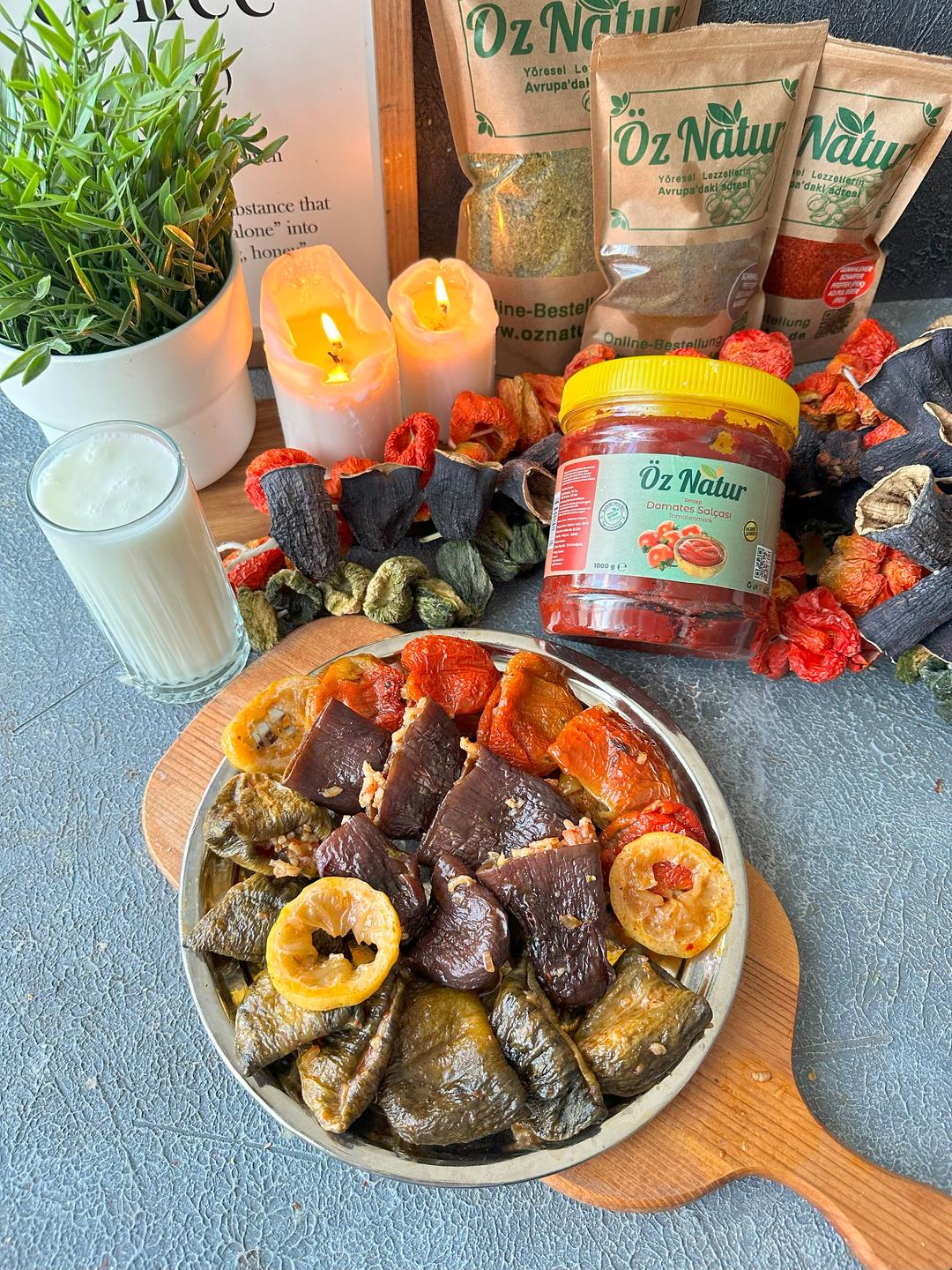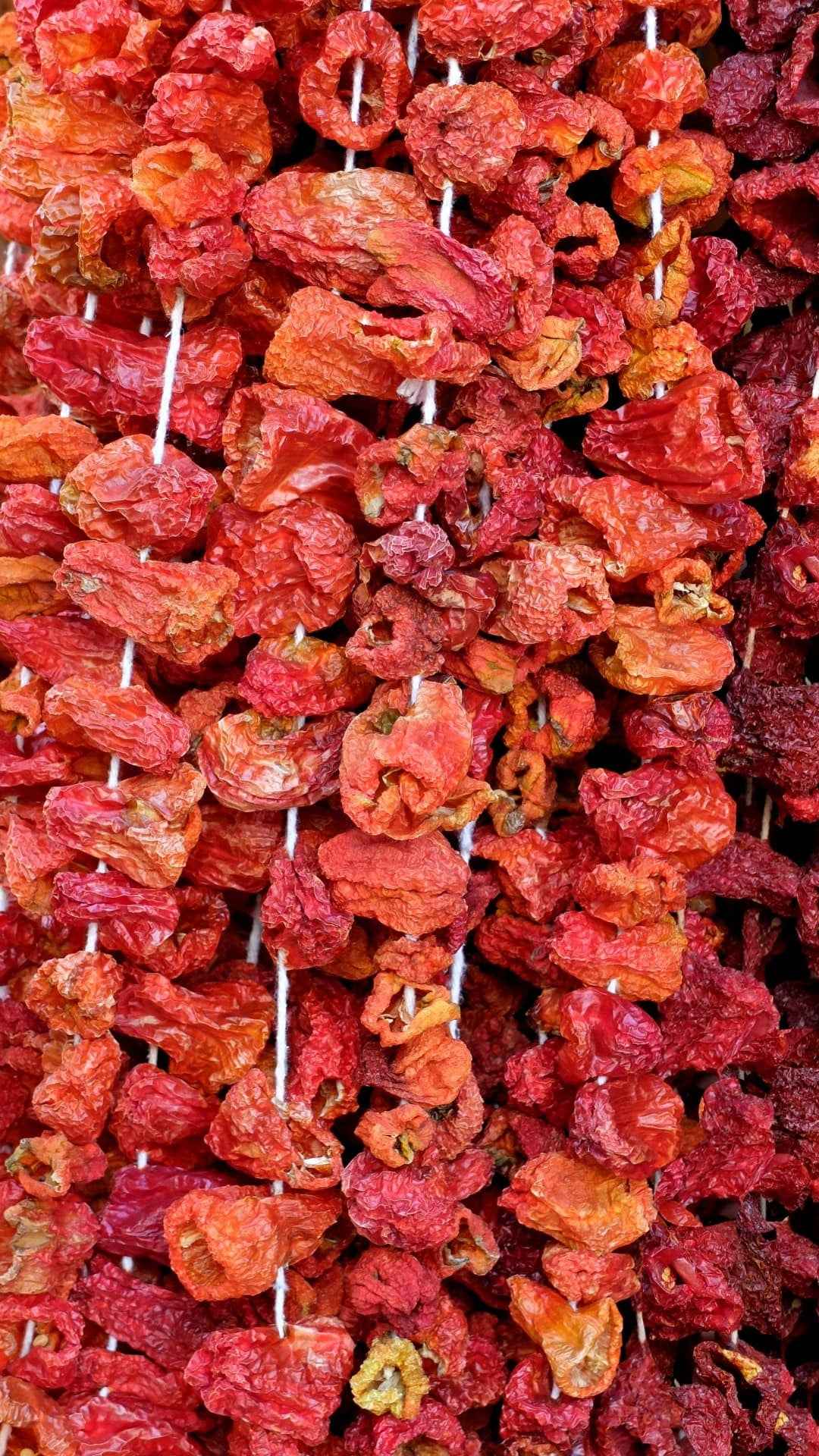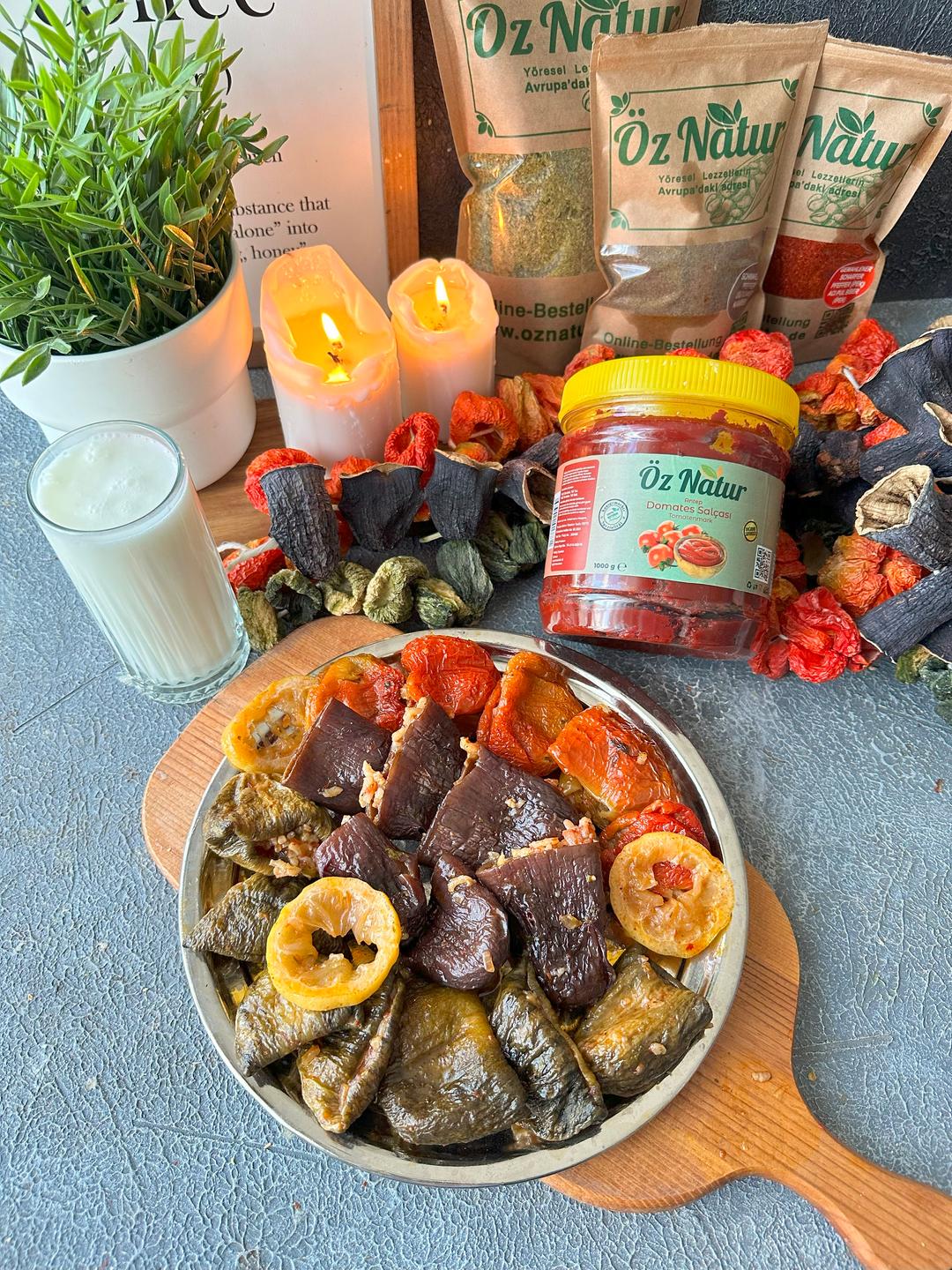

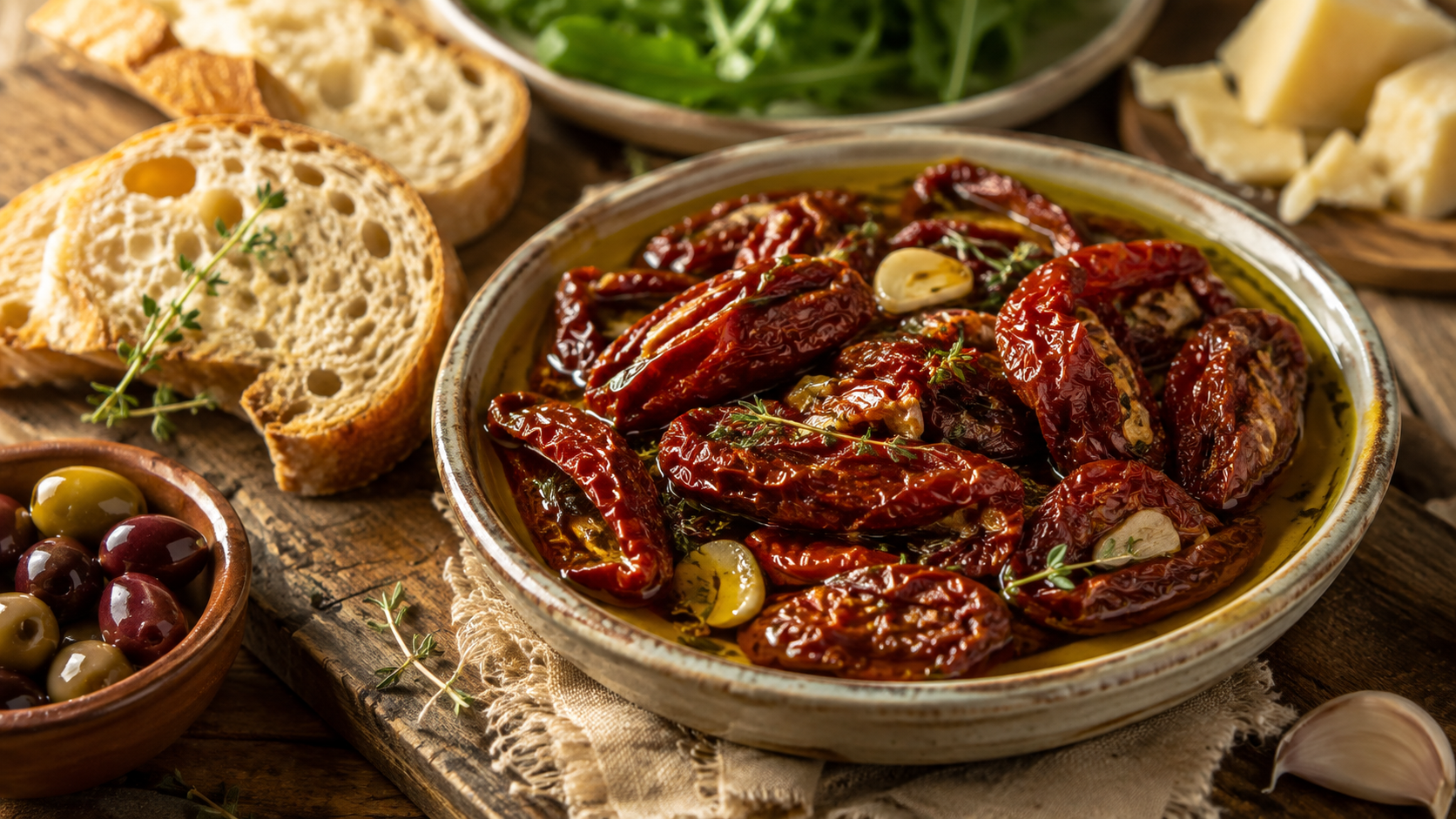
Dried tomato should be prepared properly before being served in olive oil, with its firmness and salt level balanced, then mixed with olive oil and suitable spices. Dried tomato has an intense aroma and a distinct texture, which makes it useful for breakfast plates, meze presentations, sandwiches, salads, and different table accompaniments. However, when served directly in its dry form, some varieties may be too firm or too salty.
When dried tomato is kept in olive oil, it gains a softer texture and becomes easier to serve. In this use, olive oil is not only a supporting ingredient but also an important element that carries the tomato’s aroma. When prepared with garlic, thyme, red pepper flakes, rosemary, walnuts, or different spices, it can become a richer breakfast item or meze option.
The most important point when serving dried tomato in olive oil is to avoid letting the ingredients overpower each other. Dried tomato already has a strong and noticeable flavor. If too much garlic, hot spice, or intensely flavored ingredients are added, the natural taste of the tomato may be pushed into the background. For this reason, the balance of olive oil and spices should be simple but complementary.
The serving style may change depending on the purpose. At breakfast, it can be served in a small bowl with olive oil. On a meze plate, it can be paired with cheese, olives, and bread varieties. In sandwiches and salads, it can be chopped and used in smaller pieces. When prepared correctly, dried tomato in olive oil becomes both a practical and visually appealing table product.
How Is Dried Tomato Prepared Before Being Served in Olive Oil?
Before dried tomato is served in olive oil, it should first be checked for firmness and salt level. Some dried tomatoes may be fairly soft, while others may be quite firm and salty. If the tomatoes are too firm, they can be soaked briefly in lukewarm water to soften. This helps them become easier to chew and allows them to blend better with olive oil.
After soaking, the dried tomatoes should be drained thoroughly. If they are added to olive oil with too much water on the surface, the texture of the mixture may be affected and the aroma of the oil may weaken. For this reason, the tomatoes should be placed on a clean paper towel after draining to reduce surface moisture. They should be slightly softened but not wet when added to olive oil.
The size of the tomato pieces is also important for serving. Very large pieces may be difficult to eat on breakfast or meze plates. If needed, the dried tomatoes can be sliced into strips or prepared in bite-sized pieces. Smaller pieces mix more easily with olive oil and spices. However, they should not be chopped too finely, as this may reduce their distinct texture.
The container used for preparation also matters. A glass jar or a covered storage container can be suitable for preparing dried tomatoes in olive oil. After placing the tomatoes in the container, enough olive oil can be added to lightly cover them. Spices and other complementary ingredients can be added at this stage. Letting the mixture rest for a short time helps the tomatoes absorb the olive oil and aromas more evenly.
How Is the Balance of Olive Oil, Spices, and Garlic Set?
When preparing dried tomatoes in olive oil, the balance of olive oil, spices, and garlic should be controlled carefully. Olive oil softens the strong flavor of the tomato and makes the mixture easier to serve. If too little oil is used, the tomatoes may remain dry. If too much oil is used, the presentation may feel too oily. A moderate amount that lightly covers the tomatoes is usually enough.
The spice selection should be based on the aroma of the dried tomato. Thyme, red pepper flakes, black pepper, rosemary, or basil can pair well with dried tomato. However, using too many spices in the same mixture can make the flavor crowded. For a cleaner result, choosing one or two main spices is better. For example, thyme and red pepper flakes can create a balanced breakfast-style presentation.
Garlic should also be used in moderation. Thinly sliced or crushed garlic gives aroma to olive oil quickly. However, if too much garlic is used, it may overpower the dried tomato. For a lighter aroma, larger garlic pieces can be added and removed before serving. For a more noticeable taste, a small amount of finely chopped garlic may be preferred.
After olive oil, spices, and garlic are added, the mixture should rest for a while. During this time, the dried tomatoes absorb the oil and aromas. Before serving, the mixture can be stirred gently to distribute the spices evenly. If the flavor becomes too intense, a little plain olive oil can be added to balance it. If the aroma remains weak, a small amount of spice can be added.
How Is Dried Tomato Used in Breakfast and Meze Presentations?
Dried tomato in olive oil can be served at breakfast in small bowls or on serving plates. It can be paired with cheese, olives, bread, cucumber, fresh tomato, and greens. Since dried tomato has a concentrated flavor, using it with too many salty or heavily spiced products may make the table taste too intense. Simpler accompaniments usually create a more balanced breakfast presentation.
In meze presentations, dried tomato can take on a more noticeable role. Prepared with olive oil, garlic, and spices, it can be served with yogurt-based meze, cheese plates, or toasted bread. When cut into small pieces, it becomes easier to share. Especially on bread slices, dried tomato can be arranged neatly to create a practical appetizer.
The amount of oil should be controlled when dried tomato is used on meze plates. Too much oil can mix with other items on the plate and make the presentation look heavy. Before serving, the tomatoes can be lifted from the jar and allowed to drain slightly. However, they should not be left completely dry, because olive oil is an important part of the flavor.
Dried tomato also has a strong visual effect in breakfast and meze settings. Its dark red color creates an attractive contrast with cheese and fresh greens. On a serving plate, it can be paired with walnuts, olives, cheese, or a few sprigs of fresh herbs. This creates a simple but carefully prepared presentation.
Which Products Can Be Served with Dried Tomato?
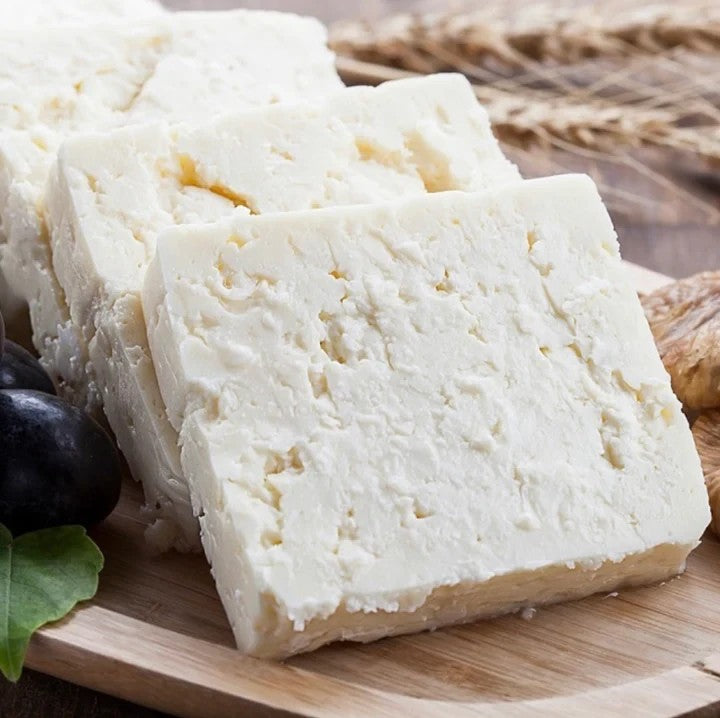
Dried tomato in olive oil pairs well with different cheese varieties. White cheese, tulum cheese, kaşar cheese, or milder cheeses can balance the strong taste of dried tomato. If the cheese is already salty, it should be remembered that dried tomatoes may also contain salt. For this reason, the amount of salty products on the plate should be controlled.
Olives, walnuts, almonds, bread varieties, and fresh greens are among the products that can be served with dried tomato. Toasted bread or small bread slices are especially practical for simple serving. Walnuts and almonds can add a different texture to the plate. However, these ingredients should be used in small amounts so they do not overpower the tomato flavor.
In salad recipes, dried tomato can be used in small pieces. It adds a stronger aroma to green salads, cheese salads, or pasta salads. If dried tomato kept in olive oil is used, it may not be necessary to add much extra oil to the salad. This helps keep both the texture and flavor more balanced.
Dried tomato can also be used in sandwiches and toast recipes. It creates a balanced flavor when paired with cheese, greens, olive paste, or simple sauces. Since dried tomato is intense, it should not be added in excessive amounts. A few thin pieces are usually enough to support the overall taste of the sandwich. This use carries dried tomato beyond the breakfast plate and into different practical recipes.