
How dried mulberries should be stored and why they become hard is a common question when their texture changes after opening the package. Dried mulberries are fruit products with reduced water content due to the drying process. For this reason, they are directly affected by air, moisture, temperature and packaging conditions. If they are not stored properly, the pieces may lose their softer texture, become firmer and feel drier when chewed.
The hardening of dried mulberries is usually related to moisture loss. When the product stays in contact with air for a long time, the surface of the pieces begins to dry. Over time, this change can also affect the inner structure. This is more noticeable in packages that are not closed properly after opening or in products exposed to dry room air for a long period.
Dried mulberries can vary in size, drying level and texture. Some pieces may be fuller and softer from the beginning, while others may already be drier and denser. For this reason, not all dried mulberries become hard at the same speed. Their initial texture, the time since opening, the temperature of the storage area and the type of container all influence the process.
Dried mulberries are used not only as a direct snack but also in breakfast plates, nut mixtures, desserts, cakes and traditional serving ideas. Therefore, preserving their texture has a direct effect on how they are used. Hardened dried mulberries do not always mean the product is unusable. However, before using them, their smell, appearance and surface should be checked.
What Storage Conditions Cause Dried Mulberries to Become Hard?
One of the most common storage mistakes that causes dried mulberries to become hard is leaving them exposed to air. After the package is opened, the product continues to lose moisture if it is not sealed properly. This change first appears as surface dryness and then creates a firmer texture throughout the pieces. Smaller and thinner dried mulberries may show this change more quickly.
Improperly closed packaging can also speed up hardening. If the original package is left loosely closed or the product is kept in an uncovered container, air contact increases. Repeatedly opening and closing a large package can also affect texture over time. If larger quantities are purchased, dividing the product into smaller portions can create a more controlled storage routine.
Temperature changes also affect the structure of dried mulberries. Products kept near a stove, oven, window or direct sunlight may change texture more quickly. Heat can affect the surface, while dry and warm air can reduce moisture and cause hardening. For this reason, the storage area should be away from direct heat sources.
Strong-smelling products in the same area should also be considered. Dried mulberries can absorb surrounding odours if they are stored uncovered or in containers that do not close well. Spices, coffee, onions, garlic or intensely aromatic products may change the mulberry’s own aroma. A clean, tightly closed container and a separate storage area are therefore important.
How Are Dried Mulberries Affected by Air, Moisture and Temperature?
The effect of air on dried mulberries is most visible in their texture. Pieces left uncovered can gradually lose their softer surface. This change does not always happen to the whole package at the same time. The pieces on top or close to the opening may become firm first. This is why the container should be sealed carefully after every use.
The moisture level of the storage environment directly affects the texture. Very dry rooms may cause dried mulberries to harden faster. In very humid areas, the surface may become uneven and the pieces may stick together. For dried mulberries, the best storage routine is a closed environment where both air and moisture exposure are controlled.
Temperature can also change the appearance and texture of the product. Dried mulberries kept in a warm environment for a long time may show changes in colour, surface and smell. If temperature changes are frequent in the kitchen, the texture may become less consistent. A cool, dry and stable storage area helps reduce these changes.
Air, moisture and temperature should be considered together. Dried mulberries should not be left uncovered, but they should also not be stored in damp conditions. When balanced conditions are provided, the pieces can preserve their form for longer. This makes them easier to use both directly and in recipes.
How Can Hardened Dried Mulberries Be Used?
Before using hardened dried mulberries, their overall condition should be checked. If the smell is normal, the surface looks usual and there is no strong colour change, the hardening is often linked to moisture loss. In this case, the product can still be used in different recipes and serving styles. However, if there is an unusual smell, a noticeable layer on the surface or a clear colour change, the product should be evaluated more carefully.
If dried mulberries have become very hard, they may be difficult to chew directly. In this case, they can be cut or crushed into smaller pieces. They can be used in breakfast mixtures, oat-based recipes, cake and cookie doughs or dried fruit plates. Smaller pieces distribute more evenly in recipes and make the firm texture less noticeable.
A short contact with lukewarm water can help soften the surface slightly. The mulberries can be soaked for a few minutes and then drained well. The aim is not to fully soak the product but to reduce surface dryness. They should not be kept in water for too long, as this may weaken their aroma and texture.
Dried mulberries can also be used in warm or moisture-containing recipes. In some desserts, mixtures or baked goods, the firmer structure can blend more easily with the recipe. If they do not regain their former softness completely, using them inside a recipe may be more practical than eating them directly. This allows the product to remain useful in a controlled way.
How Should Dried Mulberries Be Stored to Preserve Their Texture?
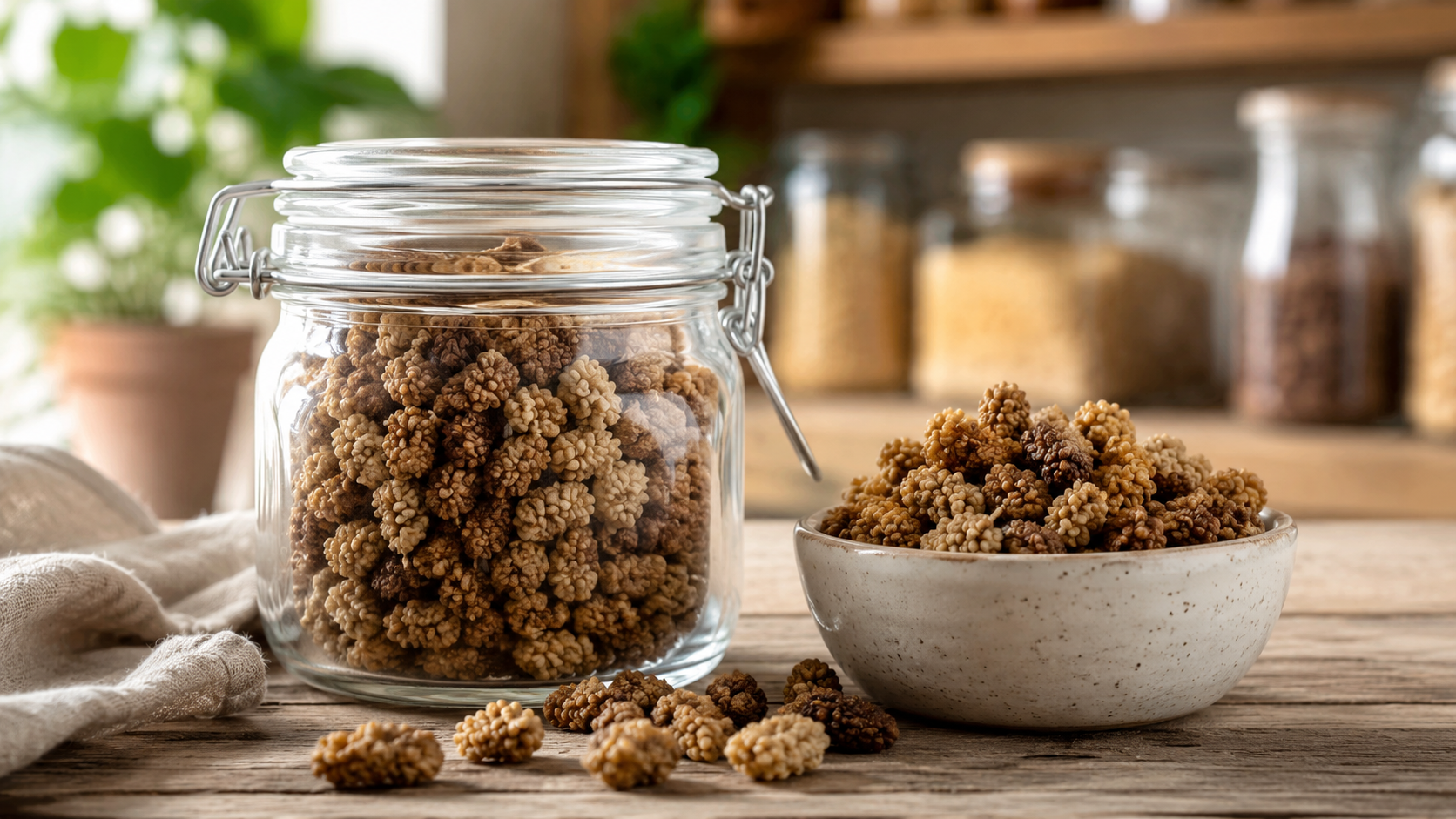
To preserve the texture of dried mulberries, the package should be closed properly after opening. The product should not be left exposed. If the original package cannot be resealed well, it should be transferred to a suitable container. A lidded glass jar or a tightly closing storage box can reduce air contact.
The storage area should be cool, dry and away from direct light. Sunlight, high temperature and moisture changes can affect the colour, smell and texture of dried mulberries. In the kitchen, they should be kept away from the stove, oven and window areas. A closed cupboard, separate from strong-smelling products, offers a more stable storage option.
If a large amount of dried mulberries is purchased, portioning can be useful. When the whole quantity is opened repeatedly, air contact increases. Smaller portions can be used more easily and remain better protected. This method is especially helpful when the product will be stored for a longer time.
Dried mulberries should be checked from time to time. If the pieces become extremely hard, sticky, different in smell or unusual on the surface, the storage conditions should be reviewed. With clean, closed and balanced storage, dried mulberries can be used in breakfast plates, desserts and nut mixtures with a more stable texture.