
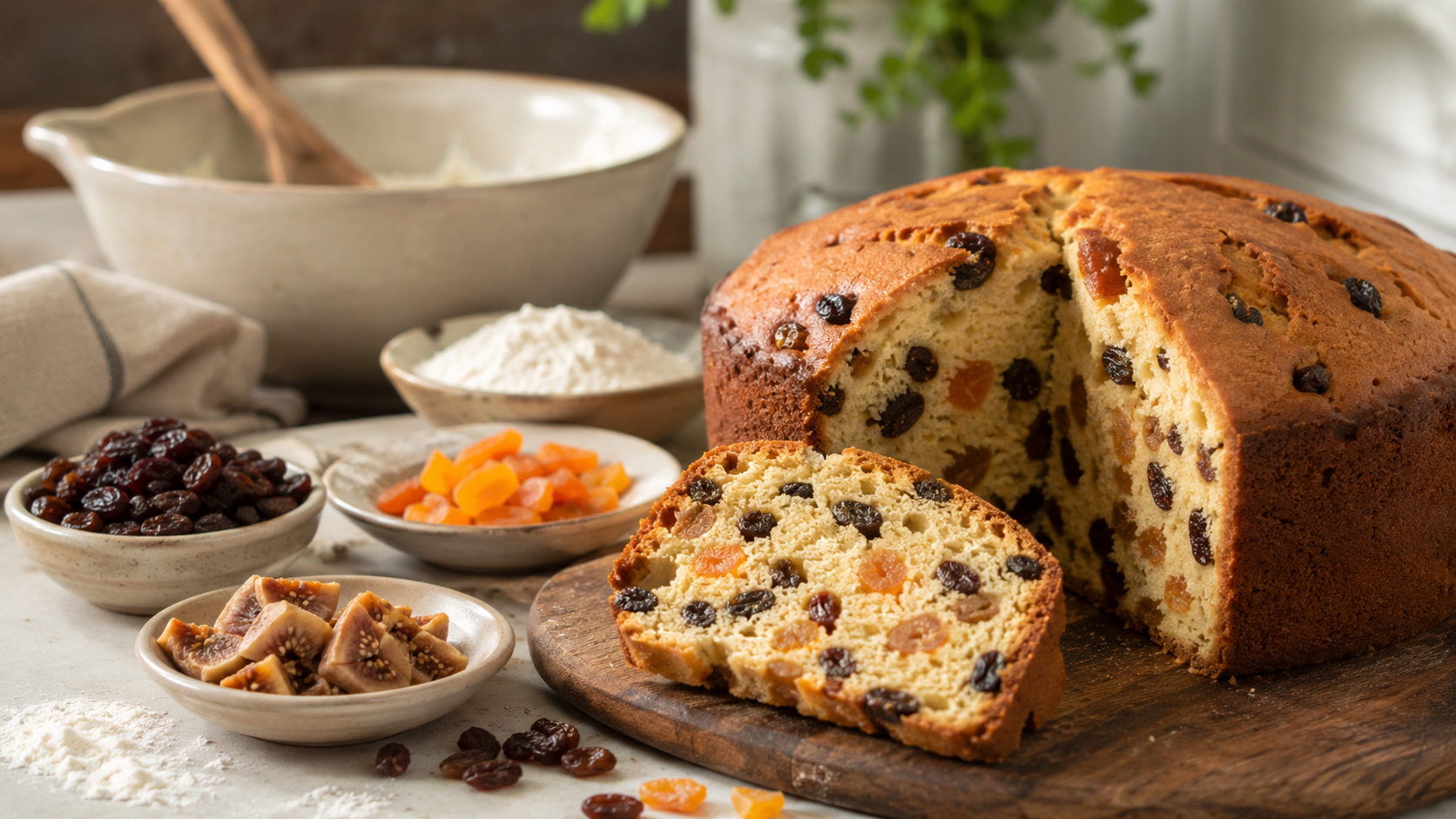
Dried fruits should be prepared in the right size, added at the right stage, and combined with a suitable batter consistency to prevent them from sinking in cake batter. Raisins, dried figs, dried apricots, dried mulberries, dates, and similar ingredients can add aroma, color, and texture to cakes. However, when they are added directly in large pieces or in excessive amounts, they may move toward the bottom of the cake during baking.
The most important point in dried fruit cakes is the structure of the batter. A very runny batter cannot hold heavier fruit pieces evenly. Large pieces of dried fruit or too much dried fruit can also make the batter heavier than it should be. For this reason, the size, amount, preparation method, and timing of adding dried fruits all affect the final texture and appearance of the cake.
Lightly coating dried fruits with flour is a commonly used method, but it may not be enough on its own. If the batter is too loose or the amount of dried fruit is too high, the fruits can still sink to the bottom. Therefore, the process should be considered as a whole. Cutting the fruits, softening them if needed, removing excess moisture, lightly flouring them, and folding them into the batter gently should all be planned together.
The goal in dried fruit cakes is to achieve an even distribution in every slice. The amount of flour, eggs, oil, milk, or yogurt in the recipe should be balanced with the amount of dried fruit. When dried fruits are used correctly, the cake looks more even, the fruit pieces stay better distributed, and each slice has a more balanced flavor.
Why Do Dried Fruits Sink in Cake Batter?
Dried fruits sink in cake batter mainly because they are heavier than the batter itself. Raisins, dried figs, dried apricots, and dates have a dense structure. Especially when they are added in large pieces, they can move downward before the batter starts to set in the oven. If the batter is not thick enough to support them, this sinking becomes more noticeable.
A batter that is too runny increases the risk of sinking. When the recipe contains too much milk, yogurt, oil, or egg compared to flour, the batter becomes loose and less stable. Even if the cake rises during baking, the dried fruits may still collect at the bottom. This is why dried fruit cakes should have a medium consistency: not too runny and not overly thick.
The size of the dried fruit pieces is also important. Large pieces of dried figs, roughly chopped dried apricots, or whole dates are harder to keep suspended in the batter. Smaller and evenly cut pieces distribute more easily. Before adding dried fruits to cake batter, they should be cut into suitable pieces. The more balanced the size, the more even the distribution in the cake.
Waiting too long before baking can also cause dried fruits to sink. If the batter sits for a long time after the fruits are added, the pieces may slowly move downward. For this reason, once dried fruits are folded into the batter, the mixture should be transferred to the pan and baked without unnecessary delay. This is especially important for softer batters.
How Should Dried Fruits Be Prepared Before Adding Them to Cake Batter?
Before adding dried fruits to cake batter, the first step is to adjust their size. Dried figs, dried apricots, dates, and large raisins should be cut into smaller pieces so they can spread more evenly through the batter. If they are chopped too finely, they may disappear into the cake. If they are left too large, they may sink. Medium-small, similar-sized pieces usually give the best result.
If the dried fruits are very firm, they can be softened briefly. Dried apricots, dried figs, or raisins that have been stored for a long time may remain too tough in the cake. They can be soaked in lukewarm water for a short time, then drained very well and dried with a paper towel. The fruits should not absorb too much water, because excess moisture can affect the batter and create uneven wet areas inside the cake.
Lightly coating dried fruits with flour is another useful step. A thin layer of flour on the surface of the fruit pieces helps them mix into the batter more evenly. However, too much flour should not be used. The fruits should only be lightly coated, and any excess flour should be shaken off. Otherwise, dry flour spots may appear in the batter.
Dried fruits are generally added at the final stage of mixing. After the batter is ready, the fruits should be folded in gently with a spatula. Mixing them for too long with a mixer can break the fruit pieces and overwork the batter. Gentle folding helps distribute the fruits while keeping the cake texture more balanced.
How Does Batter Consistency Affect the Distribution of Dried Fruits?
Batter consistency is one of the most important factors that determine whether dried fruits stay evenly distributed. In a very runny batter, the fruit pieces can sink easily under their own weight. In a very thick batter, they may not spread properly and can remain clustered in certain areas. A medium-thick batter that falls slowly from the spatula is usually more suitable for dried fruit cakes.
The balance between liquid and dry ingredients directly affects this consistency. Milk, yogurt, oil, and eggs make the batter softer, while flour and other dry ingredients give it more structure. When dried fruits are added, the batter should have enough strength to hold them. However, it should not be so thick that the cake becomes dense or dry after baking.
The amount of dried fruit also matters. A small amount is easier for the batter to carry. When too much dried fruit is added, the pieces get closer to each other and create additional weight. This can cause fruit to collect at the bottom of the cake. For a balanced result, the amount should be enough to be noticeable in each slice without making the batter heavy.
The way the batter is transferred to the pan can also affect distribution. After pouring the batter into the cake pan, the pan should not be shaken too much or tapped strongly on the counter. These movements may remove air bubbles but can also encourage the dried fruits to move downward. It is better to smooth the surface gently with a spatula and place the cake in the oven right away.
How Should Raisins, Dried Figs, and Dried Apricots Be Used in Cakes?
Raisins are among the most commonly used dried fruits in cakes. Their small size allows them to distribute more easily, but very dry or large raisins can still sink. Before use, raisins can be softened briefly, dried thoroughly, and lightly coated with flour. This helps them stay more evenly spread throughout the cake.
Dried figs are denser and often slightly sticky, so they should be used carefully. Large pieces may sink or gather in certain parts of the cake. Dried figs should be cut into small cubes, and their sticky surface should be controlled. If needed, they can be mixed with a small amount of flour to prevent them from sticking together. Since dried figs have a noticeable aroma, the amount should be balanced.
Dried apricots add color and a different flavor layer to cakes. However, large pieces of dried apricot can be heavy in the batter. They should be cut into small pieces, softened briefly if necessary, and dried well before use. Dried apricots can also be combined with walnuts, almonds, or hazelnuts for a richer texture. If dried fruits and nuts are used together, the total amount should still be controlled.
When raisins, dried figs, and dried apricots are used in the same cake, the amount of each should be reduced. Using all three in full quantities can make the batter too heavy. A better approach is to choose one dried fruit as the main ingredient and use the others as small supporting additions. This creates color and flavor variety without causing the fruits to collect at the bottom.