

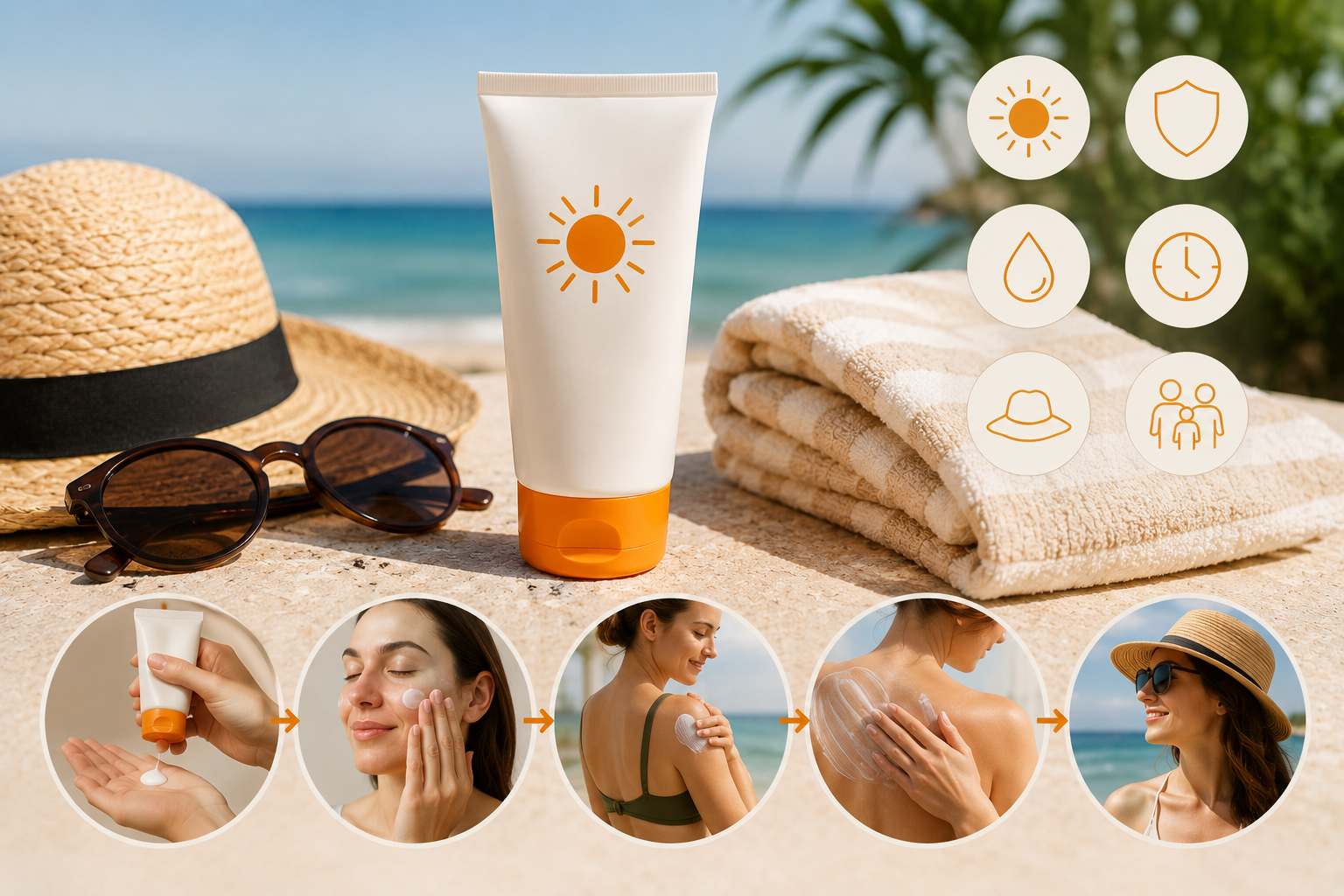
When choosing sunscreen, consider your skin type and usage purpose. Water-based, light formulas are suitable for oily skin, while more moisturizing products may be preferred for dry skin. SPF level is important; higher SPF may be chosen for extended sun exposure. Broad-spectrum products protect against both UVA and UVB rays. Water-resistant products maintain their effect during swimming or outdoor activities.
Types of Sunscreen
Chemical filters absorb UV rays and are generally lighter. Mineral filters create a thin layer on the skin and reflect UV rays. Sunscreens are available in lotions, sprays, sticks, and gels.
How to Apply Sunscreen Properly?
To achieve the best results, sunscreen should be applied about 20–30 minutes before going outside and spread evenly across all exposed areas. Commonly forgotten spots include the face, neck, ears, and hands. During activities such as swimming, exercising, or spending extended time outdoors, it is recommended to reapply approximately every two hours. Makeup users can apply sunscreen as a base layer or use spray formulas to refresh protection throughout the day.
Can Sunscreen Be Used Every Day?
Sunscreen can be used all year round, not just during summer. Sun rays reach the skin even on cloudy days or in colder months. This makes daily application a useful habit for consistent coverage. Lightweight, comfortable formulas are especially suitable for everyday routines, as they are easy to integrate without leaving a heavy feeling. With regular use, sunscreen becomes a simple step in maintaining long-term skin protection.