
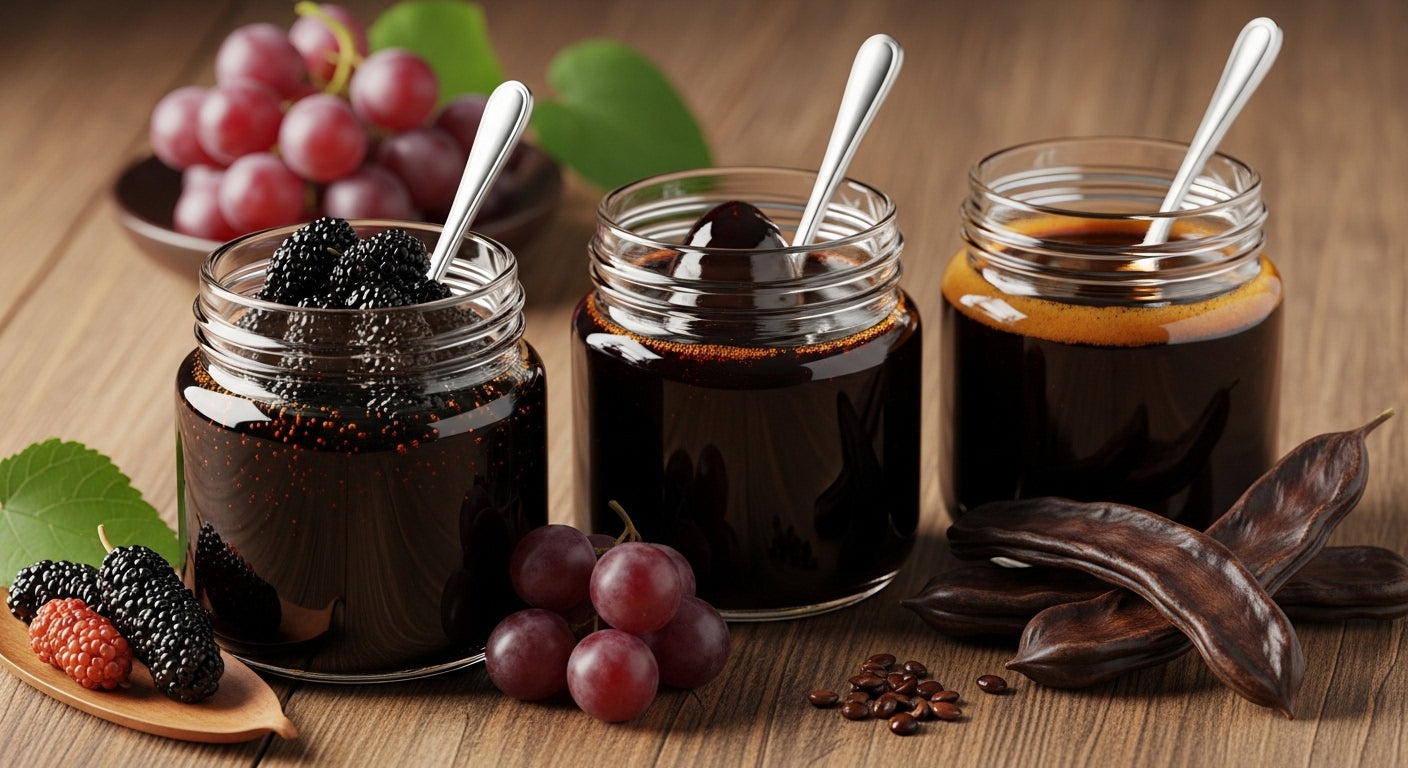
Molasses is a traditional product deeply rooted in Anatolian cuisine. It is produced by slowly boiling fruit juice until it thickens into a dense syrup. The most common varieties are grape, mulberry, and carob molasses. Each type offers distinct characteristics in flavor, color, and texture.
Choosing the right molasses depends not only on personal taste but also on intended use. Some varieties are better suited as breakfast spreads, while others are preferred in baking or beverages due to their stronger aroma.
The production process plays a key role in determining quality. Traditional methods involve slow concentration without additives, preserving the fruit’s natural sweetness. Modern production may vary, so reading ingredient labels is recommended.
Today, molasses is widely used as a natural sweetener alternative. It can partially replace refined sugar in cakes, cookies, and traditional desserts while adding depth of flavor.
What Is Molasses and How Is It Produced?
Molasses is obtained from fruits such as grapes, mulberries, or carob pods. The juice is extracted and slowly simmered until much of the water evaporates, leaving behind a thick syrup. The sweetness comes naturally from the fruit itself.
Traditional production methods rely on controlled heat levels. Excessive heat can create a burnt flavor, so balanced cooking is essential for preserving quality.
Texture serves as an important quality indicator. High-quality molasses flows slowly from a spoon and has a uniform consistency. Products that are too thin may not be sufficiently concentrated.
The ingredient list should ideally contain only fruit. Additive-free products reflect a more natural production process.
Differences Between Grape, Mulberry, and Carob Molasses
Grape molasses is the most commonly consumed variety. It has a balanced sweetness and dark brown color. It is especially popular when combined with tahini at breakfast.
Mulberry molasses is lighter in color and milder in flavor. Its subtle fruitiness makes it versatile for both direct consumption and use in warm beverages.
Carob molasses is darker and more intense. It offers caramel-like and slightly roasted notes. Due to its bold flavor, it is often used in smaller quantities.
Selection depends largely on taste preference. Those who prefer mild flavors may choose mulberry molasses, while those seeking intensity may opt for carob molasses.
Which Molasses Should Be Used for Which Purpose?
For breakfast, grape molasses is frequently preferred because of its balanced taste and spreadable consistency. Combined with tahini, it creates a classic pairing.
In baking, molasses can function as a natural sweetener. However, the chosen variety influences the final flavor, so careful selection is important.
Molasses can also be mixed into warm milk or herbal teas, depending on individual preference.
Additionally, it may be used in sauces or marinades. Its thick texture adds subtle sweetness and depth to savory dishes.
How to Identify High-Quality and Additive-Free Molasses?
Checking the ingredient list is essential. High-quality molasses should contain only fruit without added sugars or syrups.
Consistency is another key indicator. Good molasses should be thick and flow slowly.
Color and aroma also provide clues. A balanced, natural smell indicates careful production.
A mild caramel scent without burnt notes suggests controlled cooking. Paying attention to these details supports informed purchasing decisions.