
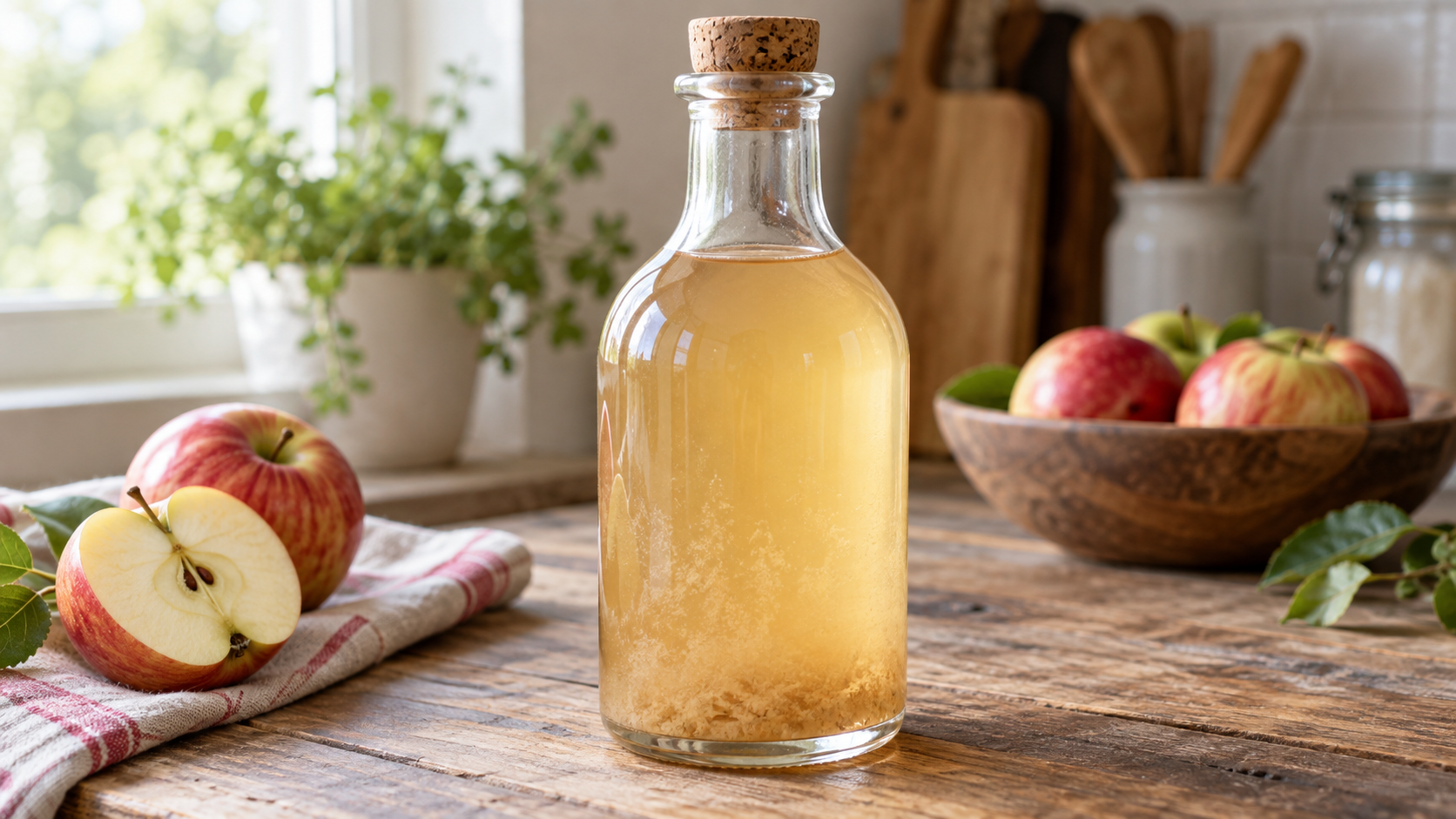
Vinegar may become cloudy when sediment, pulp, natural residue, or different densities become visible inside the bottle. Apple vinegar, grape vinegar, hawthorn vinegar, pomegranate vinegar, and other vinegar varieties can show changes in color, clarity, and bottom sediment over time. This change does not always mean the same thing; the product’s structure, production method, filtration level, and storage conditions should be evaluated together.
Some vinegars look completely clear, while others may naturally have a slightly cloudy appearance. Especially in unfiltered or more natural-looking vinegars, sediment at the bottom of the bottle may be more common. When the bottle is shaken, this sediment spreads through the liquid and makes the vinegar look cloudy. This is one of the most common points users wonder about.
Vinegar can be affected by temperature changes, air contact, and light exposure. If the bottle is left open for a long time, stored in a very warm place, or exposed to direct sunlight, natural residue may become more visible. For this reason, vinegar should not be judged by appearance alone. Aroma, consistency, color, and storage conditions should all be checked together.
When cloudiness or sediment is noticed in vinegar, the general condition of the product should be reviewed first. An unpleasant smell outside the usual sharp vinegar aroma, pressure in the cap, mold-like formations, or unexpected color changes should be evaluated carefully. Mild sediment or slight cloudiness alone may be related to the vinegar type and filtration level.
What Does Cloudiness in Vinegar Mean?
Cloudiness in vinegar may mean that small suspended particles, natural residues, or sediment have spread through the liquid. This is more common in unfiltered vinegar varieties. When the bottle is moved, particles at the bottom mix into the liquid and temporarily create a cloudier appearance.
The production method can also affect vinegar clarity. Very clear vinegars are often filtered more heavily. Vinegars that look more natural, matte, or slightly cloudy may retain fine residues. Therefore, vinegar does not always need to be perfectly transparent. Its appearance may vary depending on the variety and processing method.
Sediment at the bottom of the bottle is one of the common causes of cloudiness. When the bottle stays still for a long time, small particles settle at the bottom. When the bottle is shaken or moved, they spread through the vinegar and create a cloudy look. This can be especially noticeable in apple and grape vinegar.
When evaluating cloudiness, aroma and color should also be checked. If the vinegar has a moldy, rotten, or unusual smell beyond its typical sharp sour scent, it should be examined more carefully. A sudden color change, unusual surface layer, or strong pressure in the cap may also indicate that the issue is more than ordinary sediment.
Under Which Conditions Does Vinegar Look Cloudy?
Vinegar may look cloudier when exposed to temperature changes. In very warm environments, internal particles may move more easily and become more visible. In very cold areas, density changes may also occur. Vinegar should therefore be stored at a stable temperature and away from direct sunlight.
Frequent shaking or transportation can also make cloudiness more visible. Sediment that normally stays at the bottom of the bottle mixes into the liquid when the bottle is moved. In this case, vinegar may look cloudy for a while. After the bottle rests, the sediment can settle again and the upper part may appear clearer.
Air contact can affect both appearance and aroma. If the lid is not closed tightly or the bottle is left open for a long time, vinegar comes into contact with the outside environment. This may lead to changes in smell and appearance. After each use, the bottle should be closed properly to keep the product more stable.
Light exposure is another important factor. Direct sunlight can change the color and appearance of vinegar. If vinegar is stored in a glass bottle, it may be more exposed to light when kept on the counter. A cool, dark, and closed kitchen cabinet is usually a better storage place than a sunny area.
Is Sediment at the Bottom of a Vinegar Bottle Normal?
Sediment at the bottom of a vinegar bottle can be seen especially in unfiltered or more natural-style vinegars. Fine particles, fruit-based residue, or a denser layer may appear at the bottom. When the bottle is still, this sediment remains below. When the bottle is moved, it spreads into the liquid and makes the vinegar look cloudier.
The amount and structure of sediment can change depending on the vinegar type. Apple vinegar may contain fine fruit residue, while grape vinegar may show different pulp-like particles. Hawthorn or pomegranate vinegar may also differ in color and sediment structure. One single appearance should not be accepted as the standard for all vinegar varieties.
When sediment is visible, the bottle should be checked briefly before use. If the sediment looks natural and can disperse when the bottle is moved gently, it may be related to the filtration method. However, if there is a mold-like layer, unpleasant smell, or unexpected gas formation, the vinegar should be evaluated more carefully.
If a clearer use is desired, the bottle can be left still for a while so the sediment settles at the bottom. The clearer upper part can then be used. This method can be preferred for salad dressings or presentations where a cleaner appearance is desired. Strong shaking is not necessary in this case.
How Should Vinegar’s Consistency, Aroma, and Appearance Be Checked?
When checking vinegar, cloudiness alone is not enough. The aroma should be evaluated first. Vinegar normally has a sharp and sour smell. However, if there is a moldy, rotten, or unusually unpleasant smell, the product should be checked more carefully. Aroma changes can sometimes be more important than appearance changes.
Consistency should also be observed. Vinegar is usually fluid. Unexpected thickening, stickiness, or dense layers inside the bottle may not look typical. If a layer appears on the surface and does not disperse when the bottle is moved gently, the product should not be used without careful evaluation.
Color, sediment, and surface appearance should be considered together. Mild cloudiness, a matte look, or sediment may appear in some vinegar varieties. However, if the color has changed strongly, mold-like dots are visible, or unexpected particles are floating in the bottle, the vinegar should be inspected before use.
To keep vinegar stable for longer, the cap should be closed after each use, the bottle should be kept away from direct sunlight, and it should be stored in a cool area. Dirty spoons, other liquids, or food residue should not enter the bottle. These simple storage habits help preserve aroma, appearance, and usability.