
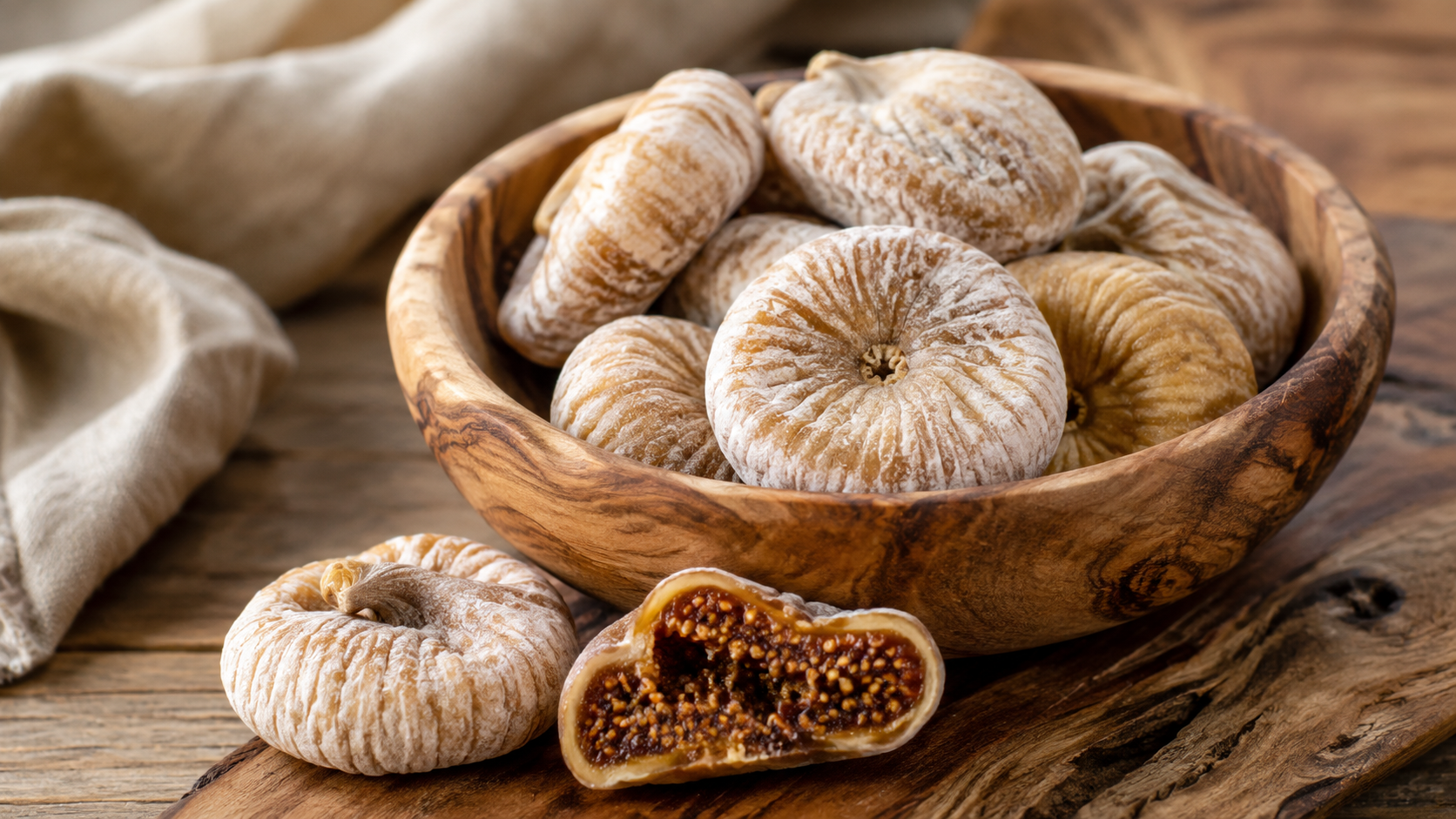
Why dried figs turn white and what it means is a common question when a light-coloured layer or white appearance develops on the surface of the fruit. Dried figs can show surface colour changes because of the drying process, their own structure and storage conditions. This white appearance does not always mean the same thing. It may be related to the fruit’s own sugar, changes in moisture balance or the way the figs have been stored.
The white layer seen on dried figs is often connected to the sugar inside the fruit coming to the surface. In dried fruits, a pale, crystal-like layer may appear on the surface over time. This can become more visible in figs that have been stored for a long period, kept in cooler conditions or exposed to changes in moisture balance. However, not every white appearance should be evaluated in the same way.
When dried figs turn white, colour alone is not enough to understand the situation. Smell, texture, surface structure and storage history should also be considered. A white layer caused by sugar usually appears dry and crystal-like. Unwanted surface changes, however, may come with an unusual smell, stickiness, fuzzy texture or a clear change in the structure of the fruit. For this reason, several points should be checked together.
Dried figs are often used in breakfast plates, desserts, nut mixtures, walnut-filled servings and traditional snack plates. Understanding what the white appearance means helps users evaluate the product more accurately. Instead of making a decision based only on colour, the overall condition of the figs should be checked carefully.
What Are the Main Factors That Cause Dried Figs to Turn White?
One of the most common reasons dried figs turn white is the sugar inside the fruit coming to the surface. Figs naturally contain a dense sugar structure. After drying and during storage, this sugar may appear as a pale layer on the surface. This appearance can be more noticeable in figs that have been stored for a long time.
Storage temperature can also affect this appearance. In cooler storage conditions, sugar crystals on the surface may become more visible. On the other hand, warm and humid environments may affect the surface in a different way. For this reason, where and how the figs have been stored matters as much as how the white layer looks.
Moisture changes directly affect the surface of dried figs. In a very dry environment, figs may become firmer and look duller. In a humid environment, the surface may become stickier or more uneven. If the white appearance is dry, powdery or crystal-like, it should be evaluated differently from a wet, fuzzy or sticky surface.
Packaging and air exposure also influence the surface structure. Once the package is opened, dried figs that remain exposed to air may experience changes in both moisture balance and appearance. Figs stored in open containers, poorly sealed packaging or near strong-smelling products may also show changes in aroma and colour. This is why storage conditions should be reviewed when evaluating white surface changes.
Is the White Layer on Dried Figs Sugar Crystallisation or a Sign of Spoilage?
To understand whether the white layer on dried figs is sugar crystallisation or a different surface change, the structure of the layer should be checked first. Sugar crystallisation usually appears as a dry, fine and crystal-like coating spread across the surface. When touched lightly, it may feel powdery or grainy. This type of appearance can be related to the fig’s own structure.
However, if the surface looks fuzzy, damp, uneven or clearly unusual, the figs should be examined more carefully. An unusual smell, excessive stickiness, strong colour change or a fruit structure that has started to break down should not be seen simply as sugar crystallisation. The type of white layer should be evaluated together with smell and texture.
Smell is an important point in this evaluation. A white layer caused by sugar usually does not create a strong negative change in smell. If the fig has a sharp, heavy or unusual odour, the overall condition of the product should be questioned. Smell alone may not be enough to decide, but it is valuable when considered together with the surface appearance.
Texture can also help make the distinction. Dried figs with sugar crystallisation often keep their shape. If the figs have become too soft, crushed, overly sticky or unevenly stained, storage conditions may have affected the product more strongly. Therefore, dried figs with a white appearance should be checked by appearance, smell, texture and storage history together.
How Should Dried Figs Be Checked by Colour, Smell and Texture?
When checking dried figs, the first point to look at is the surface colour. A pale, dry and crystal-like appearance may be related to sugar coming to the surface. However, if the colour change is greenish, grey, dark-spotted or irregular, the figs should be examined more carefully. Colour alone is not enough to decide the condition of the product.
Smell should also be checked. Dried figs have a dense, fruity smell of their own. If this smell has become heavy, sharp or clearly different from usual, the product should be evaluated again. The first smell after opening a package that has been stored for a long time is especially important.
Texture is another helpful sign. Normal dried figs may be soft, flexible or slightly firm depending on the variety. However, excessive hardness, surface stickiness, crushing, breaking apart or unusual sticking between pieces can indicate that storage conditions have affected the product. Sticking alone may not be enough to judge, but it should be checked together with smell and surface appearance.
If dried figs are stored in bulk, checking only the top pieces is not enough. Figs at the bottom of the package may be more compressed or more affected by moisture. A more general check should be made. Several pieces should be examined for colour, smell and texture, especially if the product has been stored for a long time.
How Should Dried Figs Be Stored to Reduce Whitening and Preserve Their Texture?
To preserve the texture of dried figs and reduce surface changes, proper storage conditions are important. After opening, the figs should not be left exposed to air. They should be placed in a clean container with a lid or sealed tightly in their original package if possible. Reducing air contact helps maintain the moisture balance for longer.
The storage area should be cool, dry and away from direct light. Sunny, warm or humid places can change the surface of dried figs more quickly. In the kitchen, areas near the stove, oven or window are not suitable for storing dried figs. A closed cupboard, away from strong-smelling products, is a better option.
Dried figs can absorb strong surrounding odours. If they are kept near spices, coffee, onions, garlic or other intense ingredients, their own aroma may change. The storage container should close well, and the figs should be protected from contact with strong odours. This becomes especially important when the product will be stored for a longer period.
Dried figs stored for a long time should be checked from time to time. The white layer, smell, texture and moisture condition should all be evaluated together. If excessive stickiness, an unusual smell or irregular surface changes appear, the storage conditions should be reviewed. With proper storage, dried figs can be used in breakfast plates, desserts and traditional servings with a more balanced texture.