
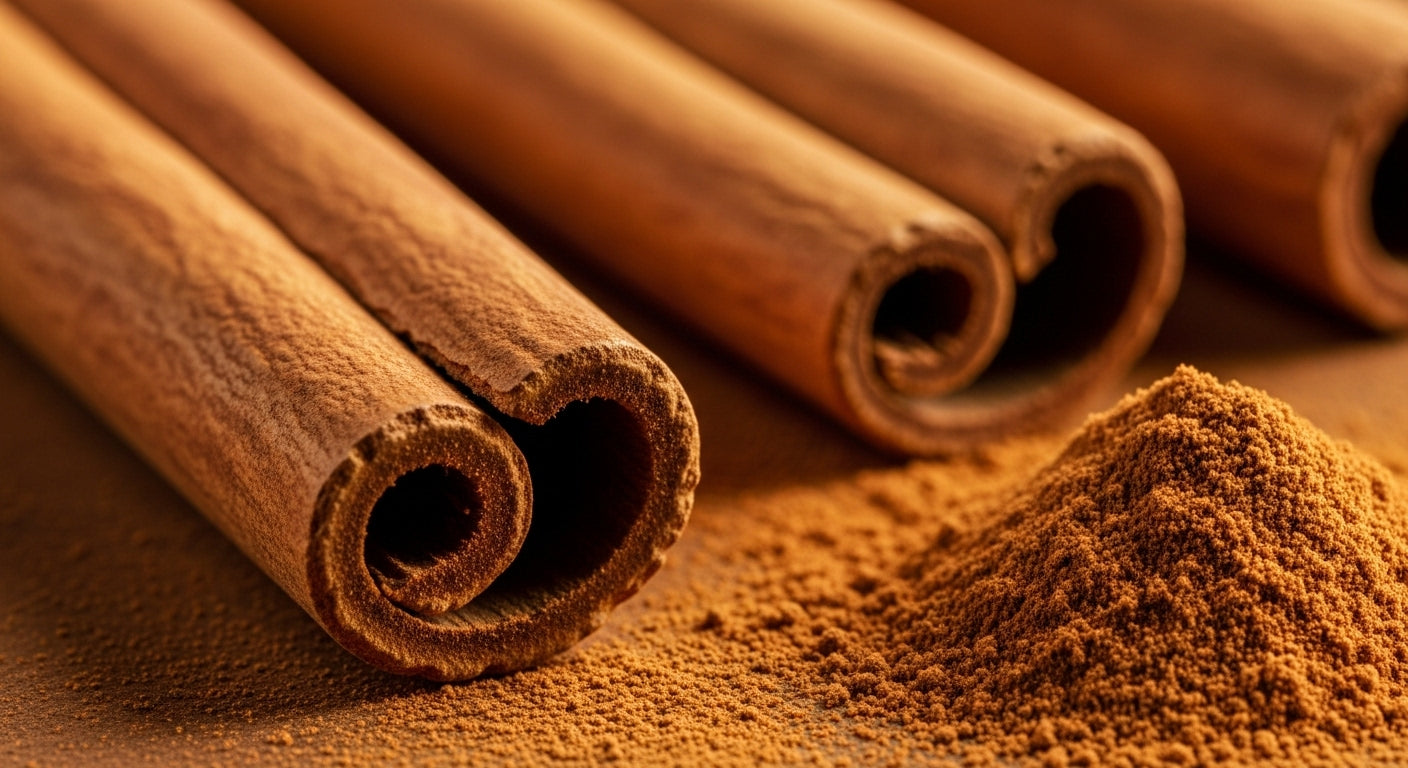
Cinnamon is a spice commonly used in both traditional and modern kitchens. In everyday cooking, it is mainly found in two forms: cinnamon sticks and ground cinnamon. Although both come from the same source, their form affects how they are used and handled.
The physical form of cinnamon influences its preparation, storage, and application in recipes. These distinctions help determine which version is more suitable for specific cooking processes.
Some recipes require cinnamon to release its characteristics gradually, while others need it evenly distributed throughout the mixture. This difference plays a key role in choosing between sticks and ground cinnamon.
Understanding these distinctions allows for more precise use of cinnamon and contributes to a more structured approach to cooking.
Production Process and Physical Differences Between Cinnamon Sticks and Ground Cinnamon
Cinnamon sticks are produced from the inner bark of the cinnamon tree. Once harvested, the bark is dried and naturally curls into its familiar stick shape without additional processing.
Ground cinnamon is made by grinding these dried sticks into a fine powder. This process removes the original structure and results in a completely different physical form.
From a structural perspective, cinnamon sticks are solid and compact, while ground cinnamon has a loose, finely milled texture. These differences affect how each form behaves during preparation.
Visually, cinnamon sticks appear natural and rustic, whereas ground cinnamon is more uniform and functional in appearance.
Culinary Uses of Cinnamon Sticks and Ground Cinnamon
Cinnamon sticks are commonly used in recipes where the spice is infused during cooking or steeping. This allows the characteristic properties to develop gradually within the dish.
Once the cooking process is complete, the sticks can be removed easily, leaving no residue behind. This makes them suitable for liquid-based preparations.
Ground cinnamon is preferred when even distribution throughout a mixture is required. It blends easily into batters, desserts, and dry mixes.
In everyday cooking, both forms serve distinct purposes, and the choice depends on the recipe structure and preparation method.
Storage Conditions and Shelf Life of Cinnamon Sticks and Ground Cinnamon
Cinnamon sticks are generally more stable due to their intact structure. When stored in a dry, airtight, and light-protected environment, they maintain their form for extended periods.
Their compact nature reduces exposure to air and moisture, making long-term storage easier.
Ground cinnamon is more sensitive because of its increased surface area. Exposure to environmental factors can affect its consistency over time.
Storing ground cinnamon in tightly sealed containers helps maintain its usability and ensures consistent kitchen use.