
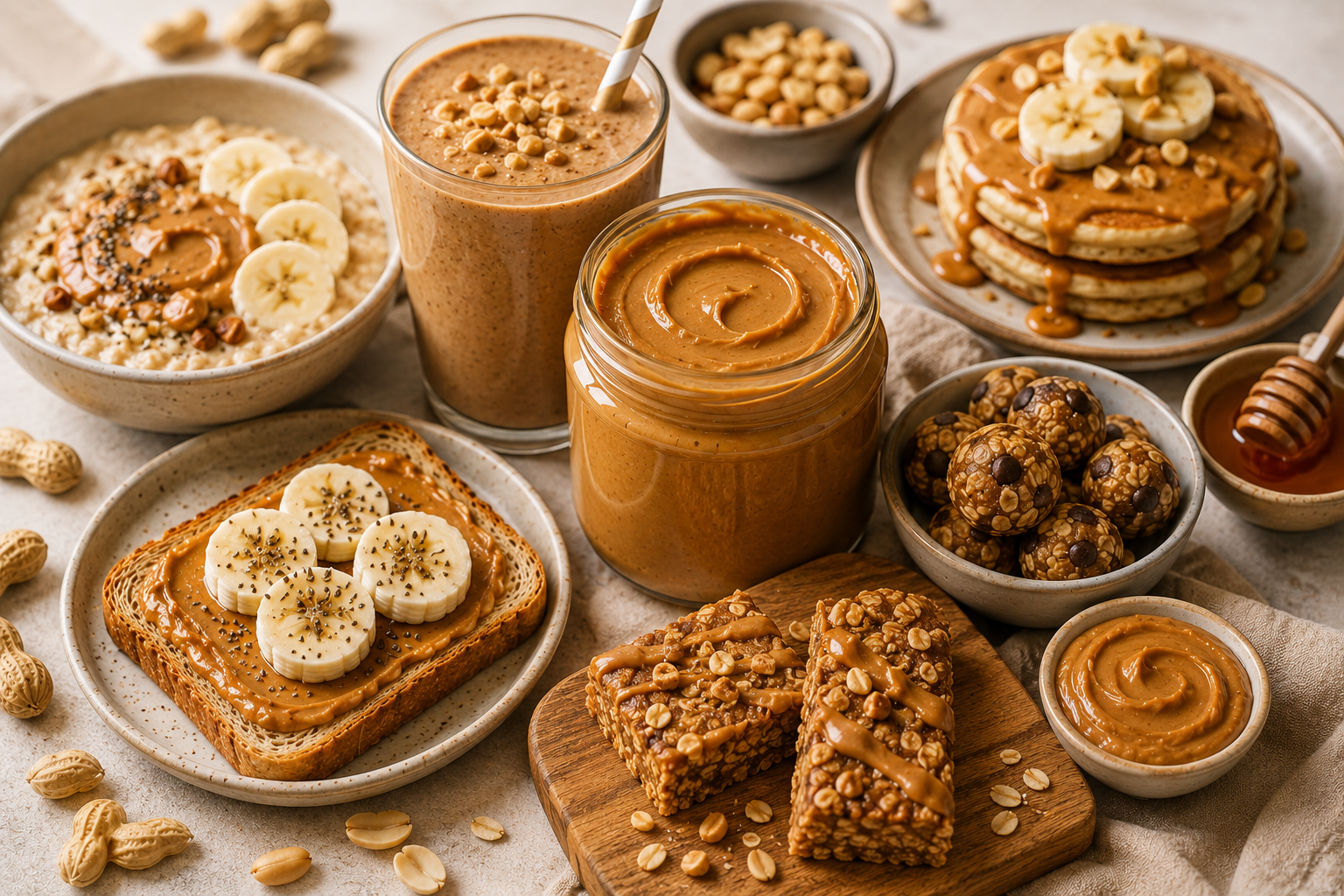
Homemade recipes made with peanut butter are no longer limited to simple breakfast spreads and have become part of a much wider recipe culture that includes desserts, smoothies, snack bowls, and baked goods. Thanks to its dense texture, rich aroma, and smooth consistency, peanut butter can easily adapt to different ingredients and recipe styles. It works equally well in spreadable breakfast recipes, creamy mixtures, and no-bake desserts, making it one of the most versatile ingredients used in home kitchens today.
The consistency and structure of peanut butter can directly influence the final texture of a recipe. Thick peanut butter varieties create more defined layers in baked goods and breakfast spreads, while smoother and more fluid versions blend more easily into sauces, smoothies, and cream-based mixtures. Because of this, choosing the right type of peanut butter for the intended recipe becomes important when aiming for balanced texture and flavour.
Peanut butter is also frequently used as a binding ingredient in homemade recipes. In no-bake snack recipes, it helps oats, dried fruits, nuts, and seeds hold together while adding a creamy and rich structure. Combined with ingredients such as cocoa, banana, or yoghurt, peanut butter creates layered flavour profiles that make recipes feel more balanced and full-bodied. This flexibility allows it to be used in a wide variety of homemade preparations.
Today, peanut butter has evolved far beyond its traditional role as a simple spread. From breakfast bowls to dessert fillings, smoothies to homemade snack bars, it has become a staple ingredient in many modern recipes because of its adaptable texture and distinctive flavour profile.
Breakfast Recipes Made with Peanut Butter
Peanut butter is one of the most widely used ingredients in homemade breakfast recipes because of its rich texture and satisfying consistency. One of the most classic serving methods is spreading it over toasted bread or warm flatbread. However, when paired with fruits such as banana, strawberries, or apples, peanut butter creates much more layered and balanced breakfast combinations. Bananas in particular soften the dense texture of peanut butter and help create smoother flavour transitions.
In some breakfast recipes, peanut butter is combined with yoghurt, granola, and oats to prepare layered breakfast bowls. The creamy structure of peanut butter makes these bowls feel thicker and richer, while oats contribute a denser consistency. Additional ingredients such as cinnamon, dried fruits, or nuts help create more complex flavour combinations. In these recipes, peanut butter functions not only as a flavour component but also as one of the structural elements holding the mixture together.
Peanut butter is also commonly used in warm breakfast recipes. In pancakes, waffles, and hot oatmeal bowls, the heat softens the peanut butter and allows it to spread more evenly throughout the recipe. This creates a smoother and more balanced flavour profile while adding richness to the overall texture. Some recipes also combine peanut butter with cocoa, honey, or cinnamon to create stronger aromatic layers.
The consistency of the peanut butter used in breakfast recipes can significantly affect the result. Thick varieties form more noticeable layers on bread, while smoother versions mix more easily into yoghurt or breakfast bowls. For this reason, selecting the right consistency according to the recipe style is essential. Peanut butter with a strong roasted aroma often delivers more pronounced results in simple breakfast recipes without overpowering the accompanying ingredients.
Desserts and Snack Recipes Made with Peanut Butter
Peanut butter is one of the most versatile ingredients used in homemade desserts because of its creamy consistency and strong flavour profile. In recipes such as brownies, cookies, and cakes, peanut butter can make the dough softer, richer, and more dense. When combined with cocoa or chocolate, it creates deeper and more intense flavour layers. Because of this compatibility, peanut butter is frequently used in chocolate-based desserts.
In homemade snack recipes, peanut butter often serves as the primary binding ingredient. When mixed with oats, dried fruits, and nuts, it creates no-bake snack balls or homemade bars with a dense and chewy structure. In these recipes, peanut butter not only improves consistency but also determines the dominant flavour profile of the mixture. Combined with ingredients such as dates, bananas, or cocoa, it helps create more balanced and layered flavours.
Some dessert recipes use peanut butter together with melted chocolate to create fillings or sauces. These mixtures are often used between cake layers, over pancakes, or inside cookies. The creamy consistency of peanut butter gives sauces a smoother and thicker structure, while ingredients such as vanilla or cinnamon can add more complexity to the overall flavour profile.
Cold desserts also frequently include peanut butter as a key ingredient. In frozen banana-based desserts or homemade dessert cups, peanut butter creates a dense and creamy texture. When blended with milk or plant-based drinks, it forms a smoother but still flavourful consistency. Recipes prepared this way often include cocoa, cinnamon, or coconut to create more layered dessert combinations.
Using Peanut Butter in Smoothies and Different Mixtures
Peanut butter is one of the most commonly used thickening ingredients in smoothie recipes. In mixtures prepared with milk, bananas, oats, or cocoa, it helps create a creamier and richer texture. Even in small amounts, its aroma becomes highly noticeable and directly shapes the character of the drink. Combined with bananas, peanut butter creates smoother flavour transitions, while cocoa-based smoothies gain a deeper and more intense aromatic profile.
The consistency of the peanut butter used in smoothies also affects the final texture. Thick peanut butter creates denser and heavier smoothies, while smoother versions allow lighter and easier-to-drink mixtures. Because peanut butter blends easily in a blender, it combines naturally with ingredients such as oats, chia seeds, or nuts to produce more layered textures.
Peanut butter is not limited to smoothies and can also be used in yoghurt bowls and mixed breakfast recipes. Combined with granola, yoghurt, and fruits, it creates visually rich and thick-textured breakfast bowls. Fruits such as bananas, strawberries, and blueberries pair particularly well with peanut butter and help balance its roasted flavour.
In some recipes, peanut butter is mixed with milk or plant-based beverages to create smooth sauces. These sauces are commonly served over pancakes, waffles, or fruit platters. When lightly heated, peanut butter becomes easier to spread and can also be used for decorative presentation purposes. This versatility transforms peanut butter from a simple spread into a multifunctional ingredient used across many homemade recipes.