
Cheese Production Overview
Cheese production and consumption are widespread around the world. There are many types of cheese that differ in texture, flavor, and ripening period. While milk is always the main ingredient, the source of the milk (cow, sheep, goat, or buffalo) and the production method lead to very different final products.
Among these, cow’s milk is the most commonly used.
The firmness of the cheese largely depends on the moisture content of the curd. The more whey removed during processing, the firmer the cheese becomes. For hard cheeses, additional pressure may be applied during straining to increase density and texture.
What Is Added to Milk During Cheese Production?
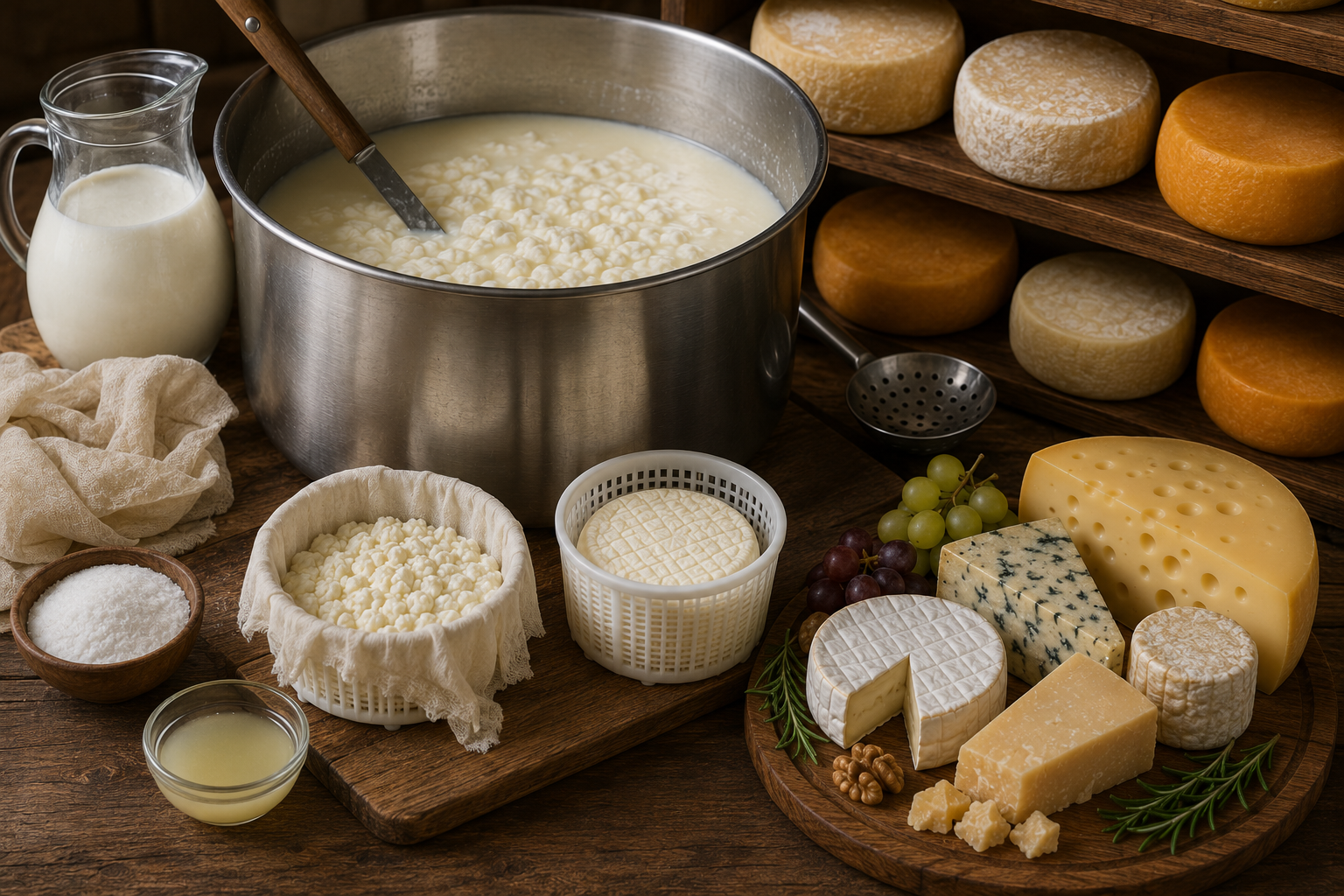
In cheese making, milk is first heated to around 35 °C (95 °F) — the ideal temperature for fermentation. A small amount of calcium chloride (about one teaspoon per 10 liters of milk) is often added, usually dissolved in warm water beforehand.
This helps improve curd formation and increases yield.
What Is Cheese Made Of?
Cheese is a fermented dairy product obtained by the coagulation of casein, a milk protein. With the help of rennet and lactic acid bacteria, the whey (liquid) separates from the curd (solid).
Further processing, maturation, and storage determine the final cheese type.
Different varieties of cheese therefore vary not only by milk source but also by fermentation time, fat content, and bacterial cultures used.
How Are Hard and Soft Cheeses Produced?
The difference between hard and soft cheeses begins with the amount of milk used:
Hard cheeses require more milk than soft ones.
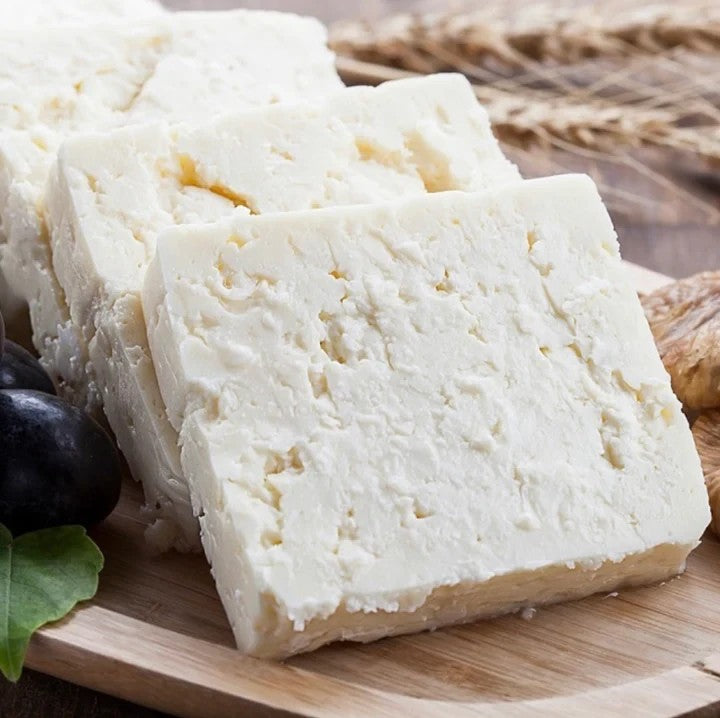
Fermentation temperature also plays an important role — for example, in white cheese, the ideal temperature is between 29 °C and 32 °C.
At higher temperatures with more bacterial culture, the result is a firmer texture; at lower temperatures with less culture, the cheese becomes softer.
Texture also depends on the type of milk — sheep’s or goat’s milk, for instance, produces a more distinctive and dense structure.