
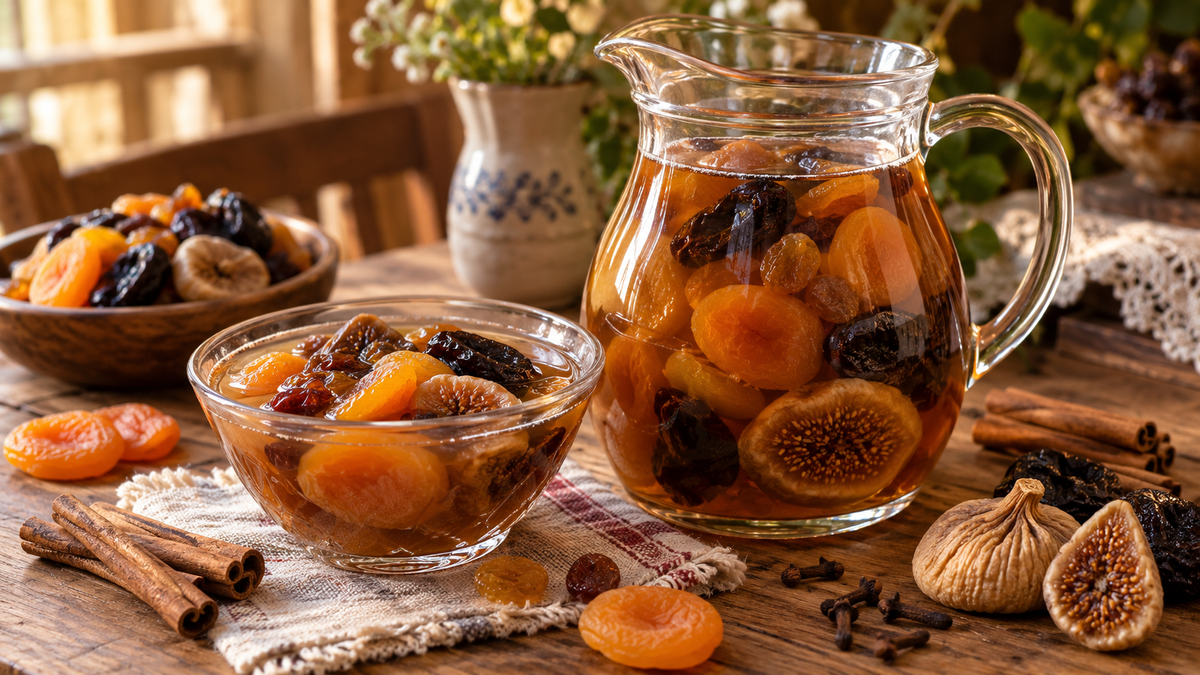
Dried fruit compote is made by gently cooking dried fruits with water, optional sugar, and aromatic spices. Dried apricots, raisins, dried figs, dried plums, dried mulberries, and similar fruits create different layers of flavor, color, and texture in the compote. For this reason, the fruit selection, cutting size, cooking time, and aroma balance should be planned together.
Since dried fruits have a denser structure than fresh fruits, preparation is important before cooking. The fruits should be checked, rinsed, and, if necessary, soaked briefly. Large fruits such as dried figs and dried apricots may soften on the outside while remaining firm inside if they are added directly to the pot. Keeping the pieces similar in size helps the compote cook more evenly.
Spices can add a clearer aroma to dried fruit compote. Cinnamon sticks, cloves, and a small amount of lemon peel can support the intense taste of dried fruits. However, if these ingredients are used too heavily, they may cover the fruit flavor. For this reason, spices should be added in moderation and checked toward the end of cooking.
Dried fruit compote can be served warm, lukewarm, or cold. It can accompany daily meals, special menus, or traditional table settings. Letting the compote rest after cooking allows the fruits to release more aroma into the liquid. This makes the flavor feel more balanced when served.
Which Fruits Are Used for Dried Fruit Compote?
The most commonly used fruits for dried fruit compote include dried apricots, raisins, dried figs, dried plums, and dried mulberries. Each fruit adds a different quality to the compote. Dried apricots give a lighter color and mild aroma, while raisins add a more intense sweetness. Dried figs create a fuller texture, and dried plums produce a darker color and stronger flavor.
Fruit selection should be based on the desired flavor profile. For a lighter and clearer compote, dried apricots and raisins can be used more prominently. For a darker and more aromatic compote, dried plums, dried figs, and raisins can be combined. Small fruits such as dried mulberries add a different appearance and a delicate flavor transition.
Using too many different dried fruits in one compote does not always give a better result. Each fruit has a different cooking time and releases flavor into the water at a different pace. Choosing three or four main fruits usually creates a more balanced structure. For example, dried apricots, raisins, and dried figs can create a clear and harmonious compote.
The quality of the fruits also affects the result. Very hard, overly dried, or unpleasant-smelling fruits can change the overall taste of the compote. Before use, the color, smell, and texture should be checked. Very sticky or dusty-looking fruits should be sorted and rinsed if needed. Clean and well-selected fruits help the compote look clearer and more balanced.
How Should Dried Fruits Be Prepared for Compote?
Dried fruits should be sorted carefully before they are used for compote. Stems, pits, hard tips, or overly dried pieces should be removed. Large fruits such as dried apricots, dried figs, and dried plums can be used whole, but they may be halved or cut into a few pieces for more even cooking. Small fruits such as raisins and dried mulberries can usually be used whole.
Rinsing the fruits is an important step in compote preparation. The dried fruits can be placed in a strainer and rinsed briefly under plenty of water. If the fruits are very dry, they can be soaked in lukewarm water for 10 to 15 minutes. This helps them soften slightly. However, they should not be soaked for too long, because some of their flavor may pass into the soaking water.
If large fruits are cut, the pieces should not be too small. Very small pieces may fall apart during cooking and make the compote look cloudy. Very large pieces, on the other hand, may take longer to soften. Medium-sized pieces are better for even cooking and a cleaner serving appearance.
Before the fruits are added to the pot, excess water should be drained. Water left on the surface of the fruits can slightly change the liquid amount in the recipe. If a clearer compote is desired, the fruits can rest in the strainer for a short time after rinsing. This preparation step helps control the cooking process, consistency, and aroma more easily.
How Is the Balance of Sugar, Cinnamon, and Cloves Set in Compote?
The amount of sugar in compote should be adjusted according to the natural intensity of the dried fruits. Raisins, dried figs, and some date varieties already provide a strong sweetness. In recipes using these fruits, the amount of sugar can be reduced. In compotes based mainly on dried apricots or dried plums, sugar can be added in a more controlled way according to taste.
Cinnamon is one of the most common aromatic ingredients used in compote. A cinnamon stick is generally preferred over ground cinnamon because it can be removed from the pot and is easier to control. If a cinnamon stick is boiled for too long, it can leave a dominant flavor. For this reason, it should be used in small amounts or removed once the aroma is sufficient.
Cloves give compote a strong fragrance and flavor. However, their aroma is very powerful. If too many cloves are used, they can overpower the fruit taste. A few cloves are usually enough for one pot of compote. Removing them before serving prevents an overly intense spice flavor. Cloves pair especially well with raisins, dried plums, and dried figs.
When balancing sugar, cinnamon, and cloves, the resting time should also be considered. As the compote rests, the fruits continue to release flavor into the liquid, and the aroma becomes more settled. A taste that seems light right after cooking may become clearer after a few hours. For this reason, sugar and spices should be added carefully, and the flavor can be checked again after resting.
How Is Dried Fruit Compote Cooked and Served?
To cook dried fruit compote, water is first added to a pot and brought to a boil. Then the prepared dried fruits are added. The cooking time changes according to how firm the fruits are. Very hard fruits take longer to soften, while raisins and dried mulberries open up more quickly. For this reason, larger and firmer fruits can be added first, and smaller fruits can be added later.
The compote should not be boiled too aggressively. Controlled cooking over medium heat helps the fruits soften without falling apart. Boiling too strongly for a long time can break the fruits and make the compote look cloudy. Sugar, cinnamon sticks, and cloves can be added either at the beginning in small amounts or during cooking after checking the taste.
After cooking, the compote should be removed from the heat and left to rest for a while. During this resting period, the fruit and spice aromas continue to blend with the liquid. If it will be served warm, a short rest is enough. If it will be served cold, it can cool to room temperature first and then be placed in the refrigerator.
For serving, the compote can be poured into glasses or small bowls. If served with the fruits, each portion should include a balanced amount of fruit. For a clearer drink-style presentation, the compote can also be strained. A simple serving style with glass bowls, fruit pieces, or a cinnamon stick helps preserve its traditional appearance.