
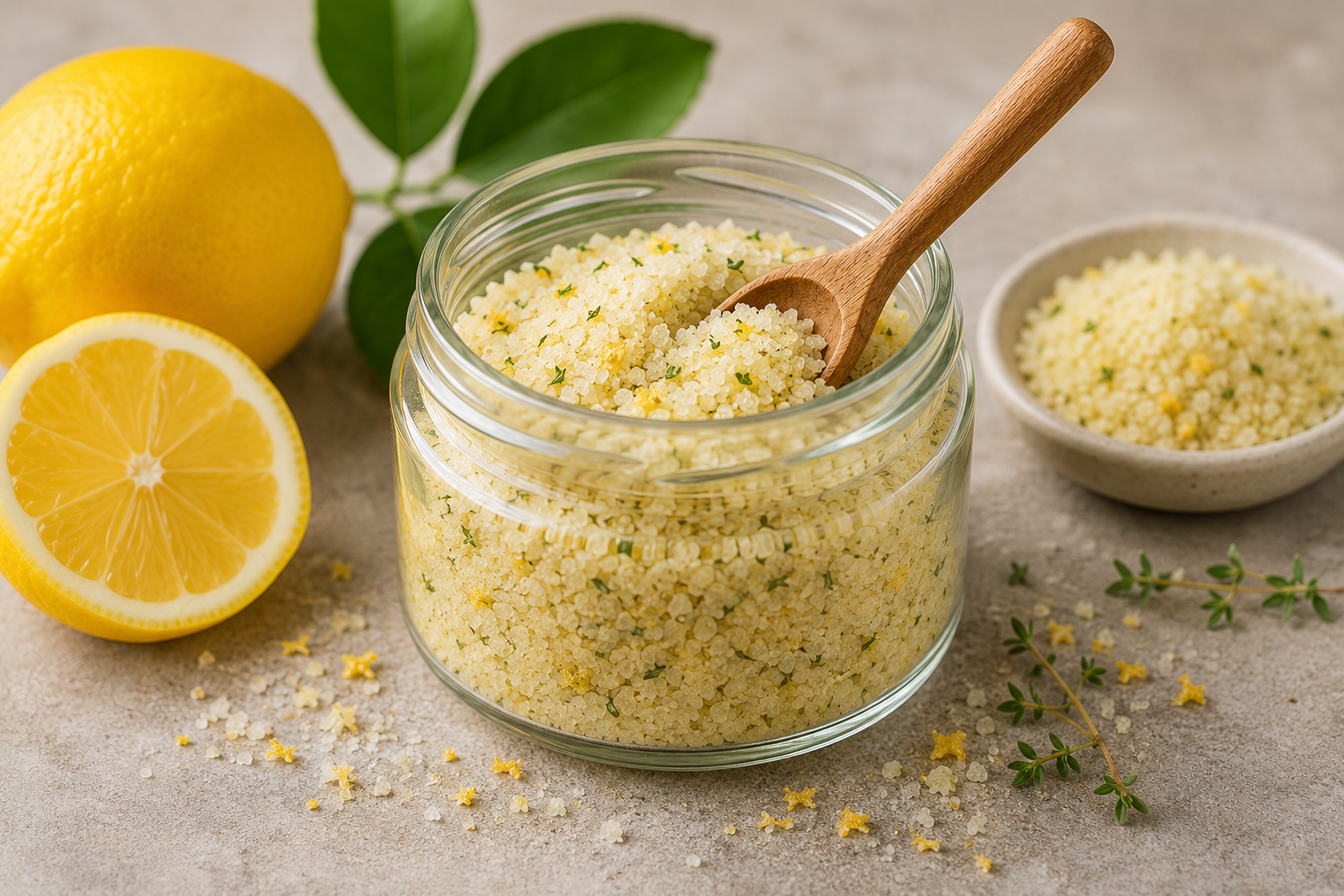
Lemon salt, also known as citric acid, is an organic compound naturally present in citrus fruits. It is not directly extracted from lemons but is typically produced through industrial fermentation. Sold in crystalline form, it has a sharp acidic taste and is valued for its wide range of applications. Lemon salt is commonly used in cooking, cleaning, and even in personal care and industrial products.
Where Is Lemon Salt Used?
Lemon salt has many practical uses in different areas:
Citric acid, also known as lemon salt, is a compound naturally found in citrus fruits. It is available as white crystals and has a sour taste. Citric acid can be used in both culinary and cleaning applications.
In the Kitchen: It can be added to jams, pickles, and certain recipes to provide a sour flavor.
For Cleaning: It is useful for cleaning kettles, coffee makers, water heaters, and dishwashers. It can also be applied to countertops, sinks, and tiles.
Personal Care and Industrial Use: Citric acid may be included in various formulations as a supporting ingredient or additive.
Features: Citric acid is utilized as a flavor balancing ingredient in food and as a supportive component in cleaning applications.
Properties of Lemon Salt
Lemon salt helps extend the shelf life of foods and serves as a natural option in home cleaning. It is valued as an eco-friendly alternative to strong chemicals, particularly for removing limescale. In cosmetics, it is included for its exfoliating and cleansing qualities. While it has many uses, it should be applied in moderation, as overuse can cause irritation or surface damage in certain contexts.
Lemon Salt and Vinegar Mixture
When combined with vinegar, lemon salt becomes a powerful natural cleaner, effective in many household tasks:
Descaling and rust removal: Used for kettles, showerheads, and sinks.
Dishwasher cleaning: Removes grease and limescale buildup for cleaner results.
Kitchen and bathroom cleaning: Works well on countertops, sinks, and tiles.
Odor removal: Neutralizes unpleasant smells in refrigerators, trash bins, and drains.
This mixture is considered an eco-friendly alternative to harsh cleaning products, though it should be applied cautiously on delicate surfaces to avoid damage.