
Black Grape Molasses: Ingredients, Uses, and Recommended Intake
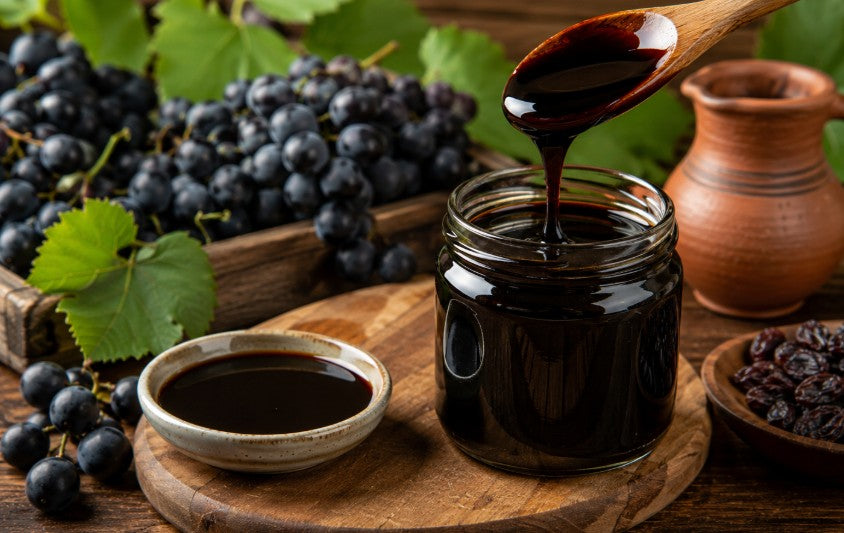
Black grape molasses is a traditional food product known for its dark color and rich aroma. It is typically made by boiling grape juice for long periods and is used in various recipes. Thanks to its thick consistency and natural grape flavor, it is commonly preferred at breakfast or in desserts.
Nutritional Value of Black Grape Molasses
One tablespoon of grape molasses contains approximately 58 calories. It also provides around 14.95 g of carbohydrates, 0.02 g of fat, 7.40 mg of sodium, 292.80 mg of potassium, 41.00 mg of calcium, and 0.94 mg of iron. These values may vary depending on the production method and grape variety.
How Much Should Be Consumed Daily?
Black grape molasses can be used at breakfast or in dessert recipes; it can easily be added to yogurt, tahini, or baked goods. These amounts are based on traditional usage and may vary according to individual needs. Like all foods, molasses should be consumed in moderation.
Points to Consider During Consumption
Since it naturally contains sugars, excessive consumption should be avoided. Otherwise, it may cause digestive discomfort in individuals with certain sensitivities. Intake habits should be adjusted based on personal tolerance.
Information About the Production Process
In molasses produced traditionally by boiling in an open cauldron for long periods, a natural compound called HMF (Hydroxymethylfurfural) may form. Therefore, production temperature and duration are among the factors that influence product quality. Lower temperatures and controlled production are generally preferred.
Common Uses
Molasses is most commonly consumed at breakfast, mixed with yogurt, combined with tahini, or used in pastry recipes. It is also valued as a natural source of flavor and color in dessert making.