
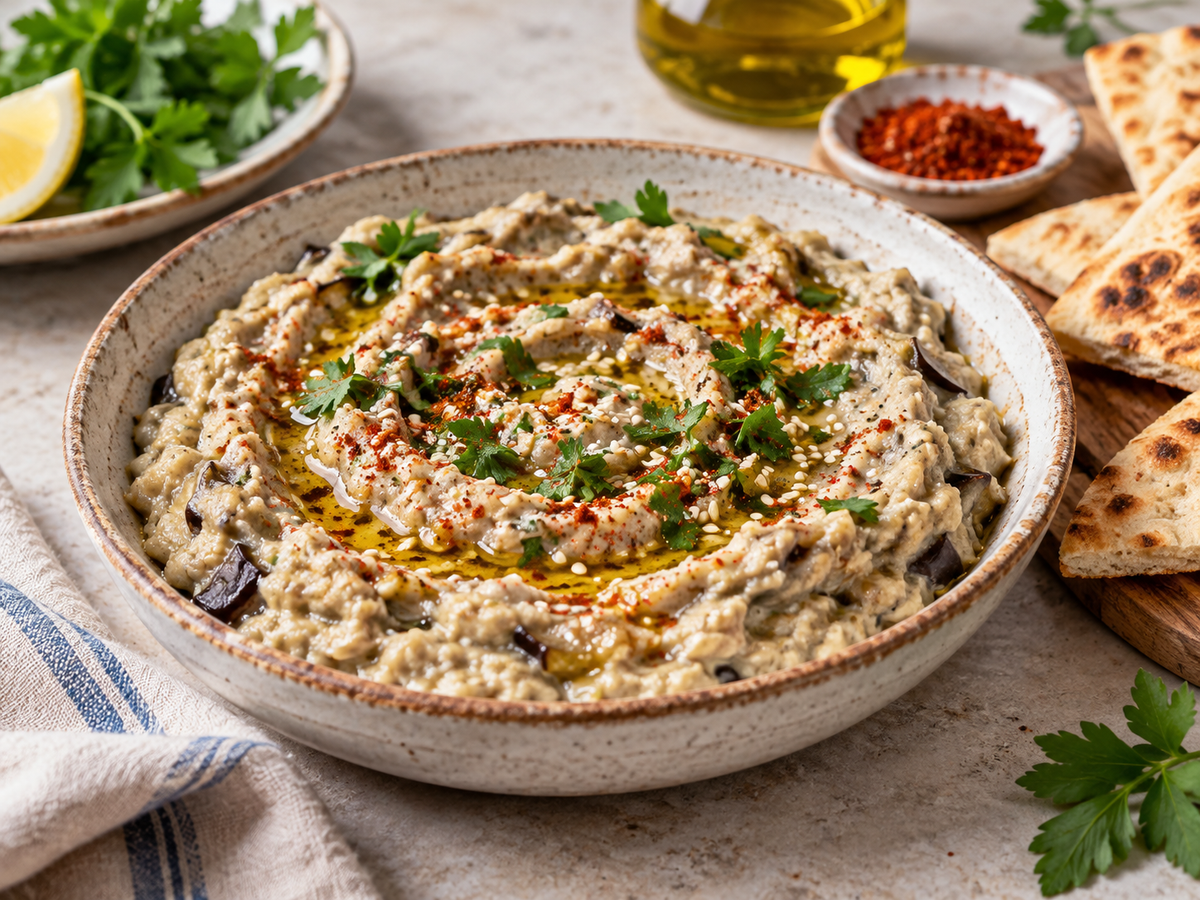
Tahini eggplant meze is made by mixing roasted eggplant with tahini, lemon juice, garlic, olive oil, and spices. The roasted eggplant gives the meze a soft texture and a lightly smoky base, while tahini adds a thicker consistency and a more distinct flavor layer. The most important points in this recipe are removing excess water from the eggplant, using tahini in a balanced amount, and adjusting lemon and garlic carefully.
The roasting method directly affects the final result of eggplant meze. Eggplants can be roasted over a flame, in the oven, or on a roasting pan. After roasting, the skin should be completely removed and the inside should be prepared as smoothly as possible. If too much liquid remains in the eggplant, the meze may become loose and may not form the desired dense texture when mixed with tahini. For this reason, roasted eggplant should be drained briefly or excess moisture should be removed after chopping.
Tahini is a strong ingredient in eggplant meze. If too little is used, it may not be noticeable enough; if too much is used, the roasted eggplant flavor may fall into the background. Lemon juice and garlic help balance the density of tahini. These ingredients should not be added all at once in large amounts. The flavor and consistency should be checked step by step.
Tahini eggplant meze can be served as a simple meze plate or finished with olive oil, red pepper flakes, parsley, sesame, or walnuts. The purpose of the presentation is to create a neat look without hiding the natural color and texture of the eggplant and tahini mixture. Too much garnish can make the plate look crowded. For this reason, toppings should be used in moderation.
Which Ingredients Are Used for Tahini Eggplant Meze?
The basic ingredients for tahini eggplant meze are roasted eggplant, tahini, lemon juice, garlic, olive oil, and salt. These ingredients form the main structure of the meze. Eggplant provides the roasted aroma and soft base, while tahini gives the mixture density. Lemon juice creates a brighter flavor transition, and garlic makes the aroma more noticeable.
Eggplant selection affects the final texture of the meze. Very seedy, watery, or firm eggplants may not give a smooth result. Fleshy eggplants that are suitable for roasting usually work better. After roasting, the skin should be cleaned completely, and burned peel pieces should not remain in the mixture. Otherwise, the texture and appearance of the meze may be affected.
Tahini should be stirred well before use. Tahini can separate in the jar, with oil on top and a denser layer at the bottom. If only the oily part is used, the meze may become too runny. If only the thick part is used, the mixture may become too heavy. Homogeneous tahini blends more evenly with the eggplant and creates a smoother consistency.
For seasoning, black pepper, cumin, red pepper flakes, or a small amount of ground red pepper can be used. However, the spices should not overpower the main flavor. Tahini eggplant meze is based mainly on roasted eggplant and tahini aroma, so spices should remain supportive. During serving, olive oil, parsley, or sesame can create a simple and clean appearance.
How Should Eggplant Be Prepared Before Adding It to the Meze?
Eggplant should be roasted well before being added to the meze. Roasting burns the skin while softening the inside and creating the main aroma of the dish. If the eggplants are roasted in the oven, they should be pierced in a few places before cooking. If they are roasted over a flame, they should be turned regularly so all sides soften evenly. Eggplant that is removed before the inside is fully soft may affect the texture of the meze.
After roasting, the eggplants should rest briefly and then be peeled. Burned peel pieces should not be allowed to mix with the flesh. A roasted aroma is desired, but burnt skin pieces may create a hard and bitter feeling in the meze. The stem ends and firm fibrous parts should also be removed. Cleaned eggplant flesh creates a smoother base for the meze.
Excess liquid should be removed from the eggplant. Roasted eggplant naturally contains moisture. This liquid can loosen the meze and make the mixture look uneven when combined with tahini. After peeling, the eggplants can be left in a strainer for a short time. Then they can be finely chopped with a knife or mashed with a fork. If a very smooth texture is desired, they can be processed briefly, but over-processing may weaken the texture.
The chopped eggplant should come to room temperature before being mixed with tahini. Very hot eggplant can change the consistency of the tahini and make the garlic aroma sharper. Working with warm or cooled eggplant gives a more controlled result. When the prepared eggplant is mixed with tahini and the other ingredients, the meze reaches a more balanced consistency.
How Is the Balance of Tahini, Garlic, and Lemon Set?
The balance of tahini, garlic, and lemon is one of the most important stages in tahini eggplant meze. Tahini gives the mixture a dense and full texture, while lemon juice opens that density and creates a brighter taste. Garlic makes the aroma clearer. If these three ingredients are used too heavily, the roasted flavor of the eggplant may fade into the background. They should therefore be added carefully and gradually.
The amount of tahini should be adjusted according to the amount of eggplant. Using too much tahini for a small amount of eggplant can make the meze feel heavy. Tahini should be considered a supporting ingredient so the natural roasted aroma of the eggplant can still be noticed. It is better to start with a smaller amount of tahini and increase it only after checking the flavor and consistency.
Lemon juice is used to balance the density of tahini. However, too much lemon can make the meze taste overly sour. Lemon juice should be added little by little, and the mixture should be checked after each addition. When tahini meets lemon, the consistency may thicken slightly. In that case, a very small amount of water or olive oil can help make the texture smoother.
Garlic should also be adjusted carefully. Crushed or grated garlic is quickly noticeable in tahini-based mezes. As the meze rests, the garlic aroma may become more pronounced. For this reason, especially if the meze will be prepared in advance, garlic should be used in a controlled amount. The goal is for garlic to accompany the eggplant and tahini, not to overpower them.
How Is Tahini Eggplant Meze Served?
Tahini eggplant meze can be served on a wide and shallow plate. After the meze is placed on the plate, the surface can be smoothed gently with a spoon and shaped into small waves. These surface lines help olive oil sit more neatly on top. Wide plates show the consistency and garnish better than deep bowls.
During serving, a thin drizzle of olive oil can be added over the surface. Olive oil gives the meze a shiny and organized appearance. Red pepper flakes, ground red pepper, sesame, walnuts, or finely chopped parsley can be added in small touches. Using all toppings heavily at once can make the plate look crowded. A simpler presentation with one or two complementary ingredients is usually more balanced.
Tahini eggplant meze can be served with bread, flatbread, toasted bread slices, or vegetable plates. It can also be placed on a meze plate alongside other olive oil dishes and salads. Its consistency should not be too runny, because it may spread too much when served on bread. A thicker texture looks neater both on the plate and in small appetizer servings.
The meze can rest in the refrigerator for a short time before serving. During this resting period, tahini, eggplant, garlic, and lemon aromas become more unified. If it waits for a long time, the texture may become thicker. In that case, it can be adjusted before serving with a little olive oil or a few drops of lemon juice. The garnish should be added at the final stage.