
To prevent eggplant from absorbing too much oil when frying, the pieces should be cut evenly, thoroughly dried, and cooked at an appropriate oil temperature. Eggplant added to oil that has not heated sufficiently may remain in the pan longer before browning, potentially increasing oil absorption. Proper preparation, consistent oil temperature, and controlled frying time are the most important factors in reducing the amount of oil absorbed by eggplant.
Eggplant has a soft, porous interior that can absorb oil during cooking. The amount of oil absorbed depends on the thickness of the slices, surface moisture, frying temperature, and time spent in the oil. Thin slices expose more surface area relative to their weight, while thicker pieces may require additional time to soften completely. The cutting method should therefore be selected according to the dish being prepared.
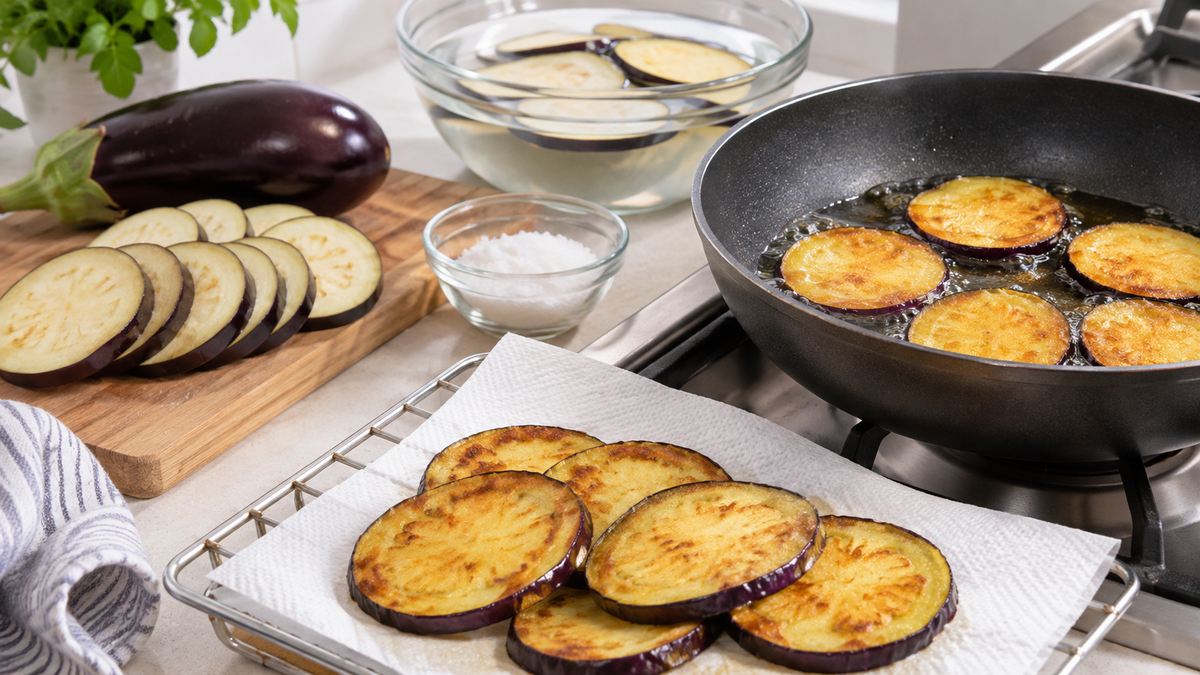
Soaking eggplant in salted water is a familiar preparation method in traditional cooking. This process can influence the flavor and texture of certain eggplant varieties. However, soaking in salted water does not automatically prevent oil absorption. If the eggplant is not dried properly afterward, the remaining moisture may cause splattering and lower the oil temperature during frying.
After frying, allowing the eggplant to drain briefly can remove some of the oil remaining on its surface. A wire rack or suitable strainer can be used for this purpose. For recipes where controlling the total amount of oil is a priority, roasting in the oven or cooking in an air fryer may provide alternatives. These methods produce somewhat different textures but allow the amount of added oil to be measured more easily.
Why Does Eggplant Absorb So Much Oil When Fried?
One of the main reasons eggplant absorbs oil is the porous structure of its flesh. Eggplant contains numerous small spaces that contribute to its characteristic sponge-like texture. During cooking, the vegetable softens and some of its water evaporates. Oil can enter spaces within the structure, particularly as the eggplant cools after being removed from the hot oil. This can give fried eggplant a richer, oilier texture than some other vegetables.
Frying at an insufficient temperature can also contribute to greater oil absorption. When the oil is too cool, the eggplant takes longer to brown, extending the cooking process. However, excessively hot oil can cause the outside to darken rapidly before the inside becomes tender. The objective is not to use the highest possible temperature but to maintain a level that allows the surface and interior to cook evenly.
The size and thickness of the eggplant pieces influence the result. Very thin slices have a greater surface area exposed to oil, while thick slices may require longer cooking. When pieces of different thicknesses are placed in the same pan, some may brown before others are fully cooked. Cutting pieces into similar sizes helps maintain a more consistent frying time.
Overcrowding the pan is another common problem. Adding too many cold eggplant slices at once can cause the oil temperature to drop. Pieces may also overlap, preventing their surfaces from browning evenly. Some slices may consequently remain in the oil longer than necessary. Frying in smaller batches helps maintain a steadier temperature and provides more space for each piece to cook.
How Should Eggplant Be Prepared Before Frying?
Before frying, eggplant should be washed, trimmed, and cut into shapes appropriate for the recipe. Firm eggplants with smooth skin and without noticeably soft or damaged areas are generally preferable. Overripe eggplants with many developed seeds may produce a different texture when cooked. The skin can be removed entirely or peeled in alternating strips, depending on the desired appearance and consistency.
Eggplant can be cut into rounds, lengthwise slices, or cubes. For sliced eggplant, keeping the pieces at a similar thickness helps them brown evenly. Very thin slices may soften quickly and become difficult to turn without breaking. Pieces that are excessively thick may brown on the outside before their centers become tender. Cutting dimensions should therefore be selected with the cooking method in mind.
Soaking eggplant in salted water is a traditional preparation technique, particularly for varieties with a noticeably bitter taste. Many modern eggplant varieties are relatively mild, so prolonged soaking is not always necessary. Saltwater treatment should not be considered a guaranteed way to reduce oil absorption. The overall result still depends on moisture, frying temperature, and cooking duration.
If the eggplant has been soaked, it should be drained thoroughly and dried with a clean kitchen towel or paper towels. Wet surfaces can cause hot oil to splatter, creating a safety risk. Excess moisture can also temporarily reduce the temperature of the oil. Preparing and drying all the pieces before heating the pan makes the frying process easier to manage.
How Should Oil Temperature Be Adjusted When Frying Eggplant?
The oil should be hot enough to brown the eggplant evenly while allowing the inside to become tender. For deep-frying, many recipes use temperatures of approximately 170–180°C, although the appropriate temperature depends on slice thickness, the cooking method, and the type of oil. Oil that is too cool may extend frying time, while excessively hot oil can burn the surface before the interior is cooked.
A kitchen thermometer is useful for monitoring the temperature accurately. Without one, the appearance of the oil can provide limited clues, but bubbles alone cannot establish its exact temperature. Heavy smoking may indicate that the oil has overheated. If this occurs, the heat should be reduced and the condition of the oil assessed before continuing. The oil should always be used within its recommended temperature range.
Eggplant should be added in small batches rather than all at once. Filling the pan with too many pieces can lower the oil temperature and make even browning more difficult. Leaving enough space around the slices allows them to cook more consistently. After one batch is removed, the oil should be allowed to return to the appropriate temperature before another batch is added.
Both the color and tenderness of the eggplant should be checked during frying. A deeply browned exterior does not necessarily mean the center has finished cooking. Once the pieces are evenly browned and sufficiently tender, they should be removed without unnecessary additional frying. Placing them briefly on a wire rack or in a strainer can help remove excess surface oil before serving.
Which Cooking Methods Can Help Eggplant Absorb Less Oil?
Several cooking methods can help control the amount of oil used when preparing eggplant. These include carefully managed deep-frying, shallow pan-frying, oven roasting, and air frying. Each method creates a slightly different texture and appearance. Traditional deep-frying produces a distinctive browned surface, while oven and air fryer methods make it easier to measure and limit the amount of added oil.
When deep-frying, maintaining the correct oil temperature is particularly important. Using only a very small amount of oil does not automatically mean the eggplant will absorb less. If heat is distributed unevenly or the temperature fluctuates considerably, some pieces may take longer to cook. Properly dried eggplant should therefore be fried in manageable batches, then drained briefly after removal.
Oven roasting provides an alternative for controlling the amount of oil from the beginning. Eggplant can be sliced evenly and arranged in a single layer on a baking tray. A measured amount of oil can then be brushed or distributed across the pieces. The eggplant should be cooked in a preheated oven until the surfaces brown and the centers soften. Overcrowding the tray can interfere with even roasting, so space should be left between the pieces.
An air fryer can also prepare eggplant with a measured amount of oil. The pieces should be arranged so that hot air can circulate freely around them. Overlapping or tightly packed slices may cook unevenly. Depending on the appliance, turning the eggplant during cooking may improve browning. Temperature and cooking time should be adjusted according to the manufacturer's instructions and the size of the pieces.
Shallow pan-frying is another option for achieving a browned surface while using a controlled amount of oil. Eggplant slices can be cooked in a lightly oiled pan and turned carefully as needed. However, repeatedly adding more oil during cooking may increase the total amount used. Measuring the oil beforehand and monitoring how much is added provides better control. Reducing oil absorption depends on combining appropriate preparation, measured oil quantities, suitable temperatures, and careful cooking times.