
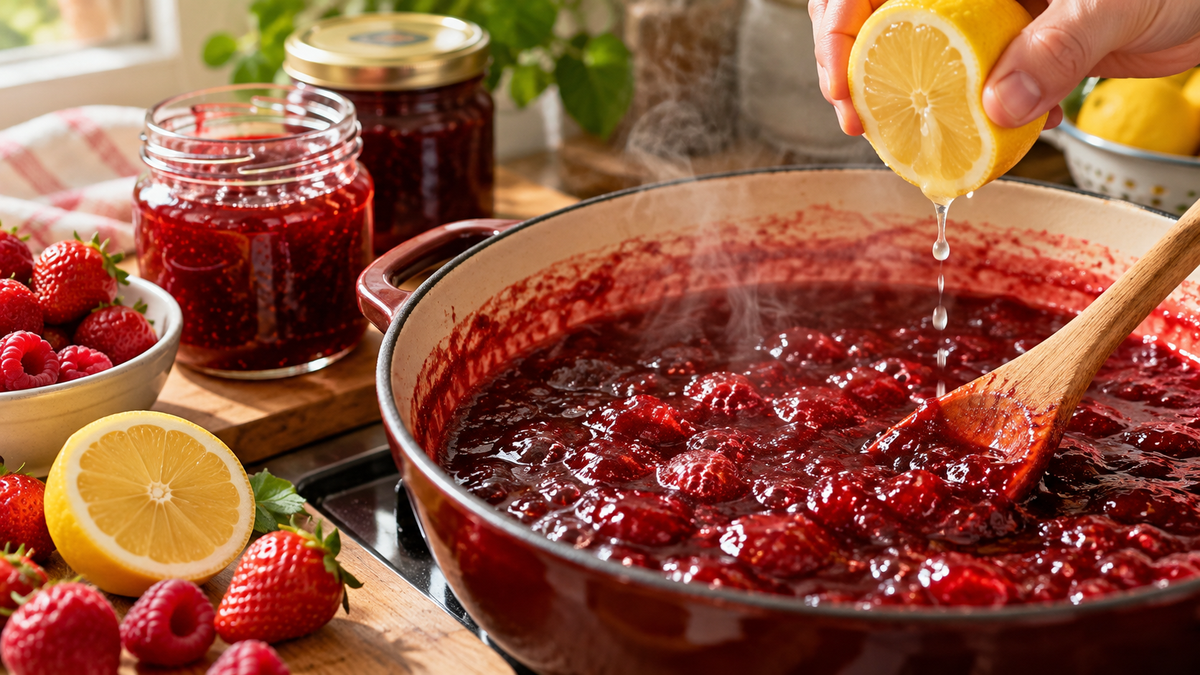
Lemon juice is generally added during the last 5–10 minutes of cooking when preparing traditional homemade jam. Once the fruit and sugar mixture has cooked sufficiently and the jam begins to reach the desired consistency, lemon juice can be stirred in. This helps balance the sweetness and may reduce the tendency of sugar crystals to form. However, the ideal time to add lemon juice depends on the fruit, the amount of sugar, and the preparation method. Some recipes require lemon juice at the beginning of cooking.
Lemon juice is not used simply to give jam a slightly sour taste. It also affects acidity, which plays a role in the interaction between fruit, sugar, and pectin. Pectin is a naturally occurring substance in fruit that contributes to the gel-like consistency of certain jams. The right balance of acidity can help pectin form a stable structure, although the amount required varies between recipes.
Strawberries, cherries, apricots, figs, and peaches have different natural acidity and pectin levels. Some fruits already have a noticeable tart flavor, while others are considerably sweeter. As a result, using the same amount of lemon juice for every fruit does not necessarily produce the same flavor or consistency. The characteristics of the fruit should be considered when selecting a recipe.
Lemon juice is only one factor affecting the final consistency of jam. The moisture content of the fruit, sugar concentration, cooking time, and size of the saucepan also influence the result. Jam cooked for too long may become excessively thick, while a mixture removed from the heat too early may remain runny. Lemon juice should therefore be treated as part of the overall recipe rather than a separate solution for thickening jam.
Why Is Lemon Juice Added to Jam?
One of the main reasons lemon juice is added to jam is to balance the sweetness of sugar with the natural flavor of the fruit. A small amount of acidity can make fruit flavors more noticeable, particularly in jams prepared with sweet fruits. However, adding too much lemon juice can overpower the original fruit aroma and make the finished jam excessively sour. The amount should therefore match the fruit and the intended flavor.
Another important function of lemon juice is its influence on acidity. Many fruits contain natural pectin, which can form a gel when the sugar concentration and acidity are appropriate. Lemon juice can help establish the acidic conditions needed in certain pectin-based jam recipes. Nevertheless, adding lemon juice does not automatically guarantee a thick consistency. The amount and type of pectin present in the fruit are also important.
Lemon juice may also influence sugar crystallization. During cooking, heat and acid can cause some sucrose to break down into glucose and fructose. Under certain conditions, this change can reduce the tendency of large sugar crystals to develop during storage. However, jam can still crystallize when it contains lemon juice, particularly if the sugar concentration is too high or the preparation conditions are unsuitable.
The acidity provided by lemon juice may also affect the appearance of certain fruit pigments. Some naturally occurring colors respond to changes in acidity, which can alter the shade of the finished jam. However, color preservation does not depend on lemon juice alone. Prolonged heating, high temperatures, and fruit maturity can also cause color changes. Lemon juice should be regarded as an ingredient that supports the overall balance of flavor, texture, and appearance.
Should Lemon Juice Be Added While Jam Is Boiling or After Cooking?
In many traditional jam recipes, lemon juice is added during the final stage of boiling. The fruit and sugar are first cooked until the mixture begins to thicken. The measured lemon juice is then stirred into the hot jam, which continues cooking for several minutes. This allows the juice to spread evenly throughout the mixture before the final consistency is checked.
Adding lemon juice toward the end is a common approach when the original fruit aroma is intended to remain prominent. It also allows the flavor of the concentrated fruit mixture to be assessed before the final addition. However, the quantity should still follow the recipe rather than being determined entirely by taste, especially when the jam is intended for preservation.
Some jam recipes require lemon juice at the beginning of cooking. This is particularly relevant to certain preparations that rely on pectin to create a specific gel structure. In these recipes, the necessary acidity may need to be present from the early stages of heating. Therefore, adding lemon juice during the final minutes is a common traditional method, not a universal rule for every jam.
Adding lemon juice only after the jam has completely cooled is generally not recommended unless the recipe specifically requires it. Distributing the juice evenly through a cold, thick mixture can be difficult, and the added liquid may alter the established consistency. Furthermore, adding lemon juice after cooking does not automatically make jam safe for storage at room temperature. Products intended for long-term storage should follow tested recipes with appropriate acidity and processing instructions.
How Much Lemon Juice Should Be Added to Jam?
The amount of lemon juice needed for jam depends on the fruit, its natural acidity, and the amount of sugar used. Some traditional recipes use approximately one or two tablespoons of lemon juice for one kilogram of fruit. However, this is not a universal measurement suitable for every jam. Recipes using different fruits or added pectin may require different quantities to achieve the intended consistency.
Strawberry and peach jams may use lemon juice to provide a more noticeable contrast to the fruit's sweetness. Sour cherries already contain considerable natural acidity, so their recipes may require a different approach. The correct amount should therefore be determined by the preparation method rather than by fruit weight alone. Following a tested recipe provides more consistent results.
When using fresh lemons, the juice should be squeezed and any seeds removed before it is added to the jam. Lemon size and juiciness vary, so one lemon does not always provide a predictable quantity of juice. Measuring the liquid with a tablespoon or in milliliters makes the recipe easier to repeat. This is especially helpful when preparing multiple batches with the same fruit.
The flavor of hot jam may differ from its flavor after cooling. For this reason, making large adjustments to lemon juice based only on tasting the hot mixture may lead to an unbalanced result. When preparing jam for preservation, the acidity should not be altered freely. Some tested recipes depend on specific ingredient proportions to achieve appropriate conditions for storage.
How Does Lemon Juice Affect Jam Consistency and Sugar Crystallization?
Lemon juice can influence jam consistency by changing the acidity of the mixture. Naturally occurring pectin can form a gel-like structure when the proportions of sugar and acid are suitable. An appropriate amount of lemon juice may therefore support thickening in certain recipes. However, fruits vary considerably in their pectin content. Adding more lemon juice to a low-pectin fruit does not necessarily create a firm jam, and the recipe may require added pectin.
Jam can appear more liquid while it is hot than it will after cooling. Continuing to boil the mixture until it becomes very thick in the saucepan may therefore result in an overly firm product. A simple consistency check involves placing a small amount of jam on a chilled plate and allowing it to cool briefly. The way the cooled sample moves can help indicate whether the desired consistency has developed.
Sugar crystallization occurs when dissolved sugar forms crystals in the finished jam. This may be influenced by sugar concentration, water content, cooking conditions, and storage. The acid in lemon juice can encourage some sucrose to break down into glucose and fructose during heating. Under certain conditions, this can make crystallization less likely, although it cannot eliminate the possibility entirely.
To limit unwanted crystallization, sugar should be properly dissolved during preparation, and the jam should not be cooked longer than necessary. Excessive boiling increases water loss and can raise sugar concentration. Appropriate filling and storage methods are also important. Lemon juice contributes to the process, but achieving the desired consistency requires the ingredients, cooking time, and preparation method to work together.