
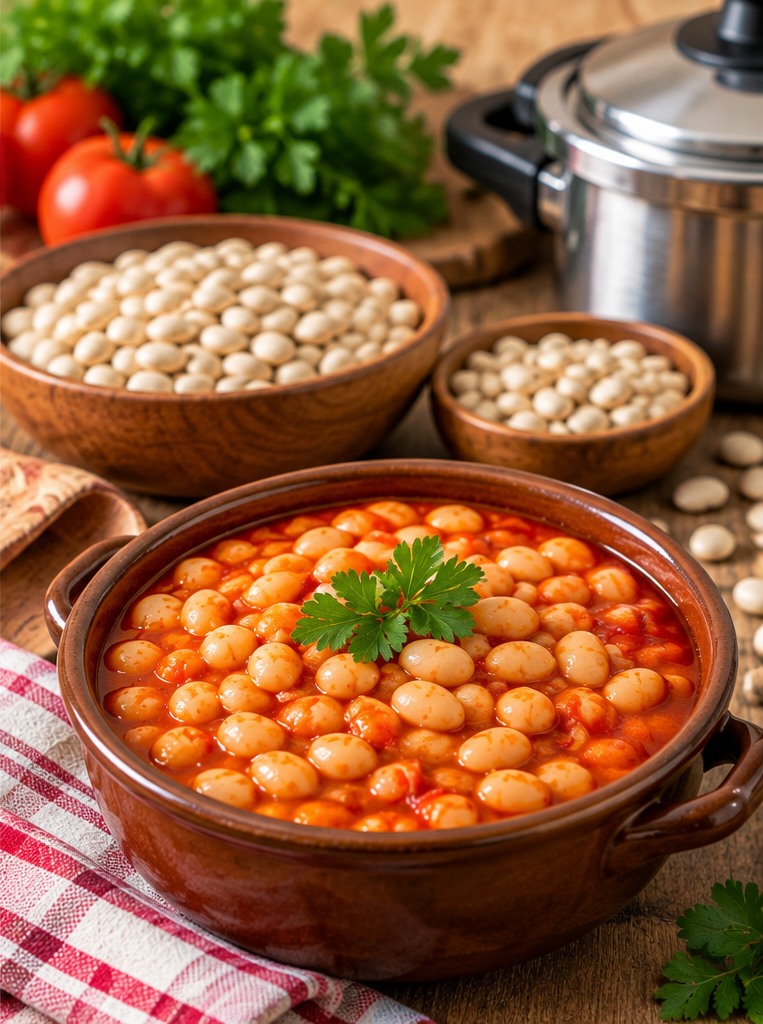
To make dried beans cook faster, they should be soaked beforehand, cooked with sufficient water, and prepared using an appropriate cooking method. Soaking dried beans overnight allows the grains to absorb moisture and can reduce the time needed for them to become tender. Using a pressure cooker is another effective way to shorten cooking time. However, the variety, size, age, and storage conditions of the beans can significantly influence how quickly they soften.
One of the most common problems when preparing dried beans is that they remain firm despite prolonged cooking. This does not necessarily mean they have simply been cooked for too little time. Beans that have been stored for an extended period, the mineral content of the water, and certain ingredients added during cooking can also affect softening. Both the preparation stage and cooking process should therefore be considered.
Cooking beans quickly is important, but achieving a tender texture without breaking the beans apart is equally valuable. Beans cooked at a vigorous boil for too long may develop split skins, while some centers remain relatively firm. Beans of different sizes may also cook at different rates. Choosing similarly sized beans and controlling the cooking temperature can produce a more consistent result.
The cooking equipment also affects preparation time. A regular pot generally requires more time than a pressure cooker. However, pressure cookers must be used according to the manufacturer's instructions. Beans expand and may produce foam during cooking, so the recommended filling limits and pressure-release procedures must be followed carefully.
How Many Hours Should Dried Beans Be Soaked Before Cooking?
Dried beans are commonly soaked in water for approximately 8–12 hours before cooking. During this period, the beans absorb moisture and increase in size, making it easier for them to soften during cooking. The required soaking time varies depending on the variety, size, and age of the beans. Smaller beans may absorb water more quickly, while larger or older beans sometimes require a longer period.
Before soaking, dried beans should be sorted carefully. Stones, foreign particles, and damaged beans should be removed. The remaining beans can then be rinsed under running water and transferred to a large container. Because beans expand as they absorb moisture, the container should provide sufficient space. Enough water should be added to keep the beans completely submerged throughout the soaking period.
For overnight soaking, the beans should be kept in the refrigerator. Leaving them in water at room temperature for extended periods, particularly in warm kitchens, may encourage unwanted microbial growth. Refrigerated soaking provides a more controlled environment. After soaking, the water should be discarded, and the beans should be rinsed again before cooking with fresh water.
When overnight soaking is not possible, a quick-soaking method can be used. The sorted and rinsed beans are placed in a pot with water and brought to a boil. After boiling briefly, the pot is removed from the heat, covered, and left to stand for approximately one hour. The soaking water is then drained, and the beans are cooked in fresh water. This technique can shorten preparation time, although results may vary by bean variety.
What Causes Dried Beans to Take Longer to Cook?
One of the main reasons dried beans take longer to cook is extended storage. Over time, changes in the beans' internal structure can make them more resistant to softening. Beans stored for long periods under warm or humid conditions may develop a particularly firm texture. Therefore, both storage duration and storage conditions influence how quickly beans become tender during cooking.
Bean variety and grain size also affect cooking time. Larger beans may require longer cooking periods than smaller varieties. When a batch contains beans of different sizes or maturity levels, they may soften at different rates. Using beans with relatively uniform dimensions helps create a more consistent cooking result.
Water quality is another factor. Hard water with a relatively high mineral content can slow the softening of certain legumes. Calcium and magnesium in particular may interact with structural components of the beans and make them more difficult to soften. If dried beans consistently remain firm despite adequate cooking time, the hardness of the cooking water may be worth considering.
Adding acidic ingredients too early can also delay softening. Tomatoes, tomato paste, lemon juice, and vinegar may affect the cooking process when beans are still firm. For beans that are particularly slow to soften, it can be useful to add acidic ingredients only after the beans have become mostly tender. Salt, however, does not automatically prevent beans from softening, and an appropriate amount can be used without necessarily causing a hard texture.
Which Methods Help Dried Beans Cook More Quickly?
One of the most practical ways to reduce cooking time is to soak dried beans before preparing them. Soaking allows the beans to absorb water, which can help them soften faster during cooking. After soaking, the beans should be drained and cooked with fresh water. This method is particularly helpful when beans are prepared in a regular pot.
A pressure cooker can reduce cooking time even further. Under increased pressure, water reaches a higher boiling temperature, allowing beans to cook more quickly than in a conventional pot. However, special care is needed because beans expand and produce foam. The pressure cooker's filling limits for legumes should never be exceeded, and the recommended cooking and pressure-release procedures should be followed.
When using a regular pot, beans can first be brought to a boil and then cooked at a gentle simmer. Constant vigorous boiling does not necessarily produce a faster or better result. Strong movement in the pot may cause the skins to split and the beans to break apart. A controlled simmer usually provides more even cooking and makes the final texture easier to manage.
Some cooking methods use baking soda to help dried beans soften more quickly. Baking soda increases the alkalinity of the cooking water, which can accelerate changes in bean texture. However, excessive amounts can cause beans to become mushy and may alter their flavor. Baking soda is not an essential ingredient. Proper soaking, suitable water, and the correct cooking equipment are generally easier methods to control.
How Can Dried Beans Become Tender Without Falling Apart?
To cook dried beans until tender without allowing them to fall apart, it is important to use similarly sized beans, soak them appropriately, and maintain a controlled cooking temperature. Beans should not be stirred aggressively during cooking. Once they begin to soften, vigorous stirring can cause their skins to split or the beans to break into pieces. Gentle handling is therefore preferable.
The amount of cooking water is also important. Beans need sufficient liquid to cook evenly. If too much water evaporates during cooking, some beans may remain firm or stick to the bottom of the pot. Hot water can be added when necessary to maintain an appropriate liquid level. However, the amount should still be consistent with the intended recipe, particularly when preparing a bean dish with a thick sauce.
The appearance of the beans alone does not always indicate whether they are fully cooked. A few beans should be removed and checked to determine whether their centers have softened. Beans that are tender on the outside but firm in the middle need additional cooking. On the other hand, continuing to boil completely softened beans for too long may cause them to split or lose their shape.
When preparing dried beans with tomato paste or tomato sauce, it can be useful to cook the beans until they are mostly tender before combining them with the sauce. The ingredients can then simmer together briefly to develop the desired consistency and flavor. This approach makes it easier to prevent the beans from breaking apart while ensuring that their centers become properly tender. Allowing the finished dish to rest for a short period can also help the sauce thicken and the flavors blend.