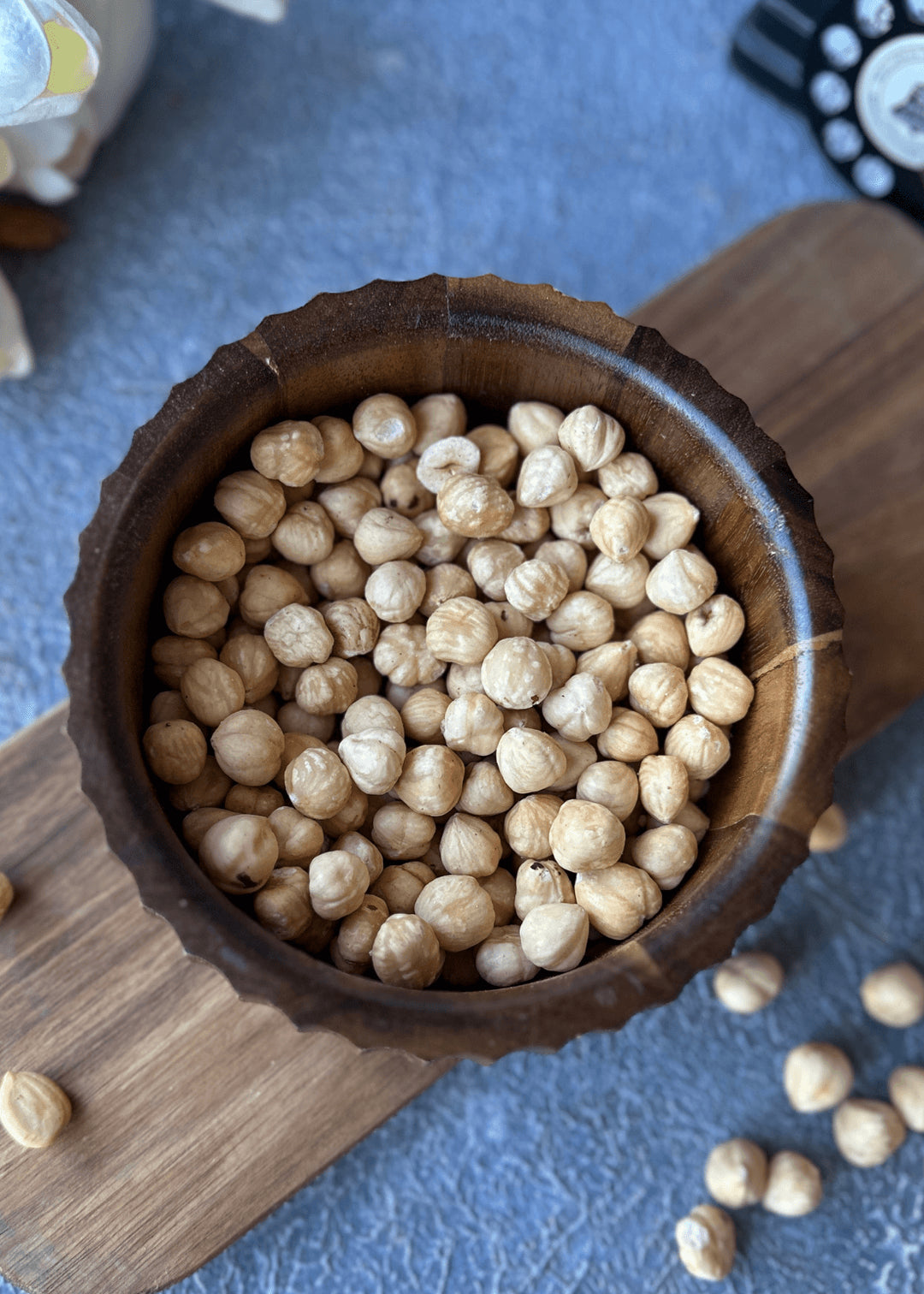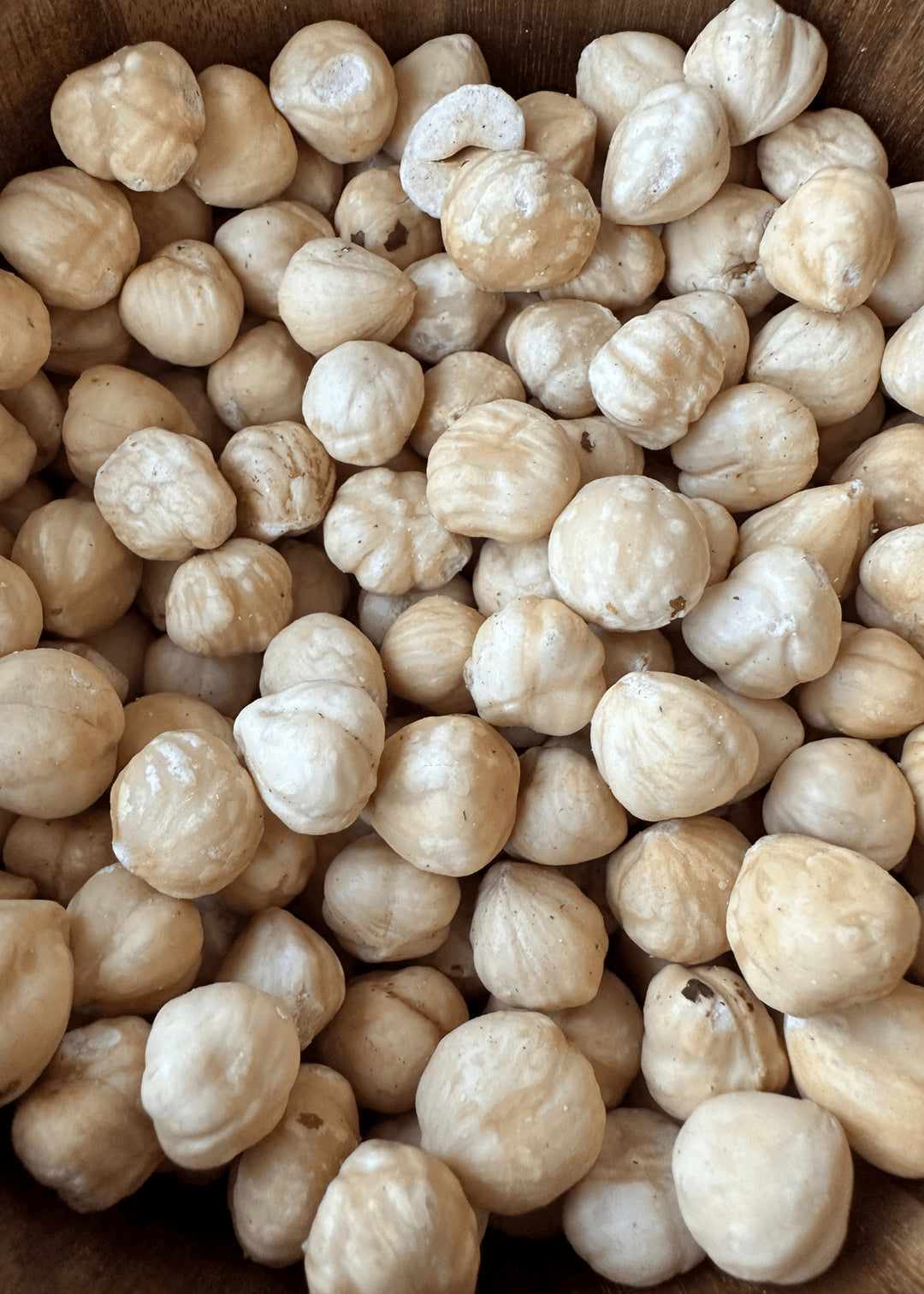

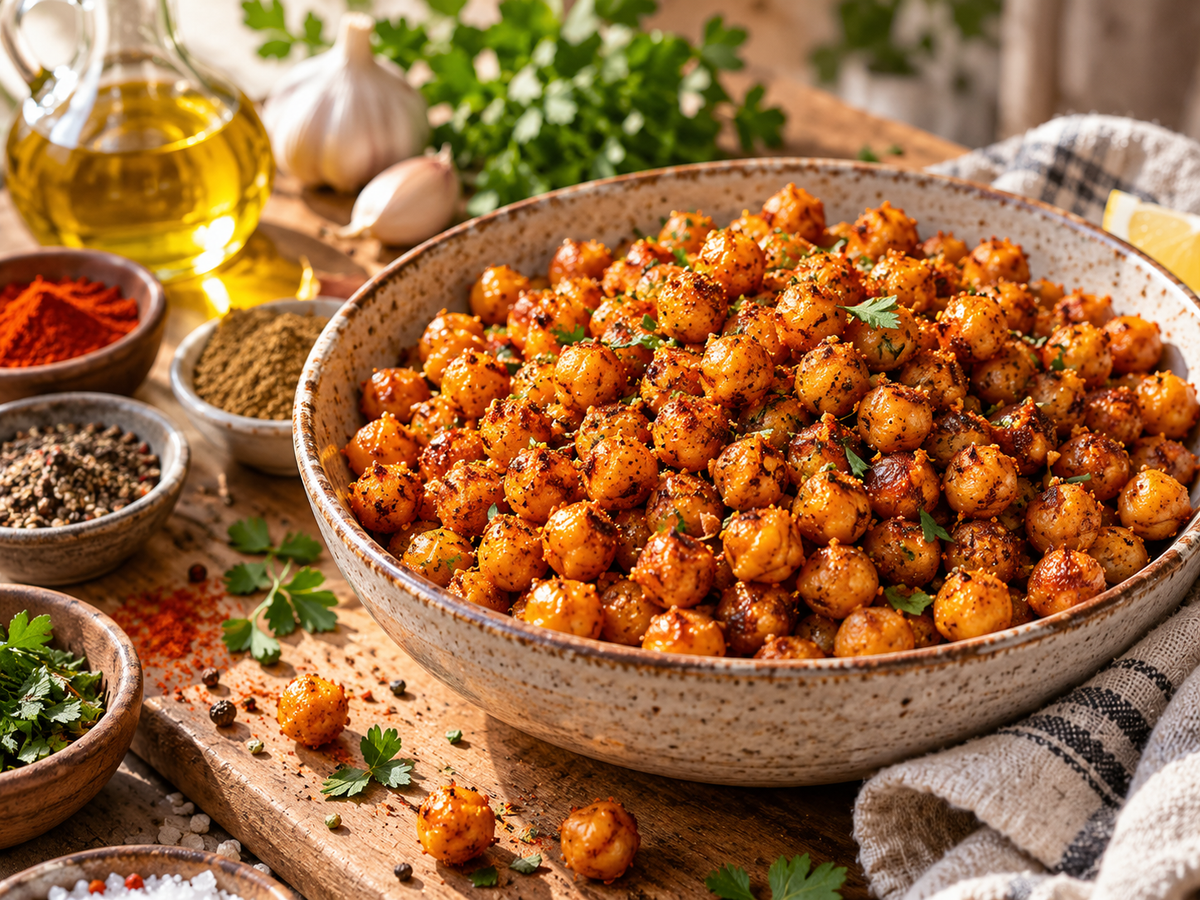
Crispy chickpea snacks are made at home by drying cooked chickpeas well, mixing them with olive oil and spices, and baking them in the oven. The goal is to make the outside crisp while keeping the inside from becoming too hard. Drying the chickpeas properly before baking, adding spices at the right time, and controlling the baking time all affect the final result.
Cooked chickpeas can be used for this recipe. If canned chickpeas are preferred, they should be drained, rinsed, and dried very well. If the chickpeas are boiled at home, very soft or broken pieces can be removed. Chickpeas that are too soft may fall apart in the oven, while very hard chickpeas may not give a balanced crisp texture after baking.
The spice selection defines the character of the snack. Red pepper flakes, cumin, black pepper, thyme, ground red pepper, garlic powder, or a small amount of salt can be used. Since spices on the surface may burn during baking, the cooking method should be chosen carefully. Some spices can be added before baking, while others give a better result when added at the end.
Crispy chickpea snacks can be eaten on their own or used on salads, soups, and meze plates. During storage, they should be completely cooled first. If warm chickpeas are placed in a closed container, steam forms and they lose their crispness. For this reason, cooling and storage are just as important as baking.
Which Ingredients Are Used for Crispy Chickpea Snacks?
The main ingredient for crispy chickpea snacks is cooked chickpeas. They should be cooked but still firm enough to hold their shape. Chickpeas that are too broken or have fully separated skins may not crisp evenly in the oven. If canned chickpeas are used, they should be rinsed and then dried thoroughly on paper towels. Home-cooked chickpeas should also be drained of excess moisture.
Olive oil helps the spices coat the chickpeas more evenly. It also supports a more even surface during baking. However, using too much olive oil can make it harder for the chickpeas to crisp. A thin layer of oil is enough. The chickpeas should be mixed in a wide bowl so the oil can cover each one evenly.
For spices, red pepper flakes, ground red pepper, cumin, black pepper, thyme, garlic powder, and salt can be used. For a simpler version, salt, black pepper, and ground red pepper may be enough. For a more aromatic result, cumin and thyme can be added. The amounts should be controlled because spices may taste stronger after baking.
Sesame seeds, black cumin seeds, or a very small amount of lemon zest can also be added if desired. However, these ingredients may brown quickly during baking, so they should be used carefully. For the basic recipe, starting with chickpeas, olive oil, and a few spices is a safer method. Different combinations can be tried later.
How Should Chickpeas Be Prepared Before Going Into the Oven?
Chickpeas should be dried very well before going into the oven. Drained and rinsed chickpeas can be spread over paper towels or a clean kitchen towel. If excess moisture remains on the surface, the chickpeas may stay soft instead of becoming crispy. This is why drying is one of the most important steps in the recipe.
If many skins have separated, they can be removed. It is not necessary to peel every chickpea, but loose skins may burn in the oven or create a messy appearance on the tray. While drying, the chickpeas can be rubbed gently by hand to remove loose skins. This creates a more even baking surface.
Once the chickpeas are dry, they should be placed in a large mixing bowl. Olive oil is then added and spread evenly over the chickpeas. Salt and heat-resistant spices can be added at this stage. More delicate spices such as garlic powder, fine herbs, or spice blends may give a better result if added near the end of baking or after baking.
The chickpeas should be spread on the tray in a single layer. Overlapping chickpeas do not crisp evenly. Crowded trays create steam, which slows down surface drying. If needed, two separate trays can be used. Leaving space between the chickpeas allows hot air to circulate better and helps create a more even crisp texture.
How Is the Balance of Spices and Olive Oil Set?
The balance of spices and olive oil determines both the flavor and texture of crispy chickpeas. Olive oil should create a thin coating on the surface without making the chickpeas wet. If too much oil is used, the chickpeas may brown but take longer to crisp. If too little oil is used, the spices may not stick evenly to the surface.
The amount of spices should be adjusted according to the amount of chickpeas. For one bowl of chickpeas, a small amount of salt, black pepper, and ground red pepper may be enough. Cumin has a more noticeable aroma, so it should be used moderately. Red pepper flakes can also dominate the flavor if added too heavily. It is better to start with basic spices and then add extra aroma if needed.
Some spices may develop a burnt taste if they stay in the oven for too long. Finely ground garlic powder, dried herbs, and some spice blends may darken quickly at high heat. These ingredients can be added during the last few minutes of baking or mixed with the chickpeas after they come out of the oven. This helps preserve the aroma while reducing the risk of burning.
To distribute the olive oil and spices evenly, the chickpeas should be mixed well in a wide bowl. A spatula or gentle tossing can help prevent them from breaking. If spices collect in certain spots, the flavor will be uneven after baking. An even coating helps each chickpea bake in a similar way.
How Are Crispy Chickpeas Baked and Stored?
The oven should be preheated before baking crispy chickpeas. Medium-high heat helps dry the surface and create crispness. The chickpeas should be spread in a single layer on a tray lined with baking paper. During baking, they can be stirred occasionally so all sides brown evenly. However, stirring too often may cause heat loss.
Baking time can vary depending on the size, moisture level, and oven strength. When the chickpeas are browned on the outside and begin to make a light sound on the tray, crispness is starting to form. Full crispness often becomes more noticeable as they cool. Keeping them in the oven too long may make them too hard.
After baking, the chickpeas should rest on the tray for a few minutes. During this time, remaining moisture decreases and the outer surface becomes firmer. If extra spices will be added after baking, they can be mixed in while the chickpeas are still warm. However, adding too much extra oil at this stage may reduce crispness.
For storage, the chickpeas must cool completely. If warm chickpeas are placed in a closed container, steam forms and softens them. Once cooled, they can be stored for a short time in a loose-lidded or lightly breathable container. Their crispness may decrease over time. To refresh them, they can be heated briefly in the oven, but any extra seasoning should be added carefully.