
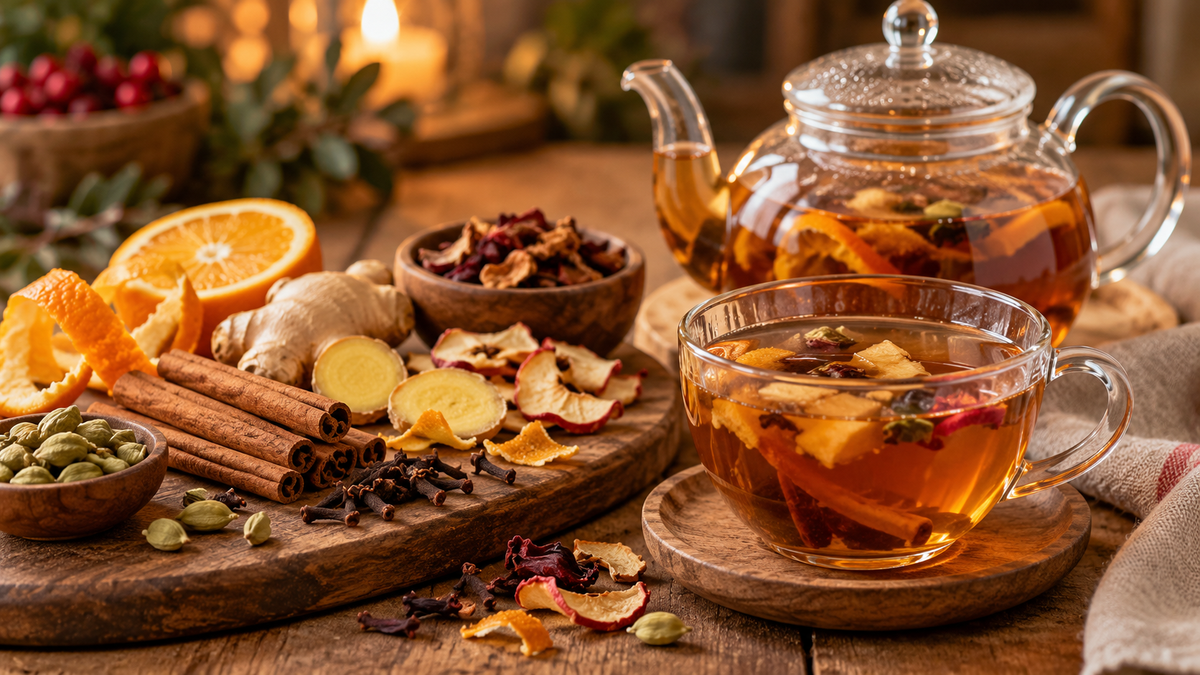
A spiced herbal tea blend can be made at home by combining aromatic ingredients such as cinnamon, cloves, ginger, cardamom, dried fruit pieces, and citrus peels in balanced amounts. The aim of this type of blend is to prepare a warm drink where no single spice dominates the whole flavor. The amount of each ingredient, steeping time, and storage method directly affect the final aroma of the blend.
Each ingredient used in a spiced herbal tea blend has a different level of intensity. Cinnamon gives a softer and warmer fragrance, while cloves create a much sharper aroma. Ginger leaves a livelier and more noticeable taste. Cardamom adds a more aromatic transition when used in small amounts. For this reason, the ingredients should not be used in equal amounts; stronger spices should be added more carefully.
Dried fruits and citrus peels help balance the sharper character of the spices. Dried apple, orange peel, lemon peel, rosehip, hibiscus, or raisins can add color, fragrance, and light flavor transitions to the blend. However, using too many different ingredients at the same time can make the tea taste crowded. For a more balanced result, a few main spices and a few supporting ingredients are enough.
When preparing the blend, the ingredients should be dry, clean, and similar in size where possible. Very large pieces release their aroma more slowly, while very small pieces may break apart during straining. After the blend is prepared, it should be stored in an airtight jar and kept away from moisture. This helps preserve the fragrance of the spices and gives a more balanced result with each brew.
Which Ingredients Are Used for a Spiced Herbal Tea Blend?
The most commonly used ingredients for a spiced herbal tea blend include cinnamon, cloves, ginger, cardamom, star anise, and allspice. These ingredients create the main aroma profile of the tea. Since each one has a different strength, their amounts should be adjusted carefully. Stronger ingredients such as cloves, cardamom, and star anise should be used in small amounts.
Cinnamon can be considered one of the main ingredients in spiced tea blends. Cinnamon sticks offer more controlled use than ground cinnamon and do not leave as much residue in the drink. Cloves give a clear aroma even when only a few pieces are used. Ginger can be used as dried pieces, thin slices, or powder; however, ground ginger spreads quickly, so it should be added carefully.
Cardamom and star anise can be used to give the blend a more distinctive aroma. Cardamom releases its fragrance more easily when the pod is lightly cracked. Star anise has a sweet and strong scent, so a small amount is usually enough. These ingredients are not required in every blend, but they can be used when a more characteristic herbal tea profile is desired.
Dried fruits and citrus peels can also be added alongside the spices. Dried apple, orange peel, lemon peel, rosehip, and hibiscus bring color and fragrance to the blend. These ingredients soften the sharpness of the spices and make the drink more layered. Starting with a simple base blend makes it easier to add variations later.
How Is the Aroma of Cinnamon, Cloves, and Ginger Balanced?
When cinnamon, cloves, and ginger are used together, they create a strong spice profile. To keep these three ingredients balanced in one blend, cinnamon should be treated as the main aroma, while cloves and ginger should work as supporting elements. Cinnamon has a softer scent, so it can be used in a slightly higher amount. Cloves and ginger are more intense, so they should be added more moderately.
Cloves have a very strong aroma. A few pieces may be enough for a small jar of tea blend. If too many cloves are used, the tea can develop a sharp and one-dimensional taste. This may push the cinnamon and fruit aromas into the background. Therefore, cloves should not be the base of the blend; they should act as a small aromatic detail.
Ginger gives the blend a more lively character. Dried ginger pieces are easier to control than ground ginger. If powdered ginger is used, the amount should be very small because it spreads quickly during steeping. Too much ginger can make the tea feel sharper. For a softer drink, ginger should be balanced with cinnamon and citrus peels.
Orange peel, dried apple, or a small amount of rosehip can soften the intensity of these three spices. Citrus peels add a fresher fragrance, while dried apple creates a smoother transition. This helps the cinnamon, cloves, and ginger feel more controlled. When the blend is kept simple, the aroma of each spice can also be noticed more clearly.
How Are Dried Fruits and Citrus Peels Added to the Blend?
Dried fruits and citrus peels are used in a spiced herbal tea blend as supporting aroma ingredients. Dried apple, orange peel, lemon peel, rosehip, hibiscus, and raisins can affect the color, fragrance, and taste of the tea. Before being added to the blend, they should be completely dry and clean. Moist pieces can shorten the storage life of the mixture.
Orange and lemon peels should ideally be thin and well dried. If fresh peel is used, the white part should be kept to a minimum because it may create a slightly bitter taste in the drink. Dried citrus peels pair well with cinnamon, cloves, and ginger. They can be added in small pieces to give the blend a clearer fragrance.
Dried apple adds a softer flavor transition to a spiced tea blend. It works especially well with cinnamon and creates a more rounded aroma. Raisins can also be used, but only in small amounts, because they may add a heavier sweetness to the drink. Too much dried fruit can push the spice character of the blend into the background.
Rosehip and hibiscus are ingredients that add color to the tea. Hibiscus creates a red-toned appearance, while rosehip gives a more traditional herbal tea profile. If these ingredients are used together with spices, their ratios should be balanced. Otherwise, the color and flavor may become more intense than expected.
How Is Spiced Herbal Tea Brewed and Stored?
To brew spiced herbal tea, about one teaspoon of the blend can be added to hot water. The steeping time can usually be kept between 8 and 10 minutes. Whole ingredients such as cinnamon sticks, cloves, and dried fruit pieces release their aroma slowly, so the tea may not become very intense immediately. As the steeping time gets longer, the spice flavor becomes more noticeable.
For a stronger aroma, the mixture can be simmered gently for a few minutes over low heat. This method releases the fragrance of the spices faster, but it can also make ingredients such as cloves, ginger, and star anise more dominant. For a softer result, simple steeping is usually a better choice. After brewing, the tea should be strained and served.
During serving, the drink can be left plain. If desired, a lemon slice, orange slice, or a small amount of honey can be added; however, these additions may change the main aroma of the tea. The drink can be served in glass cups, mugs, or a small teapot. A cinnamon stick, dried orange slice, or a few cloves can be used as simple visual details on the serving tray.
The dry blend should be stored in an airtight glass jar. Moisture can weaken the aroma of the spices and affect the texture of dried fruits. The jar should be kept in a cool, dry place away from direct sunlight. Since spices lose aroma over time, preparing smaller batches instead of very large quantities gives a fresher result.