
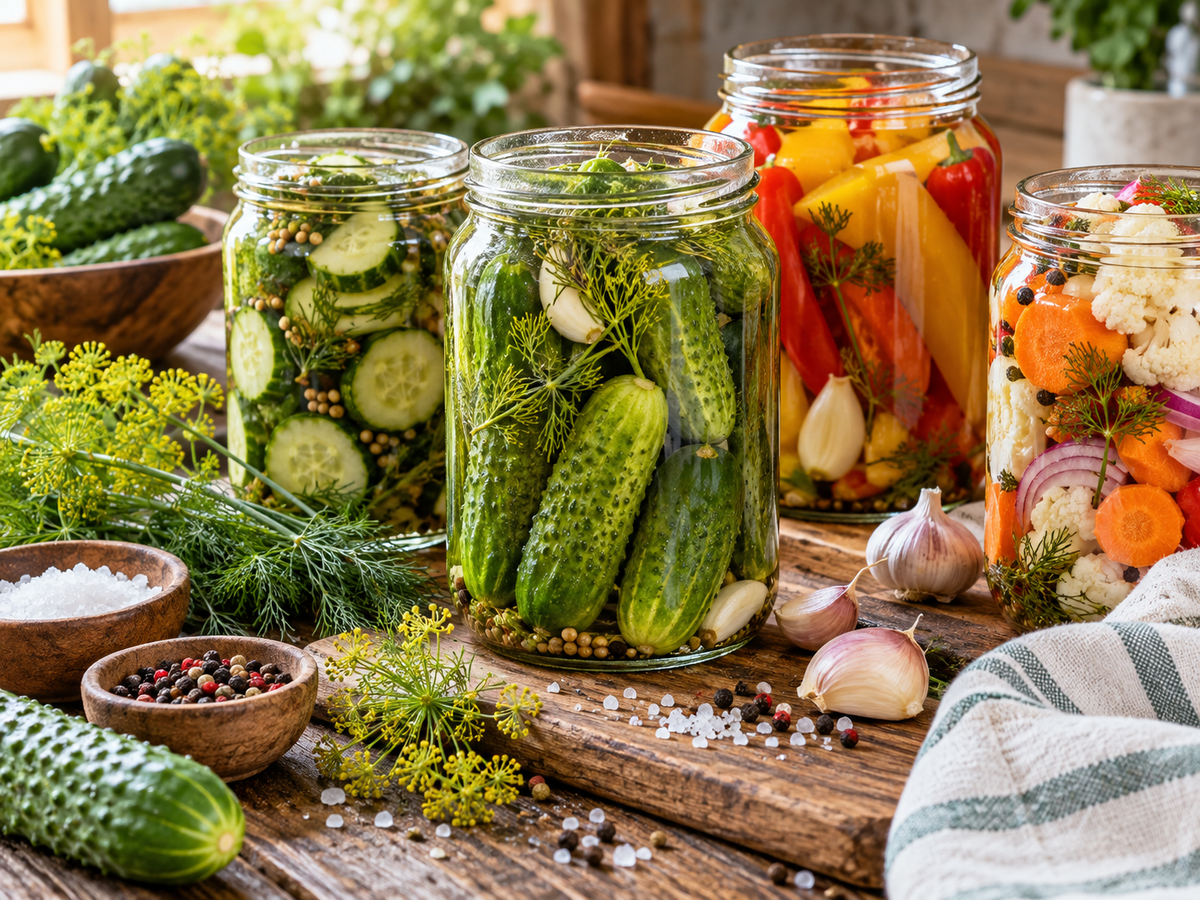
To keep pickled vegetablescrunchy, it is important to choose fresh and firm vegetables, adjust the salt concentration correctly, use clean drinking water, and maintain suitable temperatures during fermentation. The original firmness of vegetables plays an important role, especially when preparing pickled cucumbers, peppers, cabbage, and similar varieties. Overripe vegetables or those that have already begun to soften may lose their crisp texture more easily during pickling.
Preparing crunchy pickles requires more than simply adjusting the amount of vinegar or salt. The cleanliness of the vegetables, the condition of the jars, the quality of the water, and the storage environment also influence the result. In fermented pickles, the balance between salt, water, and temperature must be considered together. For vinegar-based pickles, the acidity of the vinegar and the total liquid ratio are particularly important.
Vegetables should not be crushed when placed inside pickling jars. Choosing pieces of similar sizes helps the pickling process develop more evenly. Larger vegetables may absorb the brine more slowly, while smaller or thinner pieces may soften faster. For this reason, placing vegetables with similar characteristics in the same jar can help maintain a more consistent texture.
After preparation, pickles should be kept away from direct sunlight and excessively warm environments. High temperatures may accelerate changes in vegetable texture. Depending on the pickling method, the appropriate acidity and salt conditions must also be established. Following the ingredient proportions and storage instructions of a tested recipe is essential for obtaining reliable results.
What Factors Help Pickled Vegetables Stay Crunchy?
The main factors that help pickled vegetables remain crunchy are freshness, firmness, brine composition, and preparation temperature. Vegetables with a naturally firm structure generally perform better during pickling. Cucumbers and similar vegetables may gradually lose moisture and firmness after harvesting. Therefore, using freshly harvested or recently purchased vegetables is preferable.
The maturity of vegetables also affects their final texture. Overripe cucumbers may contain larger seeds and have a softer interior. Similarly, peppers that have become excessively mature may struggle to maintain their firmness during pickling. Vegetables should be selected according to their firmness, freshness, and overall condition. Damaged, bruised, or noticeably soft vegetables should be avoided.
Brine composition is another important factor. During fermentation, salt helps create conditions that support desirable microorganisms while restricting the growth of unwanted ones. However, using too little or too much salt may interfere with the process. Salt concentration should therefore be determined according to a tested recipe rather than estimated by taste or appearance.
Temperature and fermentation time also influence crispness. Vegetables may soften more quickly when exposed to excessive heat. Keeping pickles under unsuitable conditions for too long can also contribute to texture loss. For fermented pickles, appropriate fermentation temperatures, full submersion beneath the brine, and suitable storage after fermentation are important considerations.
How Should Vegetables Be Selected and Prepared for Pickling?
Vegetables intended for pickling should be selected primarily according to freshness and firmness. Small, firm cucumbers with relatively undeveloped seeds are suitable for many cucumber pickle recipes. Peppers should have firm skin without rotten or softened sections. Vegetables of similar sizes are easier to prepare consistently because they undergo the pickling process at a more similar rate.
Before pickling, vegetables should be washed carefully under running water. Soil, dirt, and other visible residues must be removed. Particular attention should be given to stem areas and irregular surfaces where debris may collect. However, vegetables showing mold, decay, or significant softening should not be used. Washing cannot restore spoiled vegetables to an acceptable condition for pickling.
When preparing cucumber pickles, removing a thin section from the blossom end may help prevent softening. Certain enzymes associated with this part of the cucumber can contribute to texture changes. For this reason, some tested recipes recommend trimming the blossom end. Depending on the recipe, cucumbers may be left whole or cut into pieces. Smaller pieces may develop a different texture compared with whole cucumbers.
Prepared vegetables should be placed in clean, food-safe jars. Packing them too tightly may cause bruising or crushing. Vegetables should be arranged so that the brine completely covers them. In fermented pickles, a food-safe fermentation weight can help prevent vegetables from floating above the liquid. Keeping vegetables submerged is especially important because exposed surfaces may encourage unwanted microbial growth.
How Should the Salt, Vinegar, and Water Ratios Be Adjusted When Pickling?
The correct ratio of salt, vinegar, and water depends on the pickling method being used. Fermented pickles and vinegar-based pickles require different conditions. In fermented pickles, salted water creates an environment in which fermentation can develop. In vinegar-based pickles, the acidity of the vinegar and the proportion of vinegar to water play a central role. Recipes designed for these methods should not be used interchangeably without appropriate validation.
For fermented vegetables, the salt concentration may vary according to vegetable type, size, preparation method, and recipe. Some vegetable fermentation recipes use brines containing approximately 2–3% salt. However, this range is not suitable for every type of pickle. Whole cucumbers, for example, may require different concentrations. It is therefore important to follow a tested recipe specifically developed for the vegetable being prepared.
For vinegar-based pickles, the acidity of the vinegar must be considered. Many tested pickling recipes specify vinegar with 5% acidity. However, selecting vinegar with the correct acidity is only one part of the process. The vinegar-to-water ratio must also remain consistent with the recipe. Reducing the amount of vinegar or adding extra water may alter the acidity of the finished product and affect its safety.
Water used for preparing brine should be clean and suitable for drinking. Salt should be completely dissolved before the brine is added to the vegetables. Measuring salt by weight is generally more consistent than using spoon measurements because coarse and fine salts can have different weights at the same volume. Accurate measurements help maintain the intended preparation conditions and contribute to a more consistent final texture.
What Should Be Considered During Pickling and Storage to Prevent Softening?
To prevent pickled vegetables from becoming soft, care should be taken to avoid bruising, use the correct brine, and maintain clean preparation equipment. Vegetables should not be tightly compressed inside the jar because excessive pressure can damage their structure. They should be arranged carefully and kept beneath the brine. For fermented pickles, a suitable weight can help prevent vegetables from rising above the liquid.
Fermentation temperature should be monitored throughout the process. Excessively warm conditions may cause vegetables to soften more quickly. The appropriate temperature and fermentation period depend on the vegetable and the preparation method. Therefore, a single fermentation duration cannot be recommended for every type of pickle. Following the conditions stated in a tested recipe helps support consistent texture.
Once fermentation is complete, pickles should be stored according to the method used. Pickles requiring refrigeration should not be left at room temperature for extended periods. Products intended for long-term storage without refrigeration require an appropriate, tested preservation process. Simply closing a jar or filling it with hot liquid does not automatically make the contents suitable for shelf-stable storage.
During storage, the appearance, smell, and surface condition of pickles should be monitored. Mold, a slimy texture, noticeably unusual odors, or unexpected excessive softening may indicate spoilage. Some gas production may occur naturally during fermentation, but appearance and smell alone cannot establish whether a product is safe. Pickles showing clear signs of spoilage should not be eaten, and uncertain products should never be tasted to determine their safety.