
Bulgur generally does not need to be washed before cooking because it has already been cleaned, parboiled, dried, and cracked during production. Packaged bulgur that has been properly cleaned by the manufacturer can usually be used directly. However, if the product contains visible dust, husk fragments, or foreign particles, it should be inspected and briefly rinsed when necessary. The most important factors are the type of bulgur, its condition, and the texture required for the dish.
Whether bulgur should be washed also depends on the recipe. Coarse bulgur used for pilaf is often cooked directly with hot water or lightly sautéed before liquid is added. Fine bulgur, commonly used in köfte and salads, is usually softened by soaking it in hot water. Washing or soaking fine bulgur for too long before preparation may cause it to absorb water prematurely, changing the consistency of the finished dish.
When preparing bulgur pilaf, the goal is to achieve tender grains that remain relatively separate rather than forming a sticky mixture. Excessive water or prolonged soaking can make the grains too soft. On the other hand, using insufficient liquid may leave the center of the grains firm. The size of the bulgur, the amount of water, the cooking temperature, and the resting period should all be considered.
Water temperature also affects preparation. Hot water or hot broth can help coarse bulgur begin cooking evenly. Fine bulgur, meanwhile, is frequently covered with hot water and allowed to absorb the liquid before other ingredients are added. In both cases, the amount of water must be appropriate for the recipe. Too much moisture can create an overly soft texture, particularly when working with fine bulgur.
Should Bulgur Be Washed Before Cooking?
Bulgur does not always need to be washed before cooking. Commercially packaged bulgur is generally cleaned during manufacturing and prepared for direct use. Nevertheless, checking the grains for foreign particles before cooking is a useful step. If the manufacturer provides specific preparation instructions on the packaging, those instructions should be followed. The idea that all bulgur must be washed several times before cooking does not apply to every variety.
Bulgur is made from wheat that undergoes several processing stages, including parboiling, drying, and cracking. These steps distinguish bulgur from raw, unprocessed wheat. As a result, prolonged washing is not normally necessary. Instead, the product should be inspected for cleanliness, and the preparation method should be selected according to the intended dish.
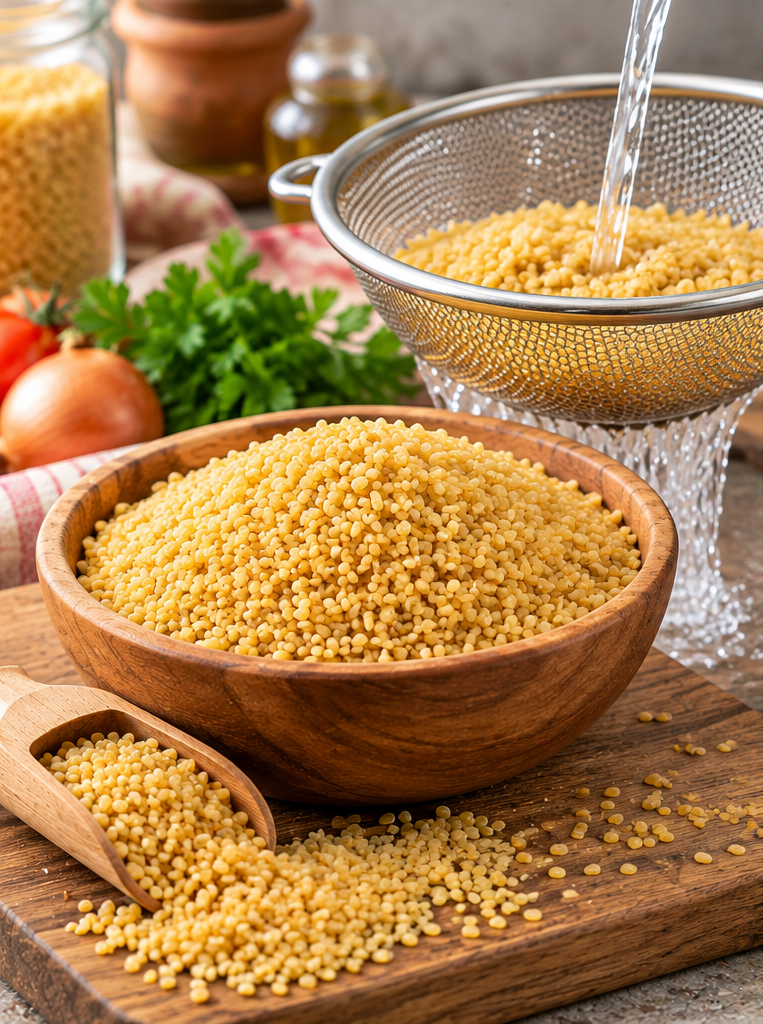
If bulgur contains visible dust or has been purchased loose rather than in sealed packaging, a quick rinse may be appropriate. It can be placed in a fine-mesh strainer and briefly rinsed under cold running water. The excess water should then be allowed to drain. Leaving bulgur submerged for an extended period may cause it to absorb moisture before cooking begins, making the recipe's liquid requirements less predictable.
When rinsed bulgur will be sautéed in oil, it should be drained thoroughly beforehand. Excess surface moisture can reduce the effectiveness of sautéing and prevent the desired toasted aroma from developing. Water may also splatter when it comes into contact with hot oil. For recipes that begin by toasting bulgur, using clean and well-drained grains provides greater control over the cooking process.
How Does the Preparation of Coarse and Fine Bulgur Differ?
The main difference between coarse and fine bulgur is the size of the grains and how they are used in cooking. Coarse bulgur is commonly used for pilaf and warm side dishes, while fine bulgur is generally preferred for köfte, kısır, and various salads. Because the grains differ in size, they require different amounts of liquid and different preparation methods.
Coarse bulgur is usually cooked with water or broth. When preparing traditional bulgur pilaf, onions, tomato paste, or vegetables may first be sautéed in oil. The bulgur is then added and briefly mixed with the other ingredients. Hot water or broth is poured into the pot, and the mixture is cooked over low heat. Lightly sautéing the grains can contribute a more noticeable toasted aroma, although this step is not required in every recipe.
Fine bulgur is often prepared without prolonged boiling. It is placed in a bowl, covered with a measured amount of hot water, and left to absorb the liquid. Once the grains have softened, tomato paste, spices, olive oil, herbs, or other ingredients can be incorporated. This method is commonly used in kısır and certain bulgur-based köfte recipes. However, preparation techniques may vary depending on the specific dish.
Coarse and fine bulgur cannot always be substituted for one another without changing the result. Coarse bulgur may remain too firm or grainy in recipes designed for fine bulgur. Fine bulgur, when used for traditional pilaf, may soften quickly and form a more compact texture. Choosing the appropriate grain size is therefore essential for achieving the intended consistency.
How Does Washing Bulgur Affect the Texture and Flavor of Pilaf?
Washing bulgur can affect the texture of pilaf because the grains begin absorbing water before cooking. A quick rinse generally has a limited effect, but prolonged soaking can significantly increase the moisture content. If the full amount of liquid specified in a recipe is then added, the pilaf may become softer than intended. This is especially relevant for smaller grains, which can absorb moisture relatively quickly.
Using clean, unwashed coarse bulgur can make the cooking liquid easier to measure accurately. The grains absorb water progressively during cooking and soften as the liquid is taken up. However, achieving separate, fluffy grains does not depend solely on avoiding washing. The water ratio, cooking temperature, pot size, and resting period are equally important.
The flavor of bulgur develops through the cooking technique and accompanying ingredients. When bulgur is lightly sautéed in oil, a subtle toasted aroma may develop. Onions, tomato paste, vegetables, and broth can contribute additional flavors. A brief rinse generally does not fundamentally change the taste, but soaking the grains for too long may make it harder to control their final texture.
To prevent bulgur pilaf from becoming mushy, the amount of liquid should match the grain size. Fine bulgur typically absorbs water more quickly than coarse bulgur. Frequent or vigorous stirring during cooking can also damage the grains and contribute to a softer texture. Allowing the pilaf to cook with minimal stirring and then rest briefly helps preserve a more even consistency.
How Should Water Ratios and Cooking Times Be Adjusted for Bulgur?
The appropriate water ratio depends on the type of bulgur and the dish being prepared. Many recipes for coarse bulgur pilaf use approximately one and a half to two measures of water for every measure of bulgur. However, this ratio can vary depending on the product, whether the grains were previously rinsed, and the moisture contributed by other ingredients. Fresh tomatoes, for example, release liquid during cooking and may affect the amount of additional water needed.
Cooking temperature is just as important as the water ratio. After hot water has been added, the mixture can be brought to a boil. The heat should then be reduced, and the pot covered with a lid. This allows the grains to absorb moisture gradually. Cooking continuously over very high heat can cause the water to evaporate before the bulgur has softened completely.
Coarse bulgur often requires approximately 10–20 minutes of cooking, although the actual time depends on the grain size and recipe. It is better to check whether the grains are tender and the cooking liquid has been absorbed than to rely exclusively on the clock. If the grains remain firm, a small amount of hot water can be added, and cooking can continue until the desired consistency is reached.
After cooking, bulgur pilaf should rest briefly with the lid closed. This resting period allows moisture to distribute more evenly and helps the texture settle. The grains can then be gently separated with a fork or large spoon before serving. With an appropriate water ratio, controlled heat, and sufficient resting time, bulgur pilaf can remain tender while maintaining a relatively fluffy structure.